8 hr
Uyuni Salt Flats Full-Day Jeep Adventure with Lunch
- Expert local guide
- Small group
- Skip-the-line access
- Free cancellation
Uyuni Salt Flats Tour — Multi-Day Expeditions & Day Trips
Where earth becomes sky, and horizons dissolve into silence
Compare fares, pick the fit — all bookings are mobile-voucher and eligible for free cancellation where shown.
8 hr
4 hr
48 hr
| Experience | Duration | Rating | Pickup | Guide | Small group | Free cancel. | Price | |
|---|---|---|---|---|---|---|---|---|
|
Guided Experience
Most popular
Uyuni Salt Flats Full-Day Jeep Adventure with Lunch
|
8 hr | ★ 4.8 | ✓ | ✓ | ✓ | ✓ | €80 | Book → |
|
Standard Entry
Uyuni Salt Flats Sunset & Stargazing Tour
|
4 hr | ★ 4.6 | ✓ | ✓ | ✓ | ✓ | €53 | Book → |
|
Guided Experience
Uyuni Salt Flats 2-Day Adventure from La Paz
|
48 hr | ★ 4.0 | — | ✓ | ✓ | ✓ | €185 | Book → |
They complement each other, but the 3-day expedition is more immersive while the daily uyuni salt flats tour provides efficient access to the primary mirror landscapes. Choosing between these uyuni salt flats tour tours depends on whether your itinerary allows for deep travel into the Andes or requires a quick visit.
|
Top pick 1-Day Express |
3-Day Expedition | |
|---|---|---|
| Key sights visited | Salt flats and Incahuasi Island only | |
| Physical intensity | Low impact | |
| Accommodation type | None (day trip) | |
| Primary travel method | 4x4 vehicle | |
| Suitability for tight schedules | Highly suitable | |
| Salt flats, lagoons, and volcanoes | High altitude activity | |
| See tickets & prices |
Verdict: Opt for the standard uyuni salt flats tour tour if your schedule is limited, but select the 3-day expedition if you seek comprehensive uyuni salt flats tour tickets including remote southern mountain landscapes.
Hand-picked experiences loved by thousands of travelers
4 days
Free Cancellation
Cross from Chile's Atacama Desert to Bolivia's otherworldly salt flats on this epic high-altitude adventure
4 hours
Free Cancellation
Witness celestial wonders and dawn's first light reflected across Bolivia's vast salt desert
9 hours
Free Cancellation
Explore Bolivia's vast salt desert, visit the train graveyard, and watch sunset over endless white plains
1 day
Free Cancellation
Explore Bolivia's otherworldly salt desert, visit giant cactus islands, and watch sunset over endless white
10 hours
Free Cancellation
Explore Bolivia's vast white desert by bike, watch the sunset with wine, and gaze at stars in the world's largest salt flat
1 day
Free Cancellation
Explore Bolivia's surreal white desert, sleep in a hotel built from salt blocks, and chase sunset colors
9 hours 30 minutes
Free Cancellation
Cycle across the world's largest salt desert, explore giant cactus islands, and toast the sunset
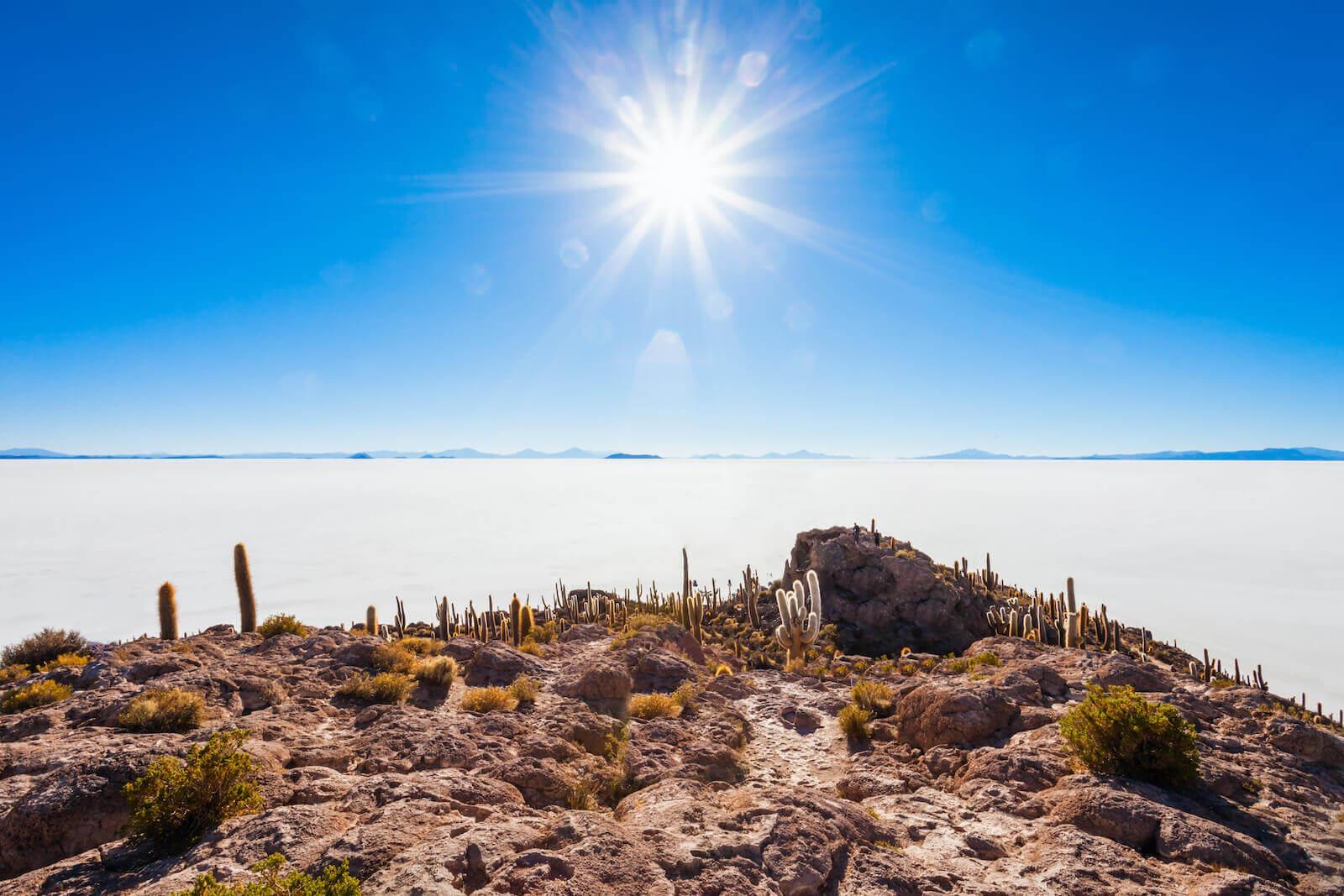
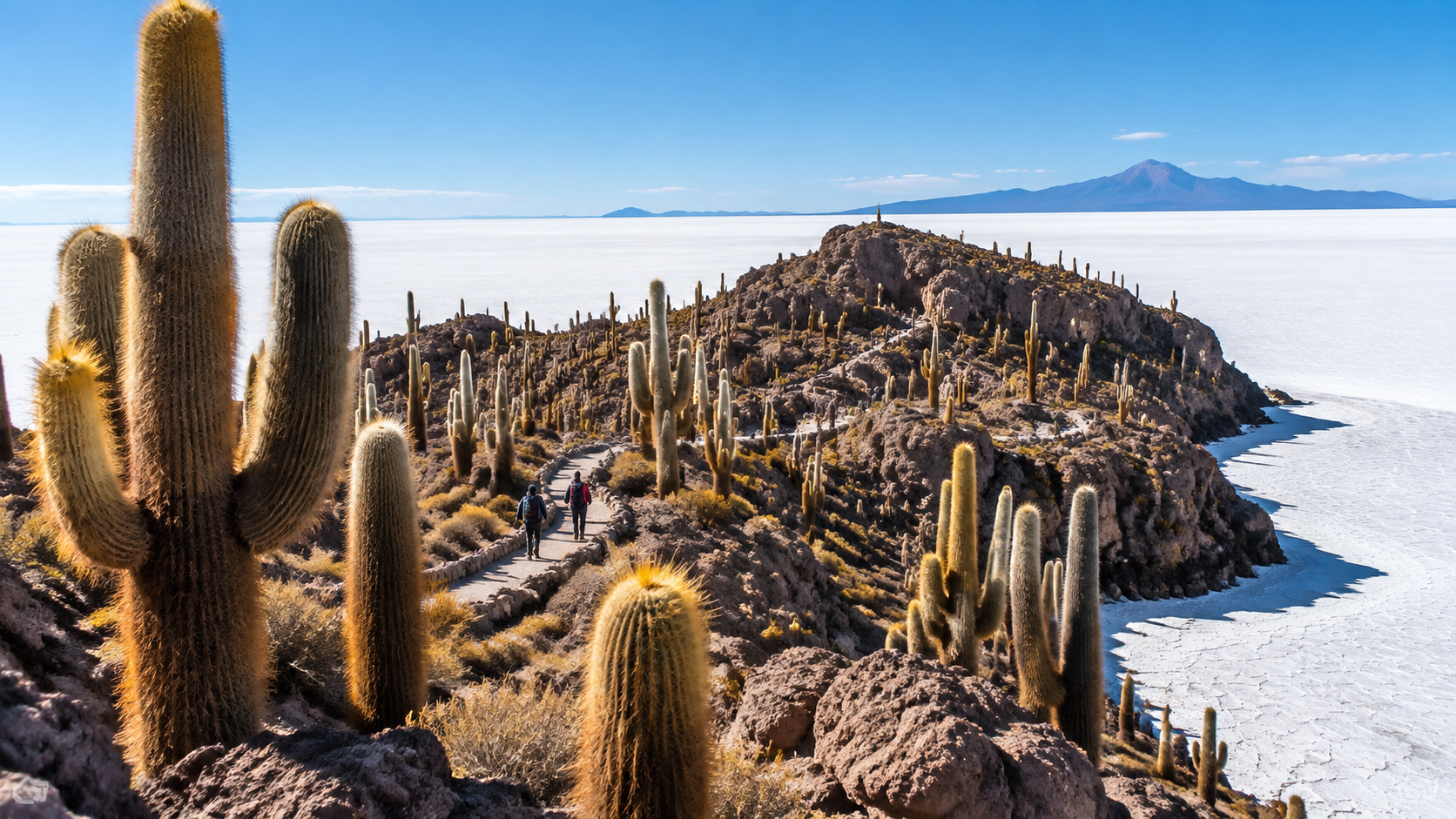
A unique, cactus-covered rocky island located in the center of the Salar de Uyuni. The island features massive cacti and panoramic views of the surrounding salt crust.
An eerie, historic site on the outskirts of Uyuni displaying rusted, abandoned locomotives. It is a common first stop on many tours to the salt flats.
Natural, bubbling water vents emerging from the salt crust that signify the underlying geological activity. These unique features are frequently visited during a 4WD uyuni salt flats tour.
A monument built from salt bricks commemorating the famous Dakar Rally route. It serves as a popular photography landmark within the Salar de Uyuni.
You leave Uyuni before dawn, the town's corrugated roofs still dusted with frost. Your driver steers a 4x4 onto the salt flat as the sky shifts from black to violet. By 06:00, you are standing on an endless white plane, the horizon a perfect circle.
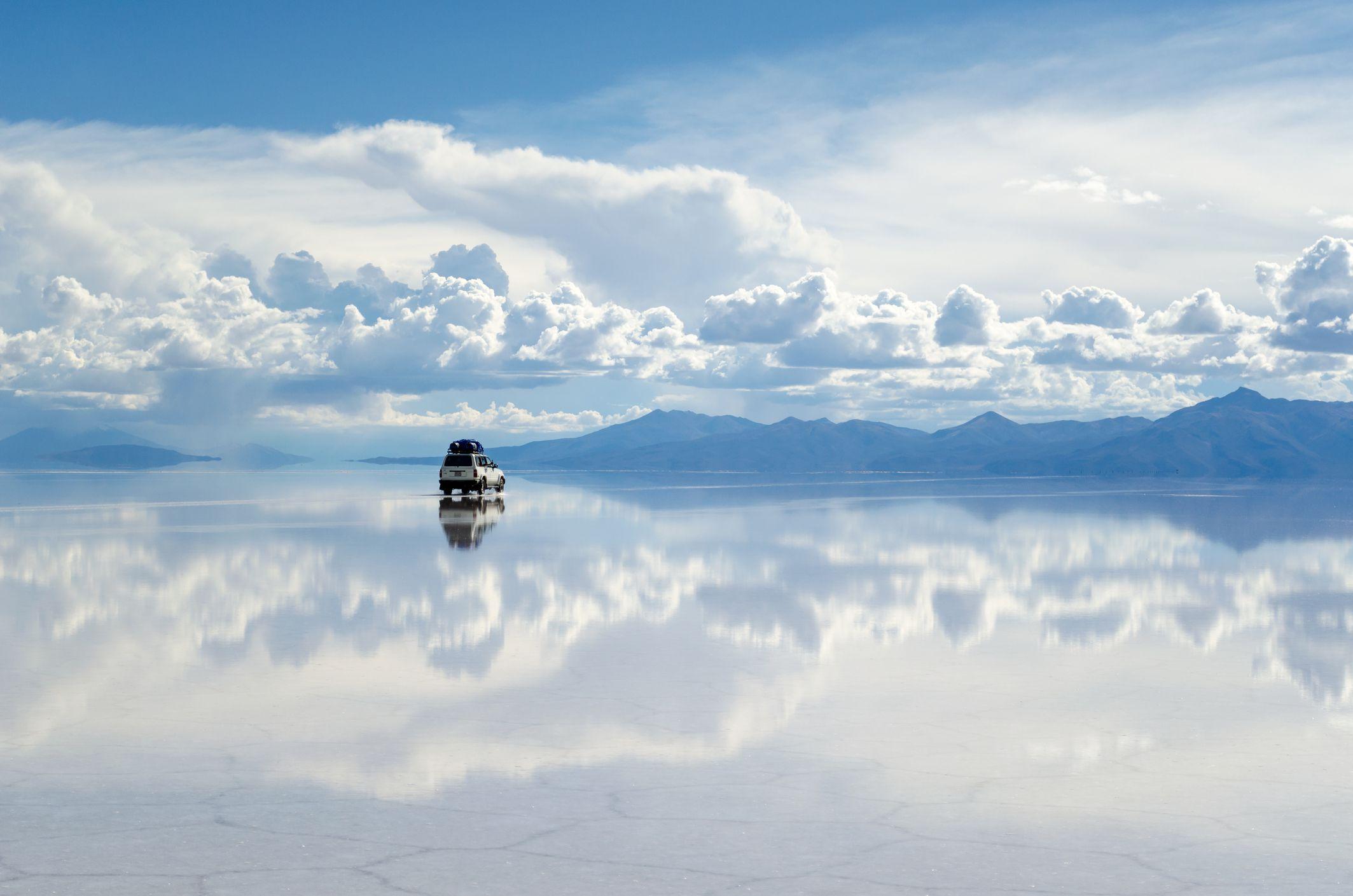
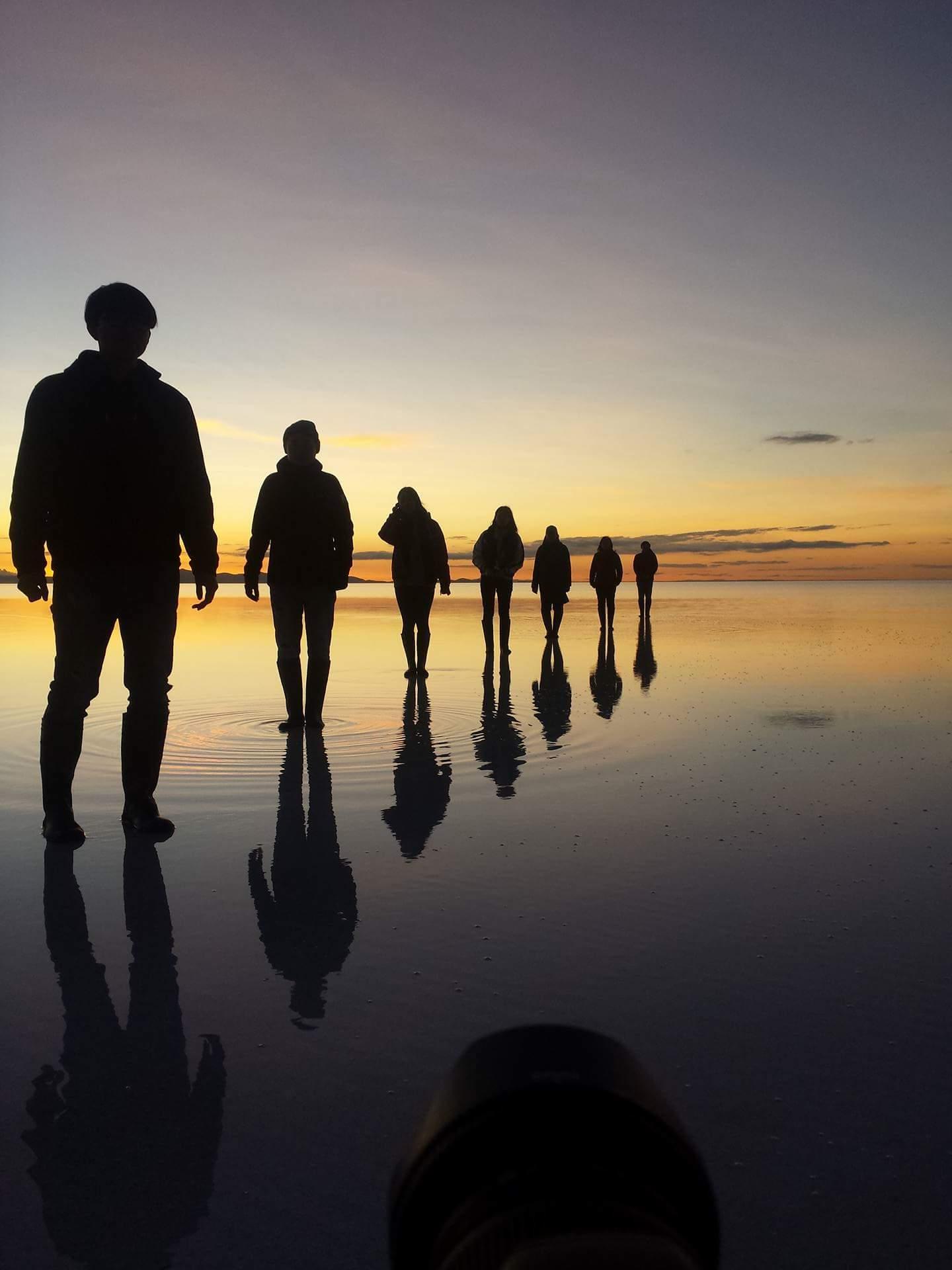
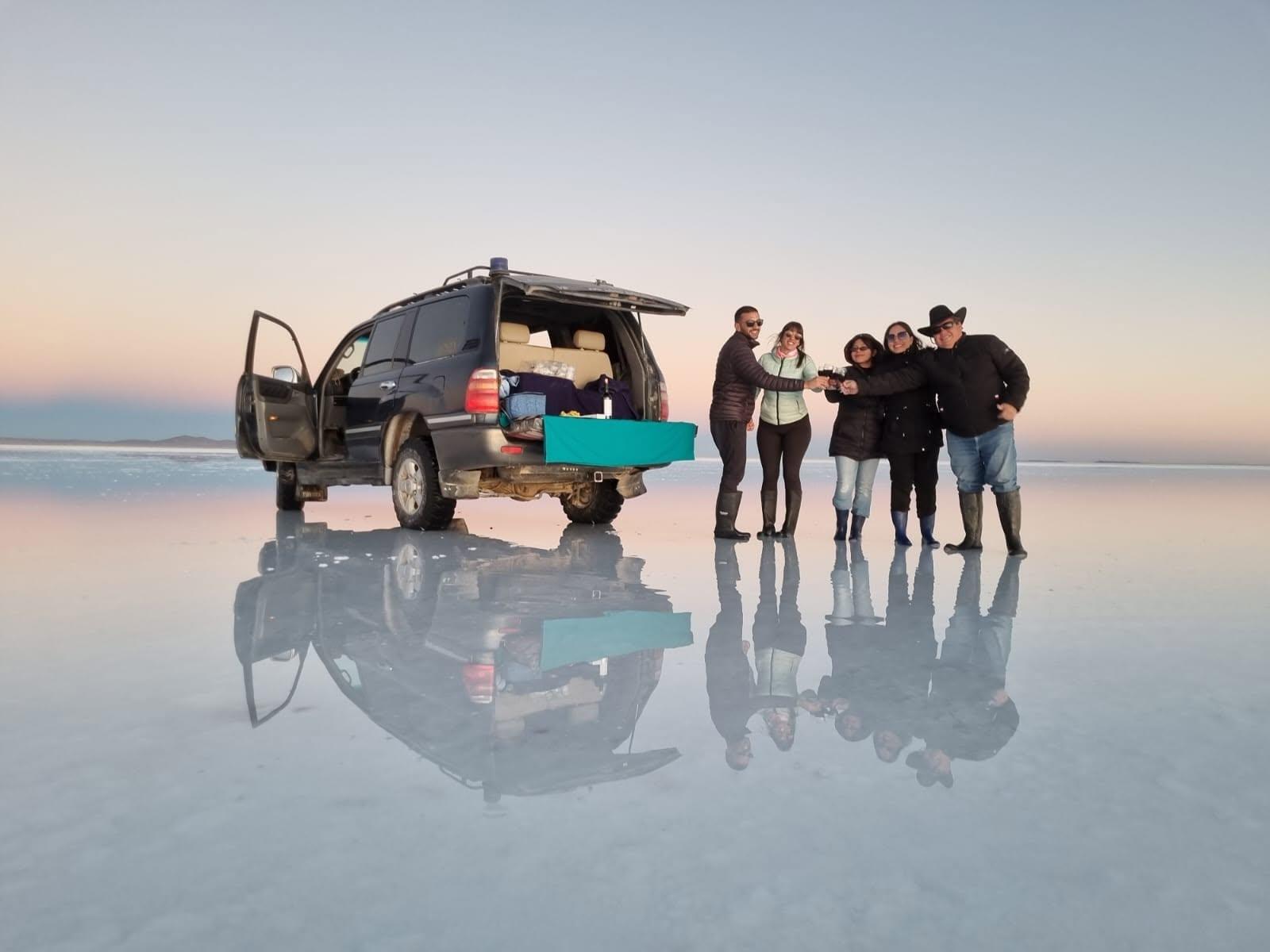
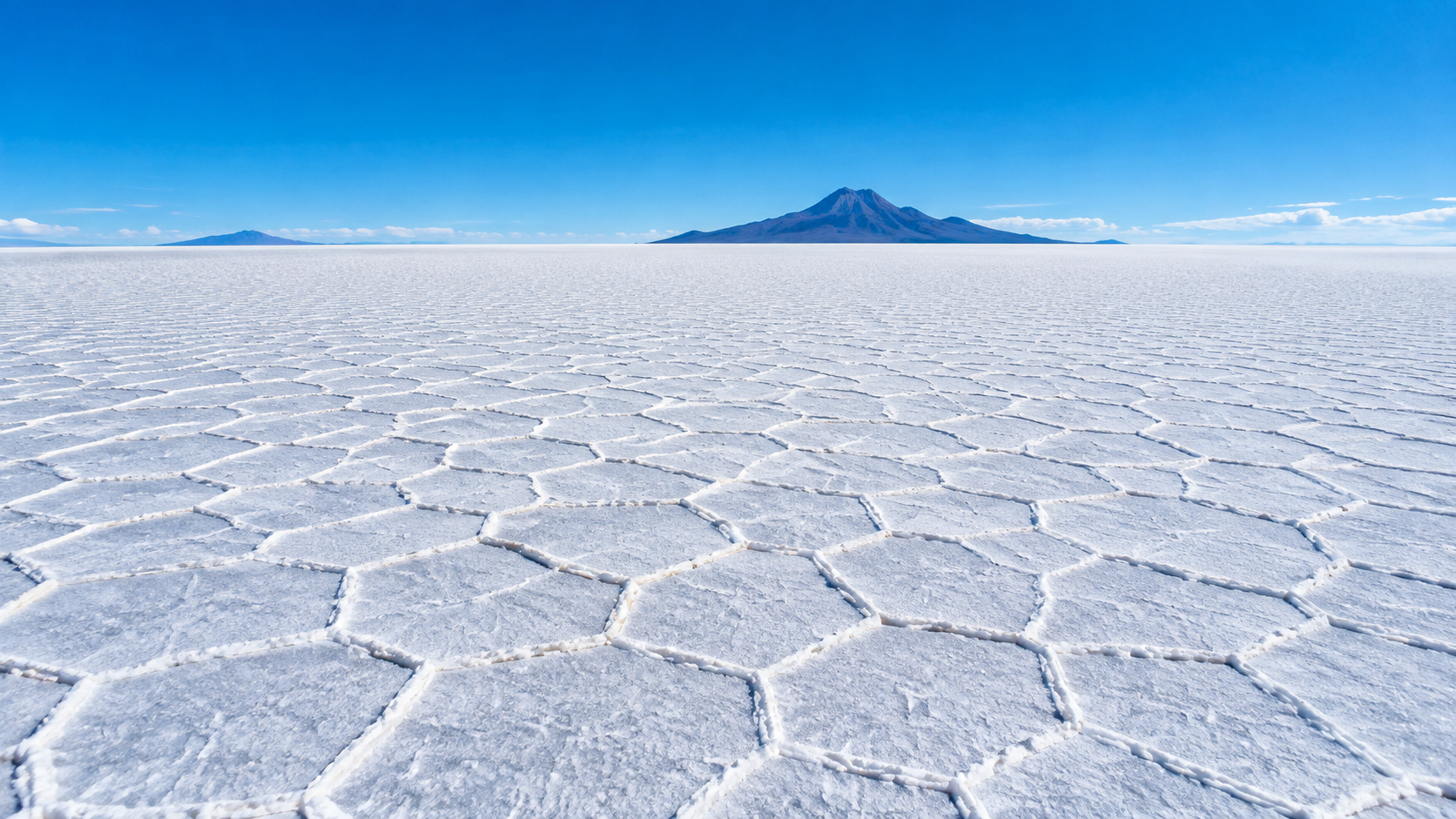
If you arrive during the wet season, a mirror sky surrounds you—clouds reflected so cleanly you lose your sense of up and down. During the dry months, hexagonal salt tiles crunch underfoot, each polygon bordered by raised ridges of crystallised sodium.
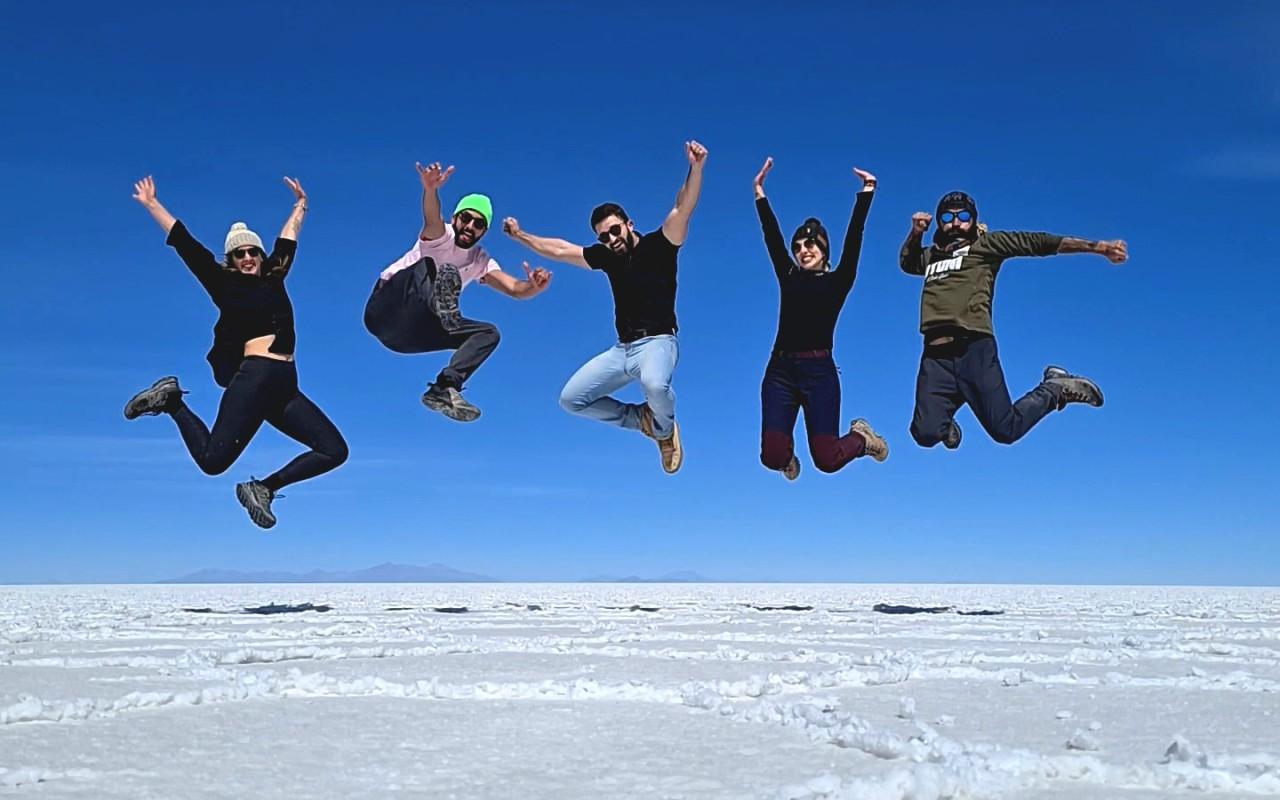
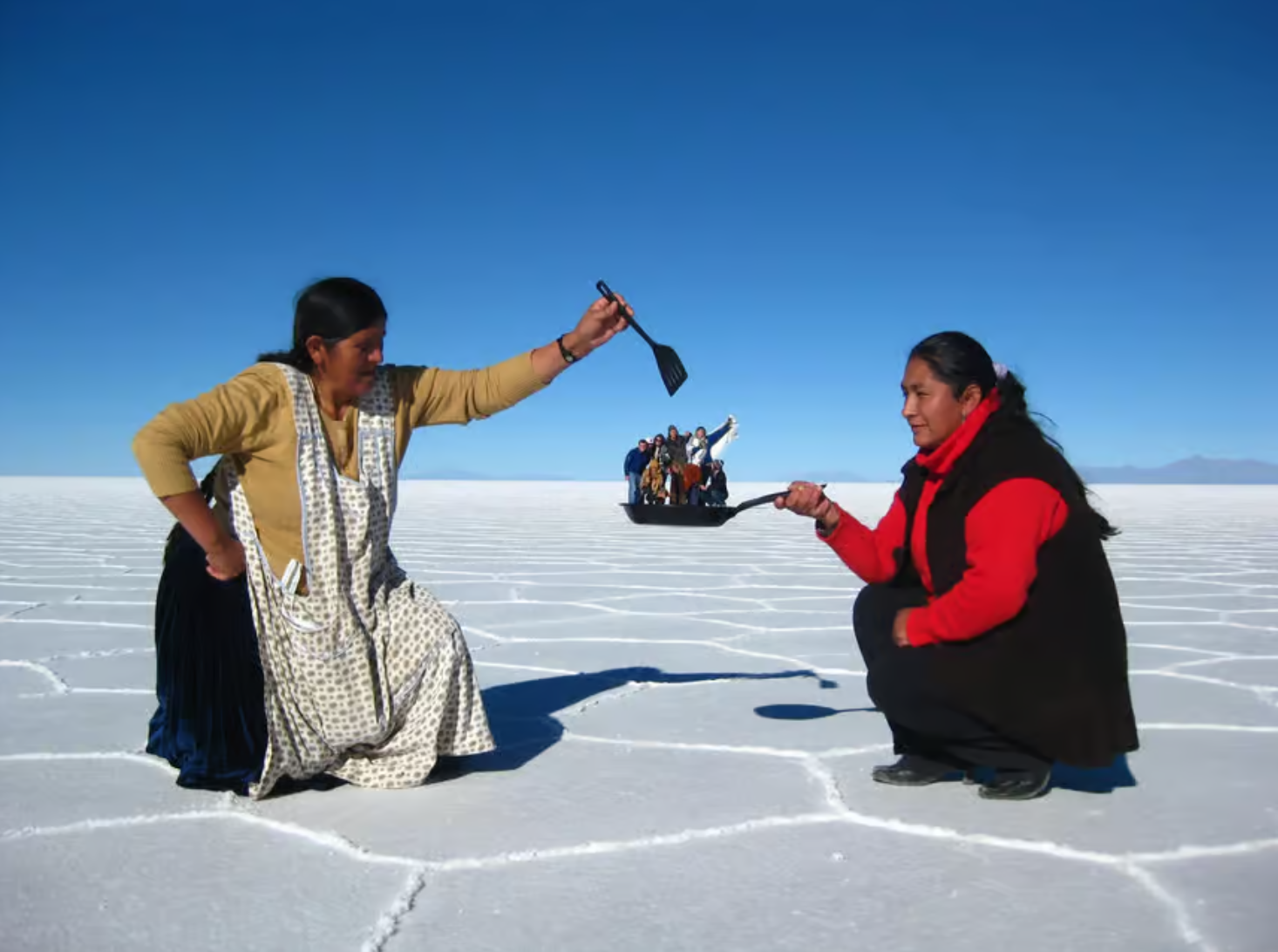
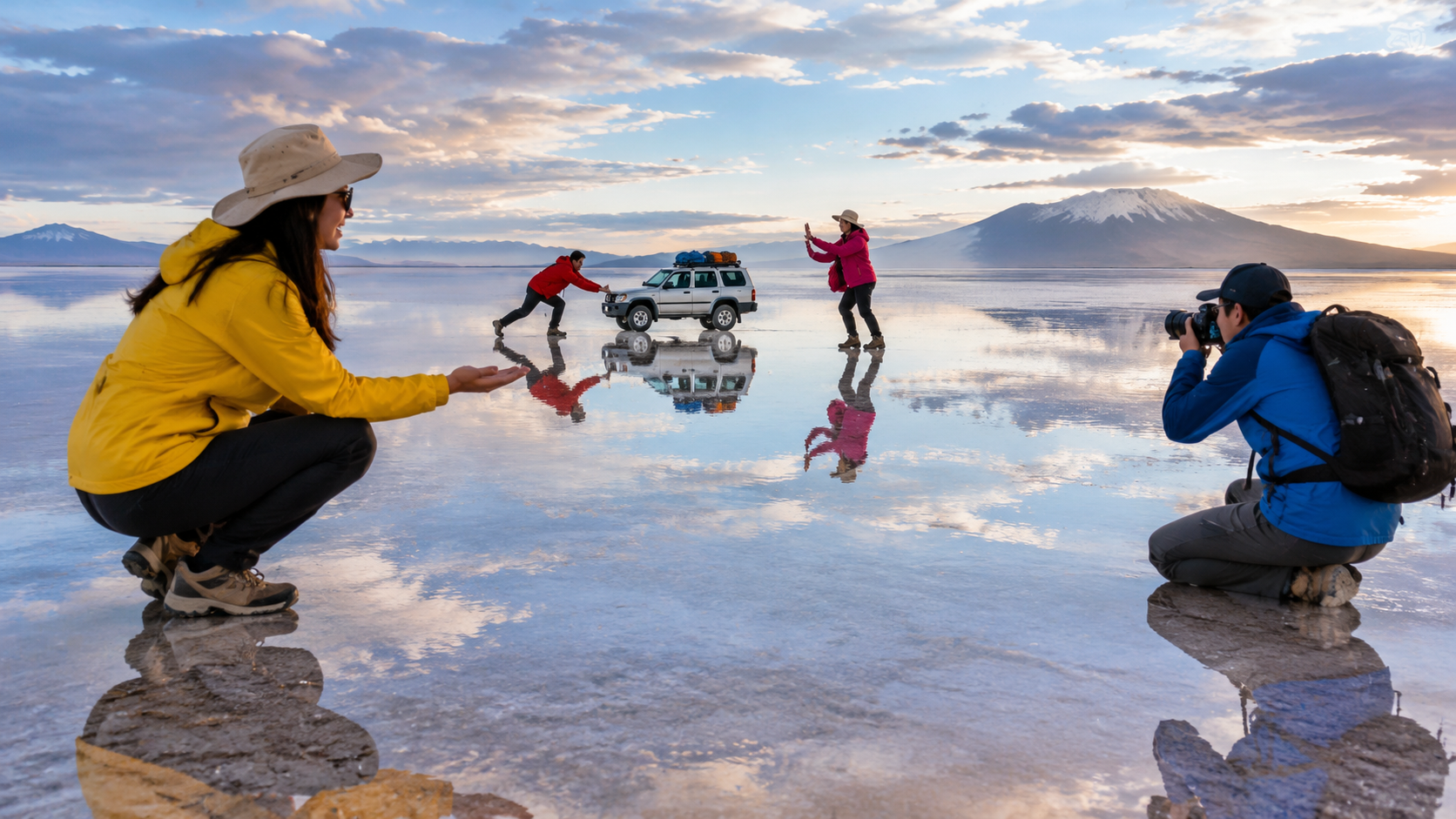
You reach Incahuasi Island mid-morning. The climb to the summit takes twenty minutes through a forest of thousand-year-old cacti, some towering six metres. From the ridge, the salt flat spreads in every direction, the Andes reduced to a faint serration on the western edge. Back on the flat, your guide arranges perspective photographs—tiny figures appearing to balance on salt shakers, or stepping into a cupped hand.
By early afternoon, you visit Colchani, where workers rake salt into pyramidal mounds. Inside a processing shed, iodised packets stack to the rafters. If your tour extends beyond one day, you continue south toward lagoons stained copper and green by algae and minerals. Flamingos—Andean, Chilean, James's—feed in the shallows, their legs impossibly thin against the wind.
All the details about your upcoming adventure in one place
A uyuni salt flats tour takes you across the world's largest salt desert, the Salar de Uyuni, spanning over 10,000 square kilometers at 3,656 meters elevation. These multi-day expeditions traverse the white expanse, colorful mineral lagoons, and high-altitude desert terrain of southwestern Bolivia. Uyuni salt flats tour tours typically include the Train Cemetery, Incahuasi Island with giant cacti, and flamingo-rich Eduardo Avaroa Reserve.
The Salar de Uyuni covers 10,582 square kilometres of Bolivia's southwest altiplano, making it the world's largest salt flat. Formed approximately 40,000 years ago when prehistoric Lake Minchin evaporated, the basin left behind a salt crust between two and twenty metres thick in places.
Beneath that crust lies more than half of the planet's lithium reserves, a fact that has positioned this remote corner of Potosí Department at the centre of 21st-century energy debates.
The salt desert sits at 3,656 metres above sea level. During the wet season—roughly December through March—a thin layer of water transforms the flats into a vast natural mirror, reflecting the sky with such precision that the horizon vanishes. This phenomenon draws photographers and filmmakers who chase the interplay of clouds, salt polygons, and illusion. The dry season exposes hexagonal patterns etched into the crystalline surface, a tessellation that stretches to the Andes in every direction. Islands of volcanic rock punctuate the expanse: Incahuasi Island, crusted with towering cacti, rises from the white like a mirage.
A uyuni salt flats tour typically departs from the town of Uyuni, a high-altitude railway junction that serves as the gateway to the desert. Multi-day expeditions venture south into the Eduardo Avaroa Andean Fauna National Reserve, where flamingos wade in mineral-stained lagoons and geysers hiss at dawn. Three-day routes often conclude in San Pedro de Atacama, crossing into Chile through the Hito Cajón border. One-day circuits focus on the salt flat proper, the train cemetery on Uyuni's outskirts, and the village of Colchani, where salt is harvested and processed by hand.
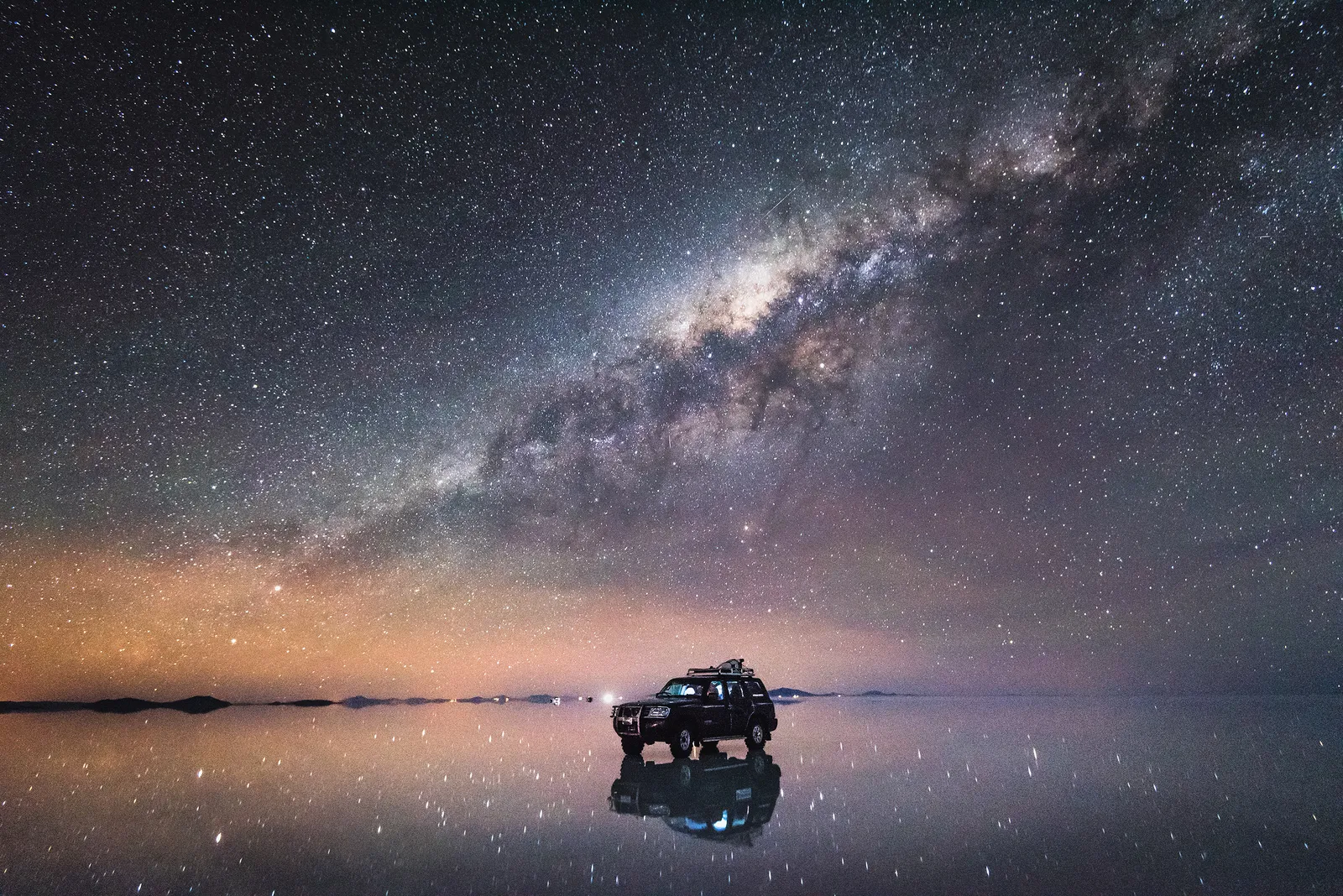
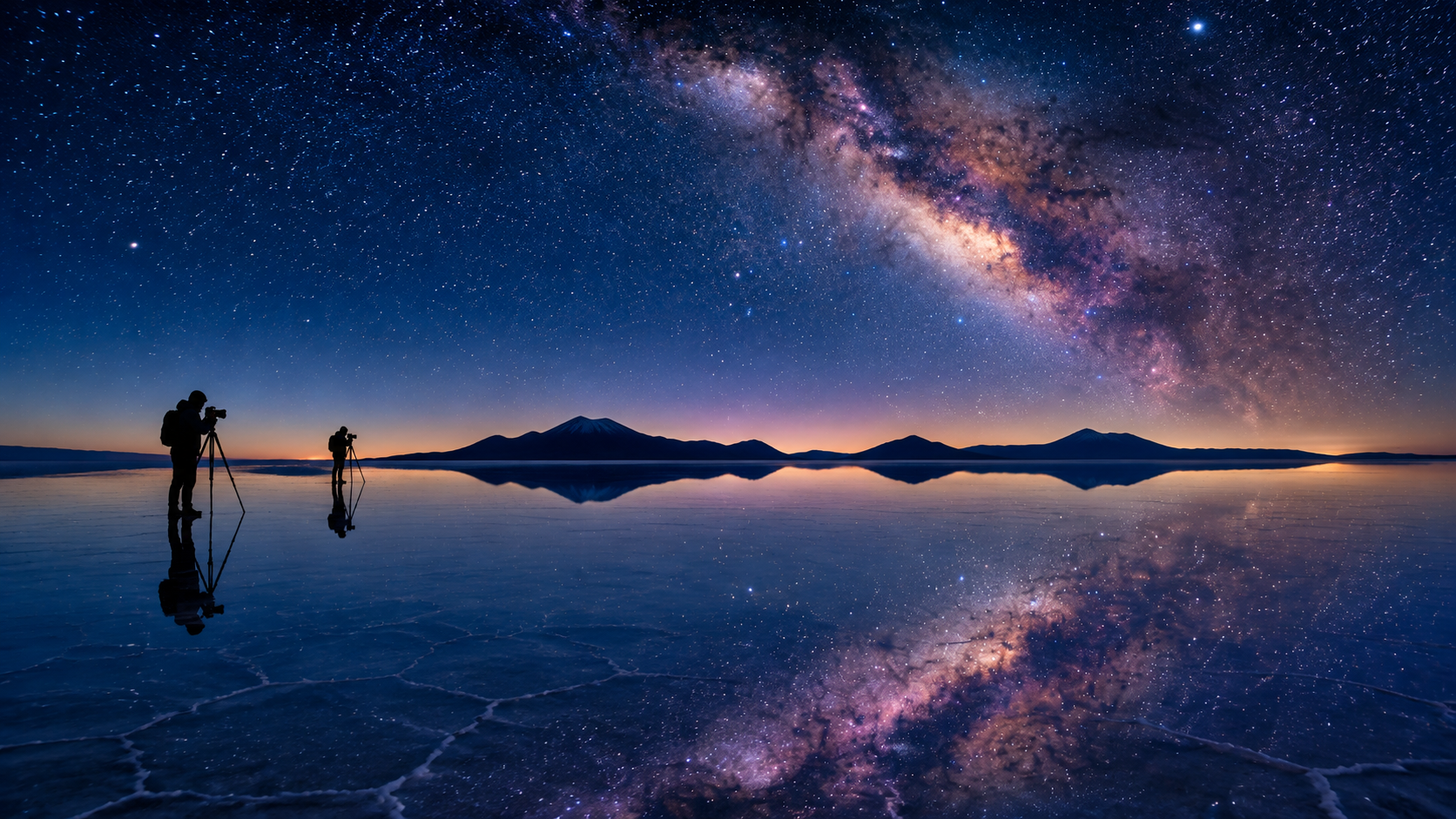
The region's remoteness is its defining feature. Cellular service is intermittent. Roads are tracks carved into salt or volcanic sand. Weather shifts without warning—blinding sun to sleet in minutes. Yet this isolation has preserved the landscape's starkness. No hotels punctuate the flat itself, only scattered salt-brick shelters. At night, the absence of light pollution renders the Milky Way in overwhelming detail, a ribbon of stars that makes the salt glow faintly silver.

When prehistoric Lake Minchin evaporated 40,000 years ago, it left behind a salt crust holding half the planet's lithium reserves.
Layered clothing is essential for a Salar de Uyuni tour due to fluctuating high-altitude temperatures. Include a windproof jacket, moisture-wicking base layers, and sturdy waterproof footwear.
There are no security screenings on the salt flats. Secure all valuables inside your 4WD vehicle and keep electronics in sealed cases to protect against salt corrosion.
Photography is unrestricted at the Salar de Uyuni. Use a wide-angle lens for perspective shots or a tripod for low-light astrophotography during your uyuni salt flats tour.
Family-friendly trips are possible, though children must be monitored near water zones. Ensure your chosen uyuni salt flats tour provides reliable, well-maintained 4WD transportation.
The salt flats are a natural, rugged environment without paved infrastructure. A 4WD vehicle is required for a safe uyuni salt flats tour across the uneven crust.
Carry at least 2 liters of water per person. Most multi-day uyuni salt flats tour packages include meals, but bringing snacks is recommended for long travel days.
Opening hours
00:00–23:59
Address
Salar de Uyuni, Daniel Campos Province, Potosí, Bolivia
Accessibility
No paved paths; 4WD access required over salt crust
Best arrival window
05:30–08:00
Storage
Keep belongings in 4WD vehicle; no facilities on salt flats
Official site
https://www.salardeuyuni.com
Bus · 8–10 hours · ~15–30 USD
Overnight transport from La Paz to Uyuni town.
Flight · 1 hour · ~100–150 USD
Direct air travel from La Paz to Uyuni airport.
Flexible cancellation terms depend on your specific operator. Entrance fees for sites like Incahuasi Island are fixed at 0 BOB for the flats themselves, though specific island entry may require local payment.
Recommended time
1 day
A typical uyuni salt flats tour encompasses a full day to allow for traversing the vast expanse and visiting distant landmarks. Securing uyuni salt flats tour tickets in advance is recommended to ensure your driver can navigate the terrain, while independent travelers should be aware that ground conditions can slow progress. Because of the scale of the Potosí landscape, crowd levels shift as groups follow similar routes between the mirror-effect basins and high-altitude cacti islands. Those seeking a uyuni salt flats tour tours experience often find that the best arrival window of 05:30–08:00 provides the calmest atmosphere before the daily excursion rush begins.
Crowd levels through the day
Weather · crowds · average price — dots go green to amber to red as each metric rises.
Wet season creates the famous mirror reflection effect.
Dry season provides firm crust for easier 4WD travel.
Ideal transition month with fewer crowds and clear skies.
Peak season with coldest nights but excellent visibility.
The solar radiation is extreme; always wear UV-rated sunglasses and heavy sunscreen during your uyuni salt flats tour.
The Salar de Uyuni formed roughly 40,000 years ago when Lago Minchin, a prehistoric lake covering much of the Altiplano, began to recede. By 10,000 BCE, a series of evaporative cycles had left behind a salt crust over 10 meters thick in places, interspersed with brine pools rich in lithium and magnesium. Indigenous Aymara and Quechua communities harvested blocks of salt from the edges of the flats for centuries, transporting them by llama caravan to distant markets. Commercial extraction began in earnest during the 1930s, when Bolivian entrepreneurs established cooperative operations near the village of Colchani. Workers cut salt bricks by hand, drying them in open-air yards before export. The Salar de Uyuni remained largely isolated from international attention until the Trans-Chaco railway brought surveying teams in the 1940s, though the line was never completed. In 1975, geologists confirmed that the brine beneath the crust held one of the world's largest lithium reserves, prompting feasibility studies that accelerated interest in uyuni salt flats tour itineraries. Tourism emerged slowly. The first organized tours launched in the mid-1980s, focused on the Train Cemetery outside Uyuni and day trips to the salt flats' western edge. Incahuasi Island, a volcanic outcrop covered in thousand-year-old cacti, became a designated stop in 1993. By the early 2000s, operators began scheduling sunrise departures to capture the mirror effect during the wet season, transforming the uyuni salt flats tours into a bucket-list phenomenon. Today, the flats draw over 300,000 visitors annually, while extraction cooperatives continue to harvest roughly 25,000 tons of salt each year, maintaining a balance between heritage industry and tourism infrastructure.
Lago Minchin begins evaporating, leaving behind the salt deposits that form the Salar de Uyuni
Evaporative cycles create a salt crust over 10 meters thick, rich in lithium and magnesium brine beneath
Commercial salt extraction begins near Colchani, with workers cutting and drying blocks by hand
Geologists confirm the salar holds one of the world's largest lithium reserves, spurring industrial and research interest
First organized uyuni salt flats tour operations launch, focusing on the Train Cemetery and western salt flat access
Incahuasi Island becomes an official tour stop, known for ancient cacti and panoramic views
Operators begin sunrise mirror-effect tours during wet season, establishing the route's international reputation
Over 300,000 visitors arrive annually; extraction cooperatives harvest 25,000 tons of salt per year
Stand on the rocky hiking trails for a high-angle view over the hexagonal salt patterns below. This location requires a separate entrance fee to explore the dense forest of giant Trichocereus cacti.
Position your camera low to the ground to capture the horizon blending with the sky on the thin layer of water. This is the ideal site to coordinate a professional uyuni salt flats tour for those seeking the perfect reflection shot.
Find the conical piles of harvested salt near the village entrance for a textured foreground contrast. Visitors often book uyuni salt flats tour tours to reach these mounds before the crowds arrive.
Capture the exterior of this historic structure built entirely from blocks of salt. It provides a unique architectural backdrop for any uyuni salt flats tour tour itinerary.
Frame the rusted locomotives against the vast, desolate desert horizon to highlight the industrial decay of the region. Many travelers secure uyuni salt flats tour tickets to access these abandoned tracks near the edge of the flats.
Real experiences from real travelers
We booked our uyuni salt flats tour for late February and caught the tail end of rainy season. The thin water layer across the salt created flawless reflections of the Andean sky. Our guide positioned us at three different locations for perspective photos and knew exactly where to find the clearest mirror surfaces. The scale of this place is difficult to process until you're standing in it.
The multi-day salt flat expedition covered Incahuasi Island, the train cemetery outside Uyuni town, and countless photo stops on the blinding white expanse. Sleeping in a salt hotel with walls constructed entirely from salt bricks was surreal. Our driver navigated the featureless terrain using distant volcanic peaks as reference points. Pack serious sun protection for the intense altiplano UV.
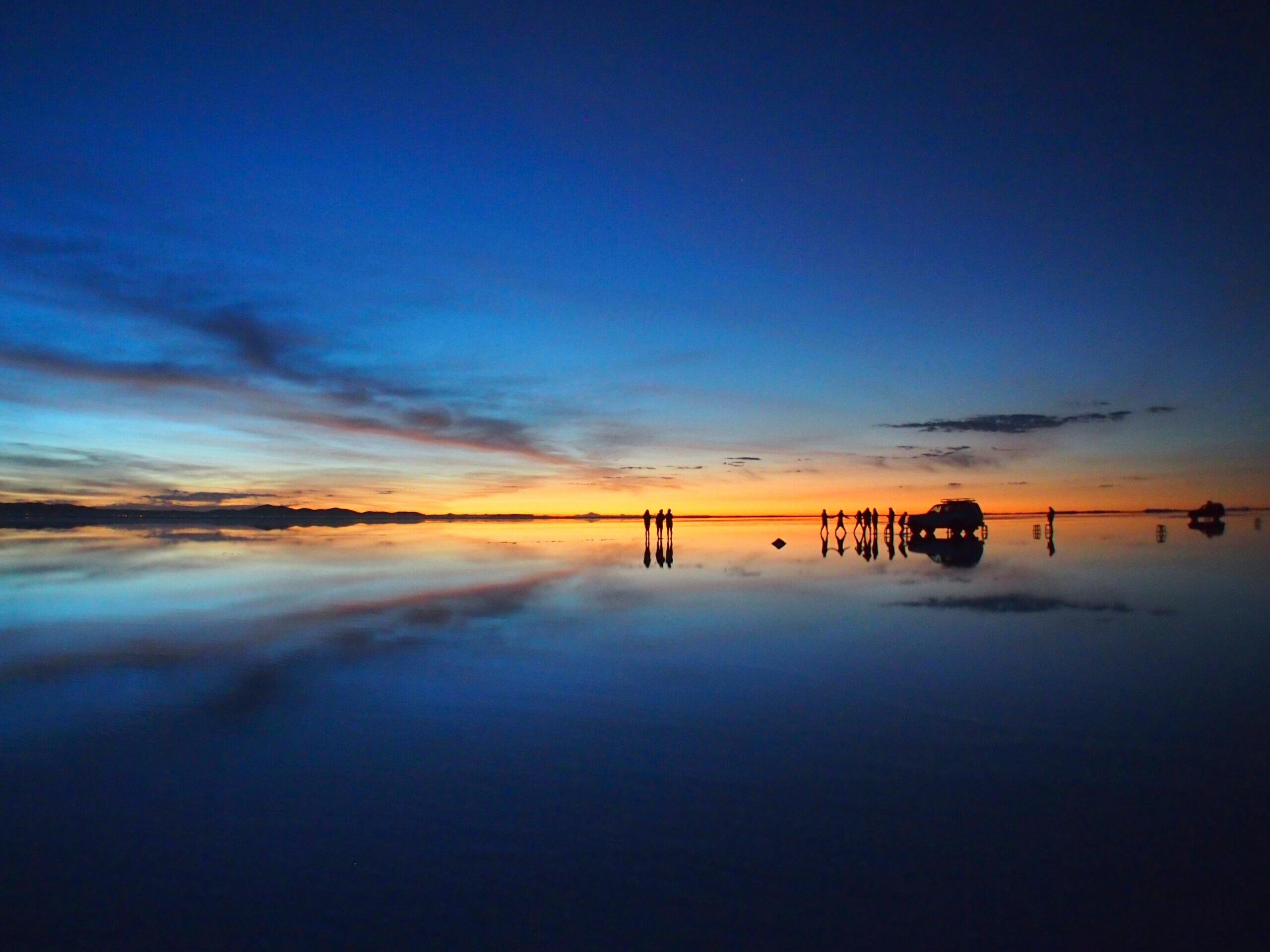
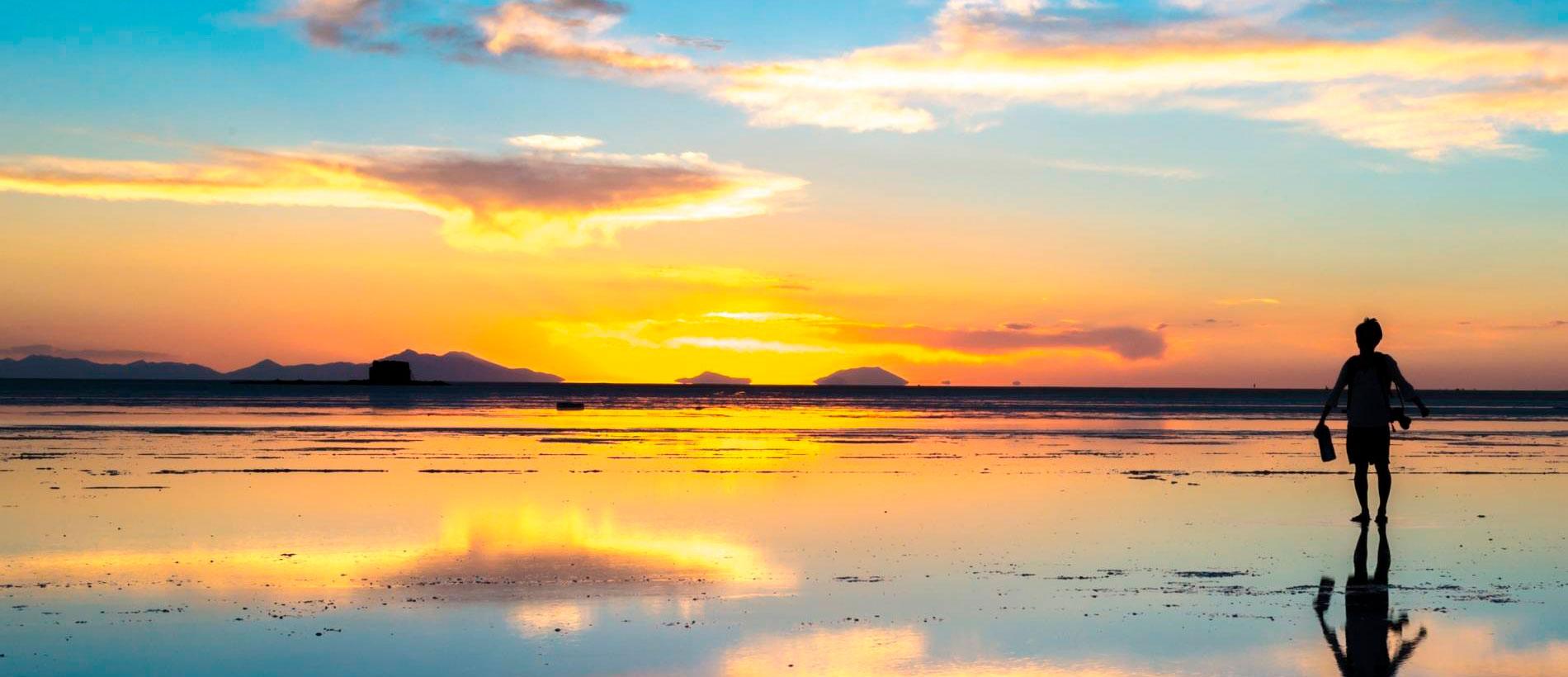
Watching sunset from the middle of Salar de Uyuni felt like floating in sky. The horizon disappeared as pink clouds reflected in standing water. We stayed after dark for astrophotography and the Milky Way appeared so bright it cast shadows on the salt crust. Cold at 3,656 meters elevation even in winter, but the thermal clothing our operator provided kept us comfortable during the three-hour night shoot.
Visited during dry season when the salt flats show their hexagonal polygon patterns instead of mirror reflections. The geometric formations stretched for 10,000 square kilometers of white crust. We drove to Tunupa volcano's base and hiked partway up for perspective over the massive flat expanse. No water meant no reflections, but the stark lunar landscape had its own alien beauty. The lack of crowds in July was a bonus.
Getting to Salar de Uyuni requires either a flight to Uyuni town or a long bus ride from La Paz, but the effort pays off immediately. Our guide explained how lithium extraction works alongside tourism in this region. The colored lagoons on the extended tour route—Laguna Colorada with its pink water and flamingos—added geological diversity. Altitude sickness hit two people in our group, so the acclimatization day in Uyuni was necessary.
The combination of uyuni salt flats tour itinerary elements—salt hotels, island cacti, flamingo lagoons, geysers—created variety beyond just the main salt flat. Our three-day route ended at the Chilean border near San Pedro de Atacama. The 4x4 convoy system meant mechanical problems didn't strand anyone. Bring cash for the basic refugio accommodations and entry fees. The dried llama meat our cook prepared was surprisingly good.
We specifically planned our trip for March after researching the best months for mirror reflections on the salt flats. The water depth was perfect—enough to reflect but not so deep it obscured the salt. Our photographer guide had a drone that captured our group from above, showing the seamless blend of sky and ground. The cactus-covered Incahuasi Island provided the only vertical relief in an otherwise horizontal world.
The sheer size of Salar de Uyuni makes you recalibrate your sense of distance and scale. What looks like a small hill turns out to be 30 kilometers away. Our guide's experience showed when he found spots for sunset where the salt crust's texture caught the light beautifully. The salt hotel stay felt gimmicky until I realized the walls actually regulate temperature well. Pack layers for 40-degree temperature swings between day and night.
Every uyuni salt flats tour operator promises good photos, but ours delivered by timing our stops for optimal light. The golden hour turns the white salt warm amber, and the blue hour creates ethereal twilight tones. We spent an entire afternoon at one location experimenting with forced perspective shots using props our guide provided. The train graveyard near Uyuni town made for atmospheric rust-and-metal compositions before we drove onto the main salt flat.
Our four-day route from Uyuni to San Pedro covered salt flats, high-altitude lagoons at 4,500 meters, and geothermal fields. The Toyota Land Cruisers handled the roadless terrain without issues. Shared accommodations were basic but adequate—more refuge than hotel. The cook somehow produced hot meals at altitude using portable stoves. Seeing vicuñas and Andean foxes in the remote southwestern corner of Bolivia added wildlife moments to the geological spectacle.
Everything you need to know for your journey
The Salar de Uyuni is accessible 24 hours a day, allowing for sunrise and sunset viewings. Your chosen operator will set the specific departure schedule for your tour.
The salt flats themselves are free to access (0 BOB), but specific sites like Incahuasi Island charge an entrance fee of 30 BOB.
The best arrival window is 05:30–08:00 to capture optimal sunrise lighting and the iconic mirror effect.
Yes, families are welcome, but ensure your uyuni salt flats tour provides safe, reliable 4WD transport for all participants.
Yes, photography is highly encouraged, though you should protect your equipment from aggressive salt corrosion during your uyuni salt flats tour.
Pack sunscreen, sunglasses, layers, water, and toilet paper for your uyuni salt flats tour.
Most travelers arrive by bus or flight in the town of Uyuni before taking a 4WD tour into the salt flats.
Yes, the Train Cemetery and Colchani village are common stops integrated into a typical uyuni salt flats tour itinerary.
Cancellation policies vary by operator; always check your specific booking terms for your uyuni salt flats tour tickets.
Yes, at 3,656m, altitude sickness can occur; take it slow and stay hydrated during your uyuni salt flats tour.
Abandoned historic trains near the edge of the flats.
Hotel constructed entirely from salt blocks.
Join thousands of happy travelers who have discovered this incredible experience
Book Your Experience Now