24 hr
Uyuni Salt Flats Full-Day Tour with Sunset
- Expert local guide
- Small group
- Skip-the-line access
- Free cancellation
Uyuni Salt Flats Tour 1 Day — Full-Day & Sunset Excursions
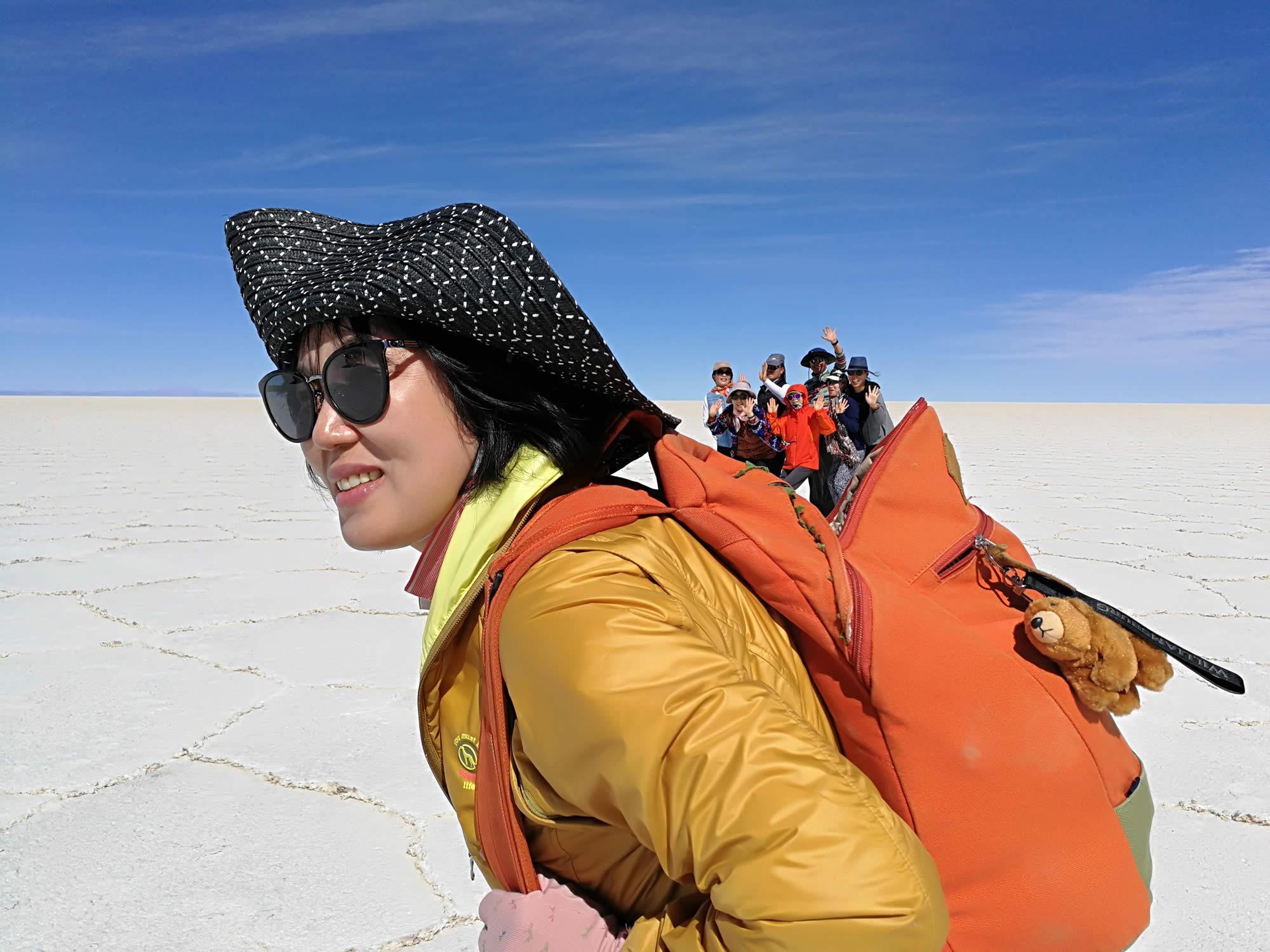
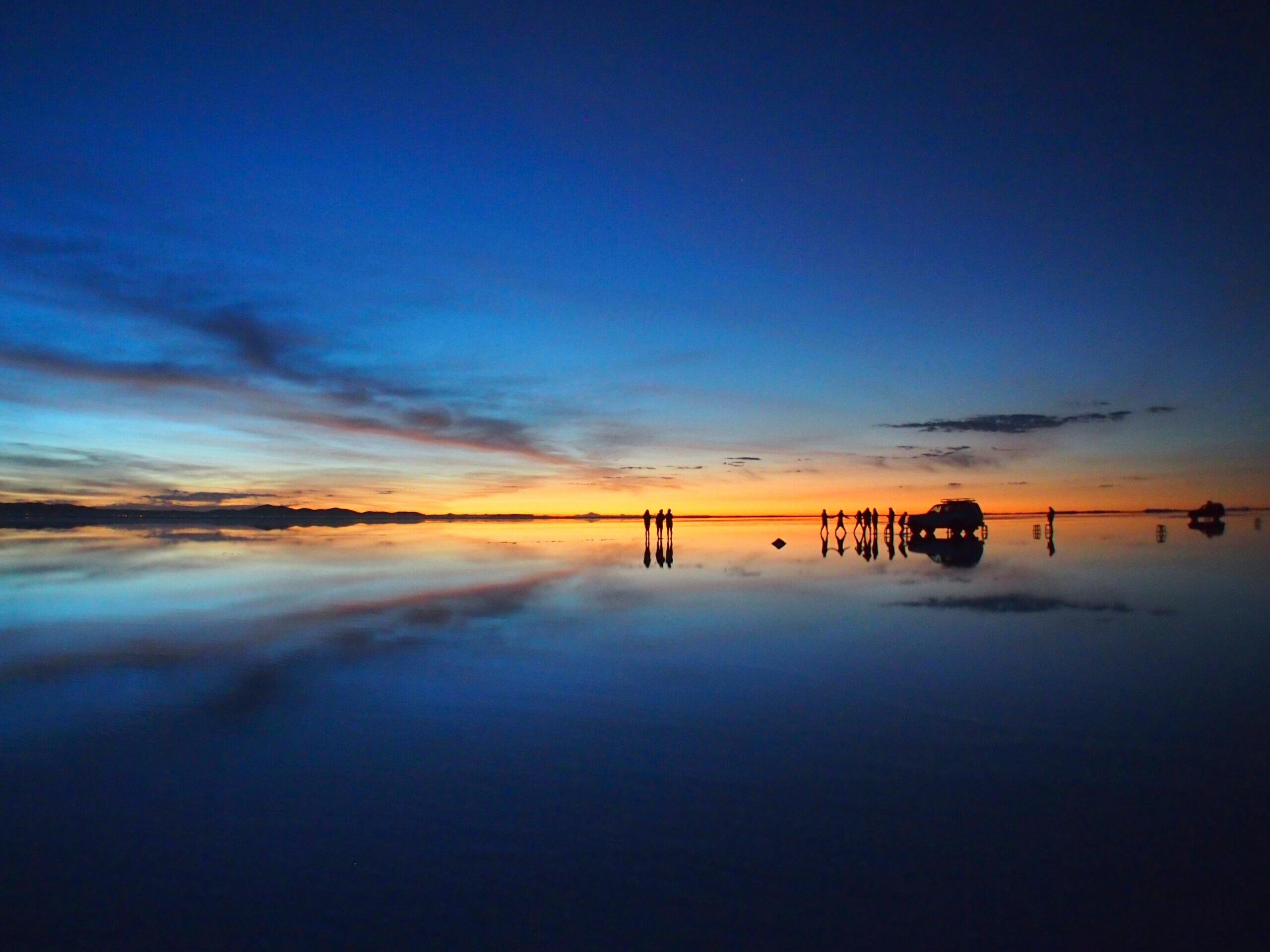
Endless white hexagons meet the Altiplano sky, mirror-still when fortune and season align.
Compare fares, pick the fit — all bookings are mobile-voucher and eligible for free cancellation where shown.
24 hr
4 hr
4 hr
Selecting the right uyuni salt flats tour 1 day requires balancing your interest in local photography with the need for flexible scheduling. These professional day trips offer curated access to the Salar de Uyuni landscape, providing a streamlined alternative to complex multi-day expeditions.
| Standard Group Tour Shared 4x4 Vehicle |
Top pick Private Sunset Tour Tailored Schedule |
|
|---|---|---|
| Duration | 8–10 hours | 9–10 hours |
| Group Size | Up to 6 passengers | Private/Exclusive |
| Sunset Access | Usually not included | Included guaranteed |
| Key Highlights | Train Cemetery, Salt Hotel, Incahuasi | Train Cemetery, Salt Hotel, Sunset |
| Best for | Budget-conscious travelers | Photography and privacy enthusiasts |
| See tickets & prices |
Verdict: For the best mirror reflection and golden hour light, prioritize a private uyuni salt flats tour 1 day ticket to ensure you remain on the flats during sunset.
Worth it for the otherworldly landscape alone
A uyuni salt flats tour 1 day delivers access to one of Earth's most surreal geological formations—over 10,000 square kilometers of hexagonal salt crusts, island outcrops dotted with giant cacti, and mirror-like surfaces during the wet season. The 30 BOB conservation fee is negligible; your main investment is the tour itself, which ranges from sunset-focused half-day options to full-day adventures with lunch and stargazing. The drive from Uyuni town takes roughly an hour, placing you on the blindingly white expanse by mid-morning. Full-day Salar de Uyuni tours maximize your time on the flats, covering the Incahuasi Island cactus forest, salt extraction sites, and perspective-play photo zones. Stargazing extensions capitalize on the flats' zero light pollution. The landscape justifies the travel commitment—this isn't a constructed attraction but a 40,000-year-old salt desert left by prehistoric lakes, unique in scale and visual impact.
Bottom line: The salt flats' sheer visual and geological singularity makes even a single-day commitment worthwhile for anyone willing to handle the altitude and distance.
The short visit is ideal for travelers on a tight schedule, whereas the multi-day trip offers a more comprehensive immersion into the Altiplano landscape.
|
Top pick 1-Day Tour |
3-Day Expedition | |
|---|---|---|
| Experience depth | Highland salt crust focus | Lagoon and desert circuit |
| Geographic reach | Salar de Uyuni core only | Regional Potosí landmarks |
| Physical demand | Minimal and relaxed | High altitude trekking |
| Logistical effort | Single day planning | Multi-day accommodation logistics |
| Sunset/Stargazing access | Limited to day trips | Overnight desert access |
| See tickets & prices |
Verdict: Select the uyuni salt flats tour 1 day tickets for a focused excursion, or opt for the longer expedition to explore the full breadth of this Andean plateau.
Hand-picked experiences loved by thousands of travelers
10 hours
Free Cancellation
Explore Bolivia's vast white desert by bike, watch sunset with wine, and stargaze under pristine skies
1 day
Free Cancellation
Explore Bolivia's stunning white desert by 4x4, visit cactus islands, and watch the sunset over endless salt
2 days
Free Cancellation
Journey across Bolivia's surreal white desert with overnight bus travel, guided exploration, and sunset wine
3 days
Free Cancellation
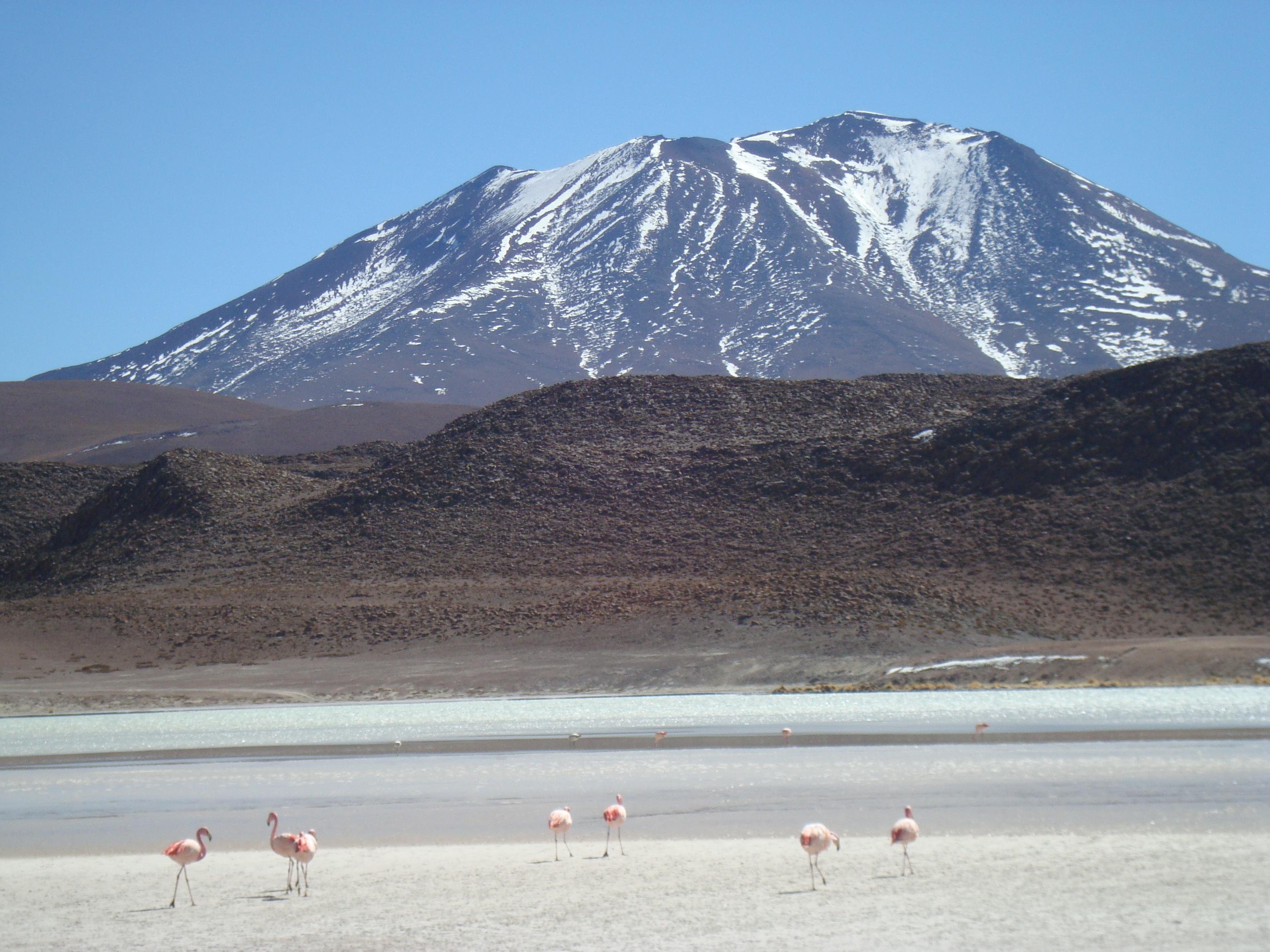
Journey across Bolivia's otherworldly salt desert, volcanic lagoons, and surreal high-altitude landscapes
3 days
Free Cancellation
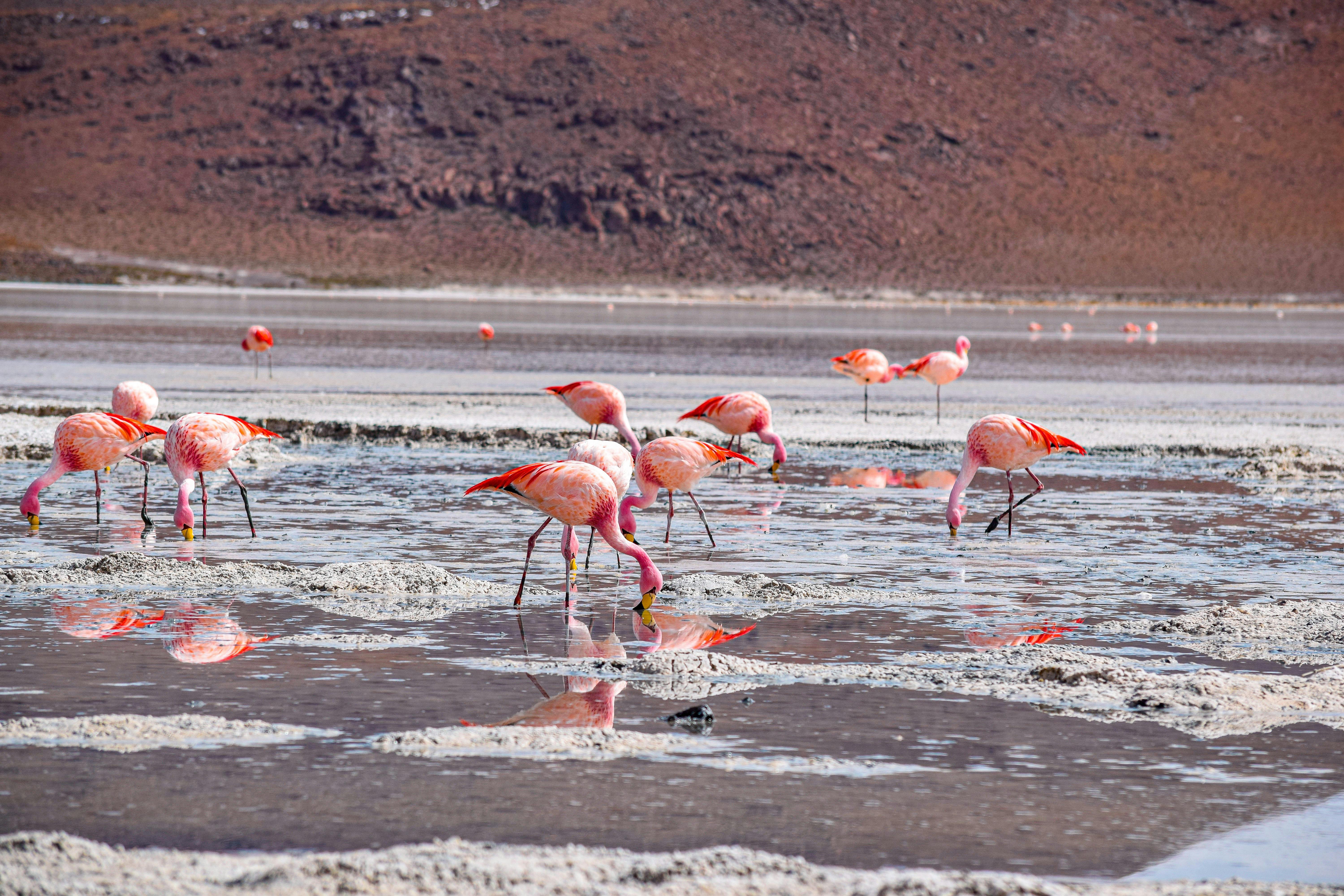
Journey through Bolivia's otherworldly deserts, flamingo-filled lagoons, and the vast Uyuni salt flats
1 day
Free Cancellation
Journey across Bolivia's stunning white desert, explore Incahuasi Island, and toast the sunset over endless salt
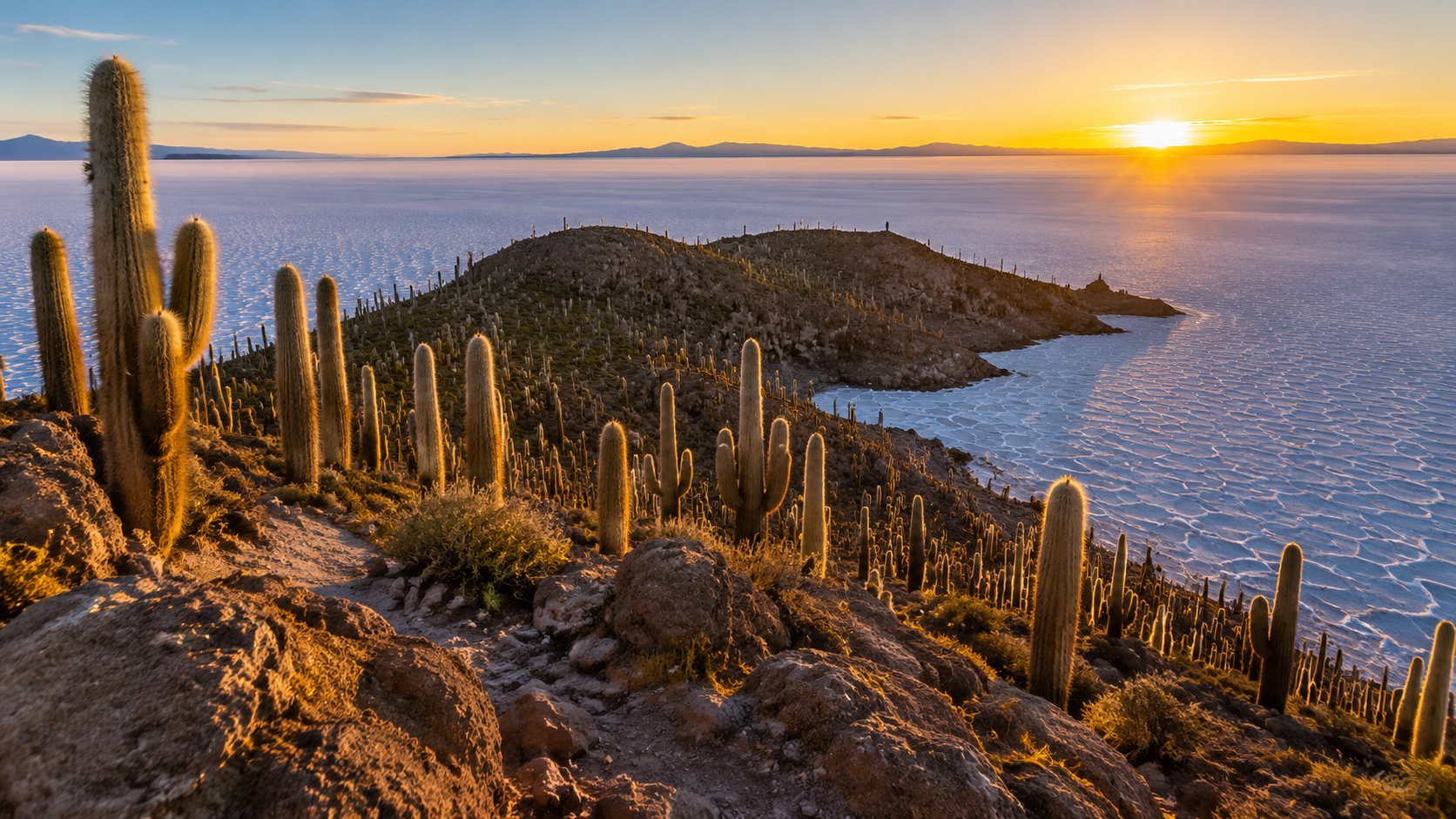
An island in the middle of the salt flats covered in centuries-old giant cacti that grow just one centimeter per year.
A historical site featuring rusted 19th-century steam locomotives that once served the mining industry in the region.
A local settlement where you can observe traditional salt extraction and processing methods used by the community.
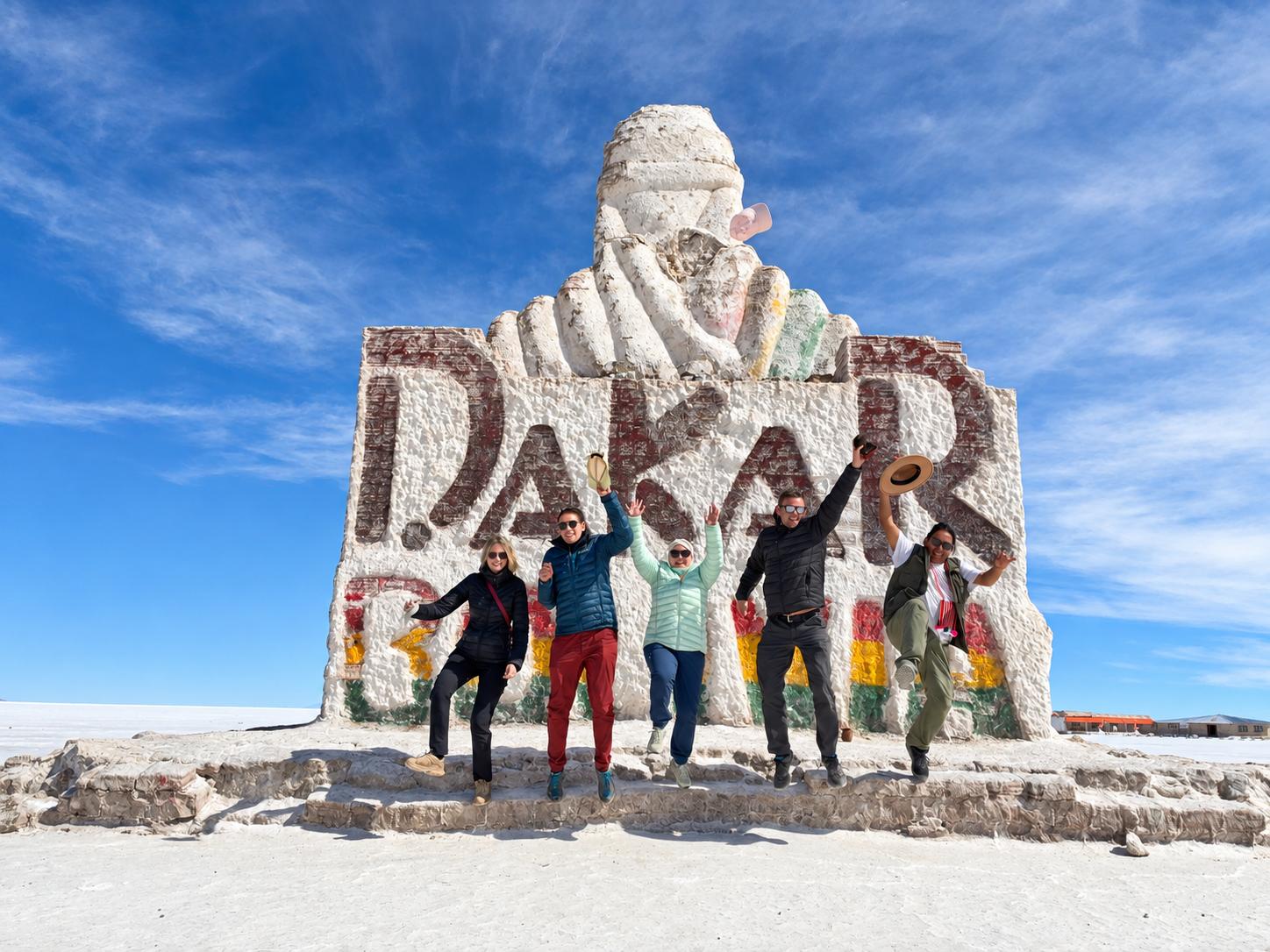
A landmark commemorating the famous rally race that has traversed the salt flats, perfect for iconic photos.
Unique structures constructed entirely from salt blocks, showcasing the ingenuity of local architecture in the Salar de Uyuni.
You leave Uyuni before sunrise, when the Altiplano cold sits heavy and the town's street dogs still sleep in doorways. The 4x4 cuts southwest across compacted earth until the first white expanse opens ahead, flat and uninterrupted to the horizon line.
Your guide stops at the train cemetery, where British and Chilean locomotives rest on tracks that led nowhere after the mining collapse of the 1940s, their iron shells rusted to lace by a century of salt wind.
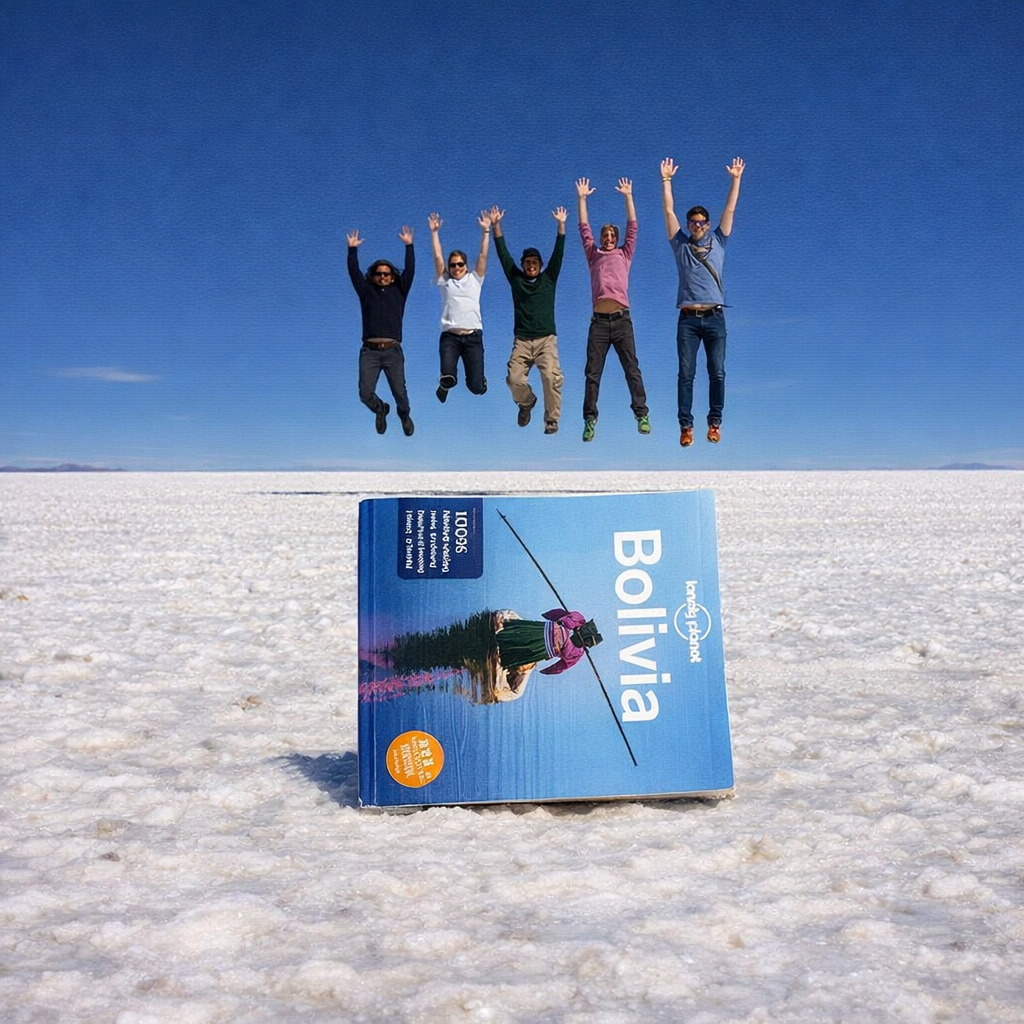
The vehicle accelerates onto the Salar itself, and the crunch of the salt crust replaces engine noise as the only sound. You pause at Colchani, where families shovel wet salt into conical piles and the air tastes of brine. Incahuasi Island rises 20 minutes later, a volcanic outcrop whose giant cacti mark decades in centimetres. You climb the footpath to the summit, 3,700 metres above sea level, and the Salar spreads white in every direction, the Andes a faint saw-edge to the south. Lunch is served on the salt itself, the folding table and chairs arranged for photographs that collapse perspective into optical tricks. The return leg times the sun's descent, the low light turning the crust gold, then rose, then violet as the first stars emerge and the temperature drops 15 degrees in an hour.
All the details about your upcoming adventure in one place
The Salar de Uyuni holds 10 billion tonnes of lithium beneath a crust that refills itself each rainy season, transforming the world's largest salt flat into a 10,582-square-kilometre mirror when conditions align between December and April.
Formed when prehistoric Lake Minchin evaporated roughly 40,000 years ago, the basin sits at 3,656 metres above sea level on Bolivia's Altiplano, leaving behind a salt layer averaging 10 metres thick and reaching 120 metres at its deepest point. The Incas harvested salt here centuries before Spanish colonisers mapped the region, and local Aymara communities continue to extract an estimated 25,000 tonnes annually using hand tools and the same evaporation ponds their ancestors carved into the crust.
Today the Salar anchors Bolivia's emerging lithium economy while drawing visitors to a landscape so geometrically flat that NASA uses satellite imagery of its hexagonal salt polygons to calibrate orbiting instruments. The 30-boliviano conservation fee supports maintenance of access roads and the protection of three island outcrops — Incahuasi, Pescado, and Cujiri — each studded with thousand-year-old Trichocerus cacti that grow at a rate of one centimetre per year. Uyuni salt flats tour 1 day itineraries traverse the white expanse to these volcanic formations, where fossilised coral confirms the basin's aquatic past and panoramic sightlines extend unbroken to the Andes.
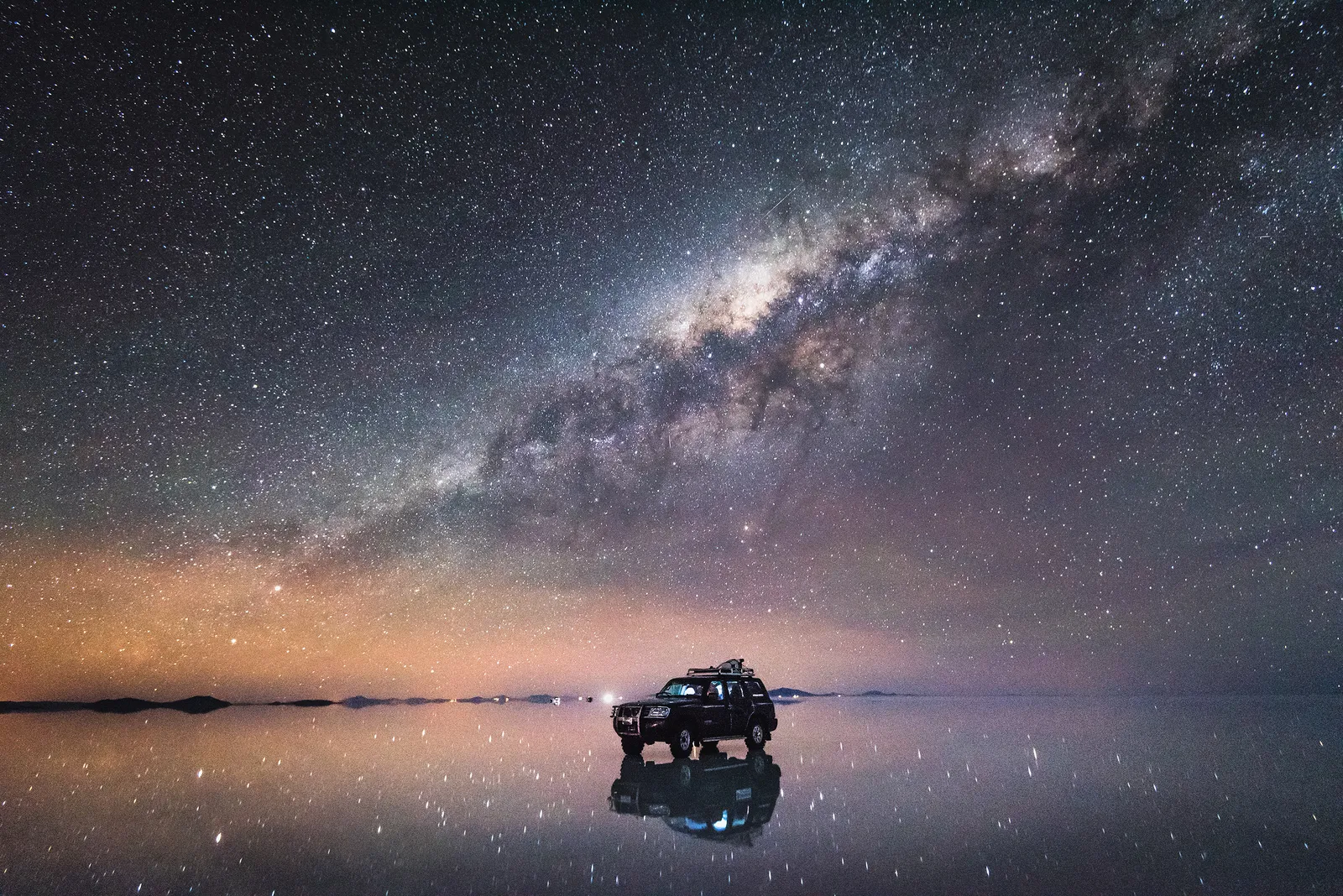
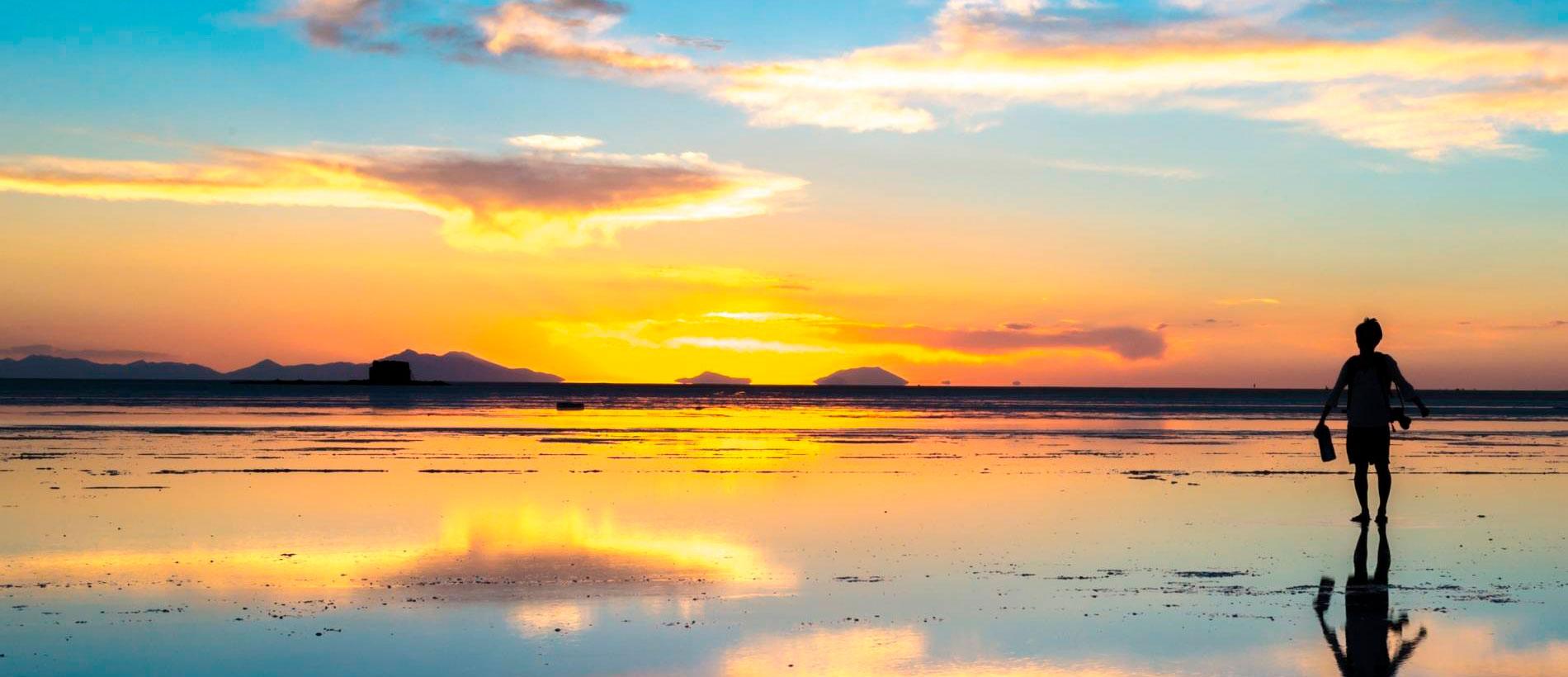
The town of Uyuni, 25 kilometres east of the Salar's edge, serves as the departure point for full-day excursions that depart between dawn and mid-morning. Operators navigate the featureless crust using GPS and the faint tracks left by previous vehicles, stopping at the Dakar Rally monuments, the train cemetery of rusting 19th-century locomotives, and the salt-brick Palacio de Sal hotel. Sunset departures time arrivals to the golden hour, when the low sun turns the white plain amber and the absence of atmospheric interference produces visibility exceeding 100 kilometres. Stargazing extensions capitalise on the Salar's status as one of the Southern Hemisphere's darkest sites, with the Milky Way's core visible to the naked eye and no light pollution within 80 kilometres. The conservation fee remains the only mandated charge; tour operators bundle transport, meals, and guide services at rates that reflect vehicle type, group size, and the inclusion of neighbouring lagoons or Eduardo Avaroa Reserve segments.

The hexagonal salt polygons are so geometrically precise that NASA uses them to calibrate orbiting instruments.
Dress in layers to adapt to extreme temperature fluctuations on your uyuni salt flats tour 1 day. Thermal base layers, windbreakers, and hats are recommended for winter months, while waterproof footwear is necessary during the wet season.
Keep all essential documents in a waterproof bag during your uyuni salt flats tour 1 day. Security checkpoints may require identification, so ensure your passport is accessible but protected from salt and water exposure.
Prepare your gear for bright, reflective conditions on a uyuni salt flats tour 1 day. Using circular polarizers helps manage glare from the white surface, while extra batteries are vital as cold temperatures drain power quickly.
A uyuni salt flats tour 1 day can be suitable for families, though children should be prepared for long hours in a 4x4 vehicle. Ensure you carry sufficient water and snacks to manage altitude-related health needs for younger participants.
The salt flats present challenges for mobility, as the terrain is rugged and largely unpaved. Please consult your tour operator regarding specific needs for a uyuni salt flats tour 1 day to determine if vehicles can accommodate your requirements.
Most operators include lunch during your uyuni salt flats tour 1 day, often featuring local ingredients. Stay well-hydrated to mitigate the effects of high altitude and the dry climate of the Salar de Uyuni.
Opening hours
Daily 00:00–23:59
Address
Salar de Uyuni, Daniel Campos Province, Potosí, Bolivia
Accessibility
Remote terrain requires 4x4 vehicles
Arrival
05:30–08:00 for optimal light
Official site
https://www.salardeuyuni.com
Cancellation policies for a uyuni salt flats tour 1 day vary by operator; confirm specific refund windows upon booking. The 30 BOB conservation fee for foreign adult visitors is typically non-refundable as it is paid to local authorities.
Recommended time
10-12 hours
A typical uyuni salt flats tour 1 day covers the vast expanse of the Salar, requiring a full day to traverse the horizon and reach significant landmarks. While early morning arrivals offer solitude at the white crust, crowds peak midday when 4x4 vehicles congregate for lunch and perspective photography. Opting for a private Salar de Uyuni excursion allows more flexibility, though group uyuni salt flats tour 1 day tours follow structured paths that lead to higher congestion during the afternoon. Visitors requiring extra time for long-exposure photography or detailed geological observation may find that standard uyuni salt flats tour 1 day tickets often prioritize efficiency over extended exploration.
Crowd levels through the day
The Salar de Uyuni formed roughly 40,000 years ago when prehistoric lakes—Minchin, Tauca, and Coipasa—evaporated across the Altiplano, leaving behind a 10,582-square-kilometer crust of salt averaging two to twenty meters thick. Indigenous Aymara communities harvested salt from its surface for centuries, using llama caravans to transport blocks to highland markets. Spanish colonial records from the 1540s mention the vast salares but dismissed them as economically worthless compared to Potosí's silver veins fifty kilometers east. Modern interest began in 1888 when German geologist Alphons Stübel documented the salt flat's lithium-rich brines, though extraction technology lagged until the mid-twentieth century. The Ferrocarril de Antofagasta a Bolivia railway reached Uyuni town in 1889, establishing a logistical hub that would later anchor uyuni salt flats tour 1 day operations. Train cemetery ruins two kilometers west—rusting British locomotives abandoned in the 1940s when mining traffic declined—became an unplanned tourist prelude. By 1967 the Bolivian government declared the salar a protected geological reserve under Daniel Campos Province administration. Commercial tourism emerged slowly in the 1980s as overlanders traveling the gringo trail detoured for day excursions. The first organized uyuni salt flats tour 1 day tickets appeared circa 1992 when local cooperatives purchased surplus Toyota Land Cruisers. Infrastructure remained sparse—no paved roads, no visitor centers—but mirror-effect photographs during January–April rainy seasons began circulating through backpacker networks. The Dakar Rally's 2014 and 2015 routes crossed the salar, triggering a tenfold increase in international bookings. Today over 300,000 annual visitors generate pressure that conservationists balance against the 30-boliviano entrance fee introduced in 2018 to fund surface restoration near Incahuasi Island, where tourist footfall erodes fragile cactus ecosystems.
Prehistoric lakes Minchin, Tauca, and Coipasa evaporate, depositing salt crust across the Altiplano plateau
Spanish colonists document the salt flats but prioritize nearby Potosí silver mines over undeveloped salares
German geologist Alphons Stübel records lithium concentrations in brine, decades before extraction becomes viable
Railway reaches Uyuni town, establishing transport infrastructure that later supports the tourism industry
Bolivian government designates Salar de Uyuni a protected geological reserve under provincial management
Local cooperatives launch the first organized day-tour services using reconditioned Land Cruiser fleets
Dakar Rally routes crossing the salt flats trigger exponential growth in international visitor numbers
Conservation entrance fee instituted to counter erosion damage from increasing foot traffic near Incahuasi Island
Climb the trail to the summit for a 360-degree view of the hexagonal salt crust patterns and giant cacti.
Position your camera low to the ground for perspective-distorting shots during your uyuni salt flats tour 1 day.
Capture the bubbling salt springs that create dark, circular contrasts against the bright white landscape.
Find the conical piles of harvested salt near the village entrance for a textured foreground element.
Photograph the exterior of this former hotel structure which is now an iconic monument featuring flag displays.
Exploring the vast white expanse of the Salar de Uyuni salt flats with children is a unique adventure, but success relies on careful acclimatization and selecting a private excursion. An uyuni salt flats tour 1 day offers a manageable way to see the iconic landscape without the multi-day commitment of longer expeditions.
The salt terrain is entirely natural and uneven, making strollers impractical for this Bolivian landmark; plan to carry infants or ensure children are steady walkers.
For families with younger children, booking a private uyuni salt flats tour 1 day allows you to set your own pace and skip more strenuous stops.
At 3,656 meters, altitude sickness is a real concern; prioritize a slow ascent through lower-altitude towns like Sucre before your uyuni salt flats tour 1 day tickets are scheduled.
The train cemetery provides a fun, tactile stop where older kids enjoy climbing on retired machinery, though always supervise them near rusted edges.
Pack layers for the harsh, fluctuating temperatures and ensure you have sufficient water to combat the extreme dryness of this high-altitude environment.
Most visitors on a uyuni salt flats tour 1 day rely on pre-arranged meals, as there are no public dining venues directly on the flats. You will find a variety of local cafes and tourist-friendly restaurants in the town of Uyuni to fuel up before or after your excursion.
A popular spot for wood-fired pizzas, offering a reliable atmosphere and gluten-free choices before or after your salt flats journey.
Located within Palacio de Sal on the edge of the flats, this venue specializes in local Andean ingredients like llama and quinoa.
$
A small, casual spot in the tourist area serving traditional Bolivian dishes, hearty breakfasts, and occasional international staples.
A simple, welcoming room in town known for its unique quinoa-flour pizzas prepared fresh in front of diners.
Everything you need to know for your journey
The Salar de Uyuni is accessible 24 hours a day, allowing for sunrise and sunset viewings during your tour.
The cost for a uyuni salt flats tour 1 day is set by individual tour operators, typically covering transport, a guide, and meals.
Yes, there is a mandatory 30 BOB conservation fee for each foreign adult visitor, which is often not included in tour prices.
For optimal light and potential mirror reflections, the best arrival window is 05:30–08:00 for your uyuni salt flats tour 1 day.
Due to the vast and remote nature of the terrain, an organized 4x4 tour is strongly recommended instead of independent travel.
Yes, families can join a uyuni salt flats tour 1 day, provided they are prepared for long vehicle journeys and high-altitude conditions.
Bring sunscreen, sunglasses, lip moisturizer, waterproof boots, and layers to stay comfortable throughout your uyuni salt flats tour 1 day.
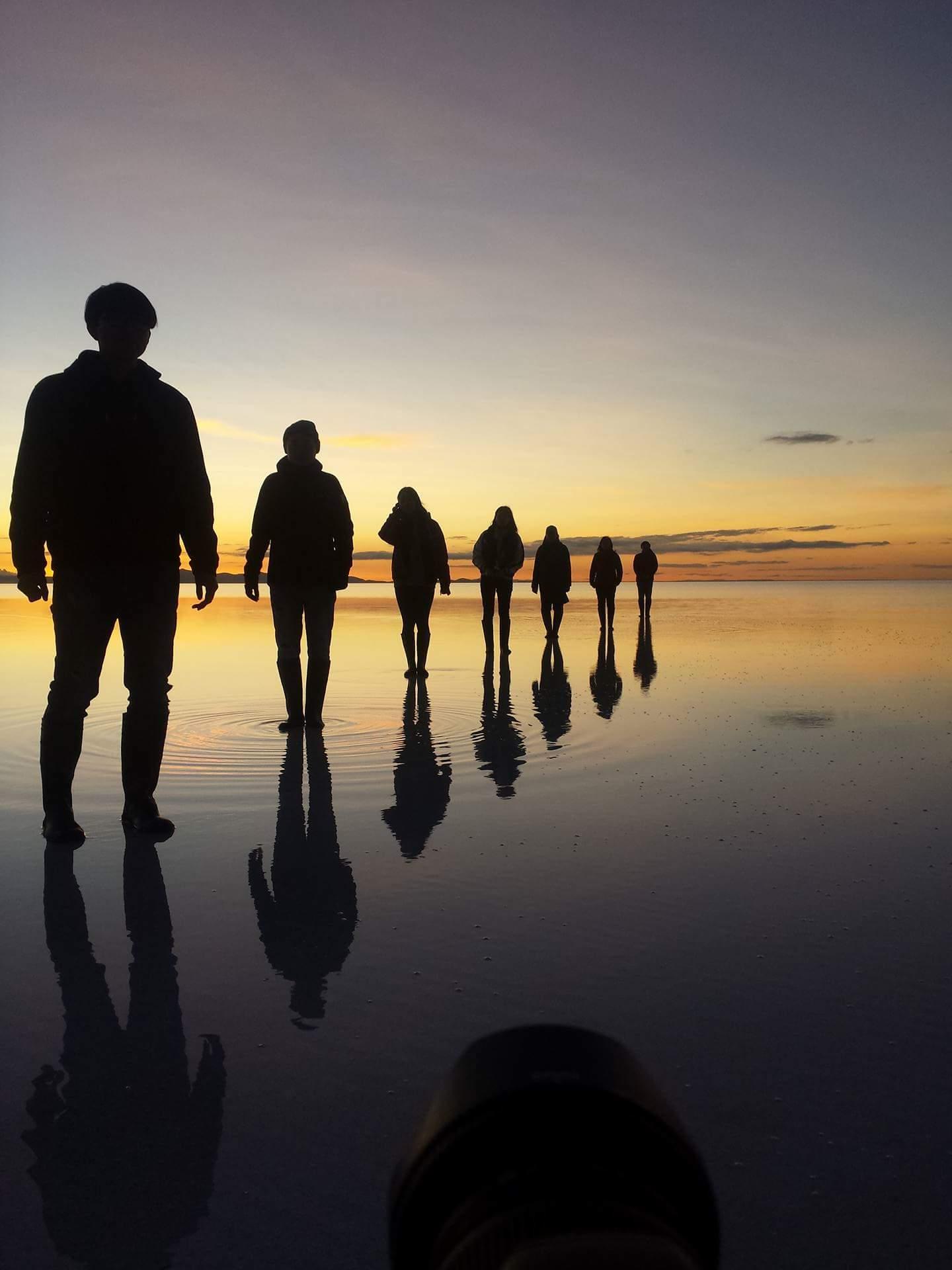
The mirror effect is weather-dependent and most likely to occur during the rainy season from December to April.
Yes, items like unpermitted drones and pollutants are prohibited to protect the environment of the Salar de Uyuni.
Stay hydrated, eat lightly, and consult your doctor before your uyuni salt flats tour 1 day to help your body adjust to the 3,656m elevation.
Join thousands of happy travelers who have discovered this incredible experience
Book Your Experience Now