72 hr
Three-Day Uyuni Salt Flats to San Pedro de Atacama
- Expert local guide
- Small group
- Skip-the-line access
- Free cancellation
Uyuni Salt Flats — Three-Day Expeditions to the Atacama
Cross the world's largest salt desert, sleep beside Andean lagoons under crystalline skies
Compare fares, pick the fit — all bookings are mobile-voucher and eligible for free cancellation where shown.
72 hr
72 hr
72 hr
Selecting the right uyuni salt flats tour 3 days depends on your preference for social interaction versus personalized travel. Choosing the correct tour tier ensures you experience this iconic Bolivian landmark with the appropriate level of comfort and flexibility.
|
Top pick Shared Group Tour Social Adventure |
Private Expedition Tailored Comfort | |
|---|---|---|
| Transport Type | Shared 4x4 Jeep | Private 4x4 Vehicle |
| Group Size | Max 6 travelers | Exclusive (your party) |
| Itinerary | Fixed route | Customizable timing |
| Accommodation | Basic salt hostels | Select hotel or glamping |
| Conservation Fee | 30 BOB paid at checkpoints | 30 BOB paid at checkpoints |
| Best for | Budget-conscious adventurers | Private groups and photographers |
| See tickets & prices |
Verdict: For the best balance of value and experience, most first-time visitors prefer a shared uyuni salt flats tour 3 days tour for their journey.
Worth it for scenery seekers and cross-border travelers
A uyuni salt flats tour 3 days delivers exceptional value if your goal is immersive high-altitude landscapes and a seamless Bolivia-Chile crossing. The itineraries above range from shared group departures to private expeditions, all including accommodation in basic salt-block hostels, meals, and transport across the Salar de Uyuni, Laguna Colorada, and the Siloli Desert. You'll cover roughly 800 kilometers through Andean lagoons, geysers, and flamingo habitats before arriving in San Pedro de Atacama. Group tours prioritize affordability and fixed schedules; private options add flexibility and comfort for couples or small parties. The 30 BOB conservation fee applies at entry checkpoints. Shared bathroom facilities and long driving days are standard trade-offs. Multi-day uyuni salt flats tour 3 days tours justify the investment for photographers chasing sunrise mirror effects and travelers who value cross-border logistics bundled into one package. Budget backpackers and luxury seekers may find the mid-range accommodation limiting.
Bottom line: The three-day format maximizes scenery per dollar for those willing to trade comfort for comprehensive Altiplano access.
These options complement each other; most visitors who do both call the 3-day itinerary the more complete adventure. While the short route focuses on the mirror-like salt pans, the longer tour acts as a gateway to the broader Andean landscape.
|
Top pick 3-Day Tour |
1-Day Tour | |
|---|---|---|
| Duration | 3 days (2 nights) | 10–12 hours |
| Primary Focus | Altiplano region and salt flats | Salar de Uyuni salt flats |
| Accommodation | Basic mountain hostels | None (return to town) |
| Altitude Intensity | High (up to 4,900 m) | Moderate (3,650 m) |
| Price Range | 150–400 USD | 59–120 USD |
| Transport | Shared 4x4 vehicle | Shared 4x4 vehicle |
| See tickets & prices |
Verdict: Choose the 3-day tour if you want to experience the full geyser and lagoon region, or the 1-day tour if you are strictly limited by time or comfort.
Hand-picked experiences loved by thousands of travelers
3 days
Free Cancellation
Journey across Bolivia's stunning Altiplano to Chile, visiting salt flats, volcanic lagoons, and geysers
3 days
Free Cancellation
Journey across Bolivia's white salt desert, volcanic landscapes, and flamingo-filled lagoons on this unforgettable highland expedition
3 days
Free Cancellation
Journey across Bolivia's iconic white expanse with overnight bus travel, island exploration, and desert wonders
3 days
Free Cancellation
Journey across Bolivia's surreal salt desert, volcanic lagoons, and geothermal fields with meals and lodging
3 days
Free Cancellation
Journey to the world's largest salt desert with VIP overnight buses and a full-day guided exploration
3 days
Free Cancellation
Journey across Bolivia's vast white desert, volcanic lagoons, and geothermal wonders on this immersive expedition
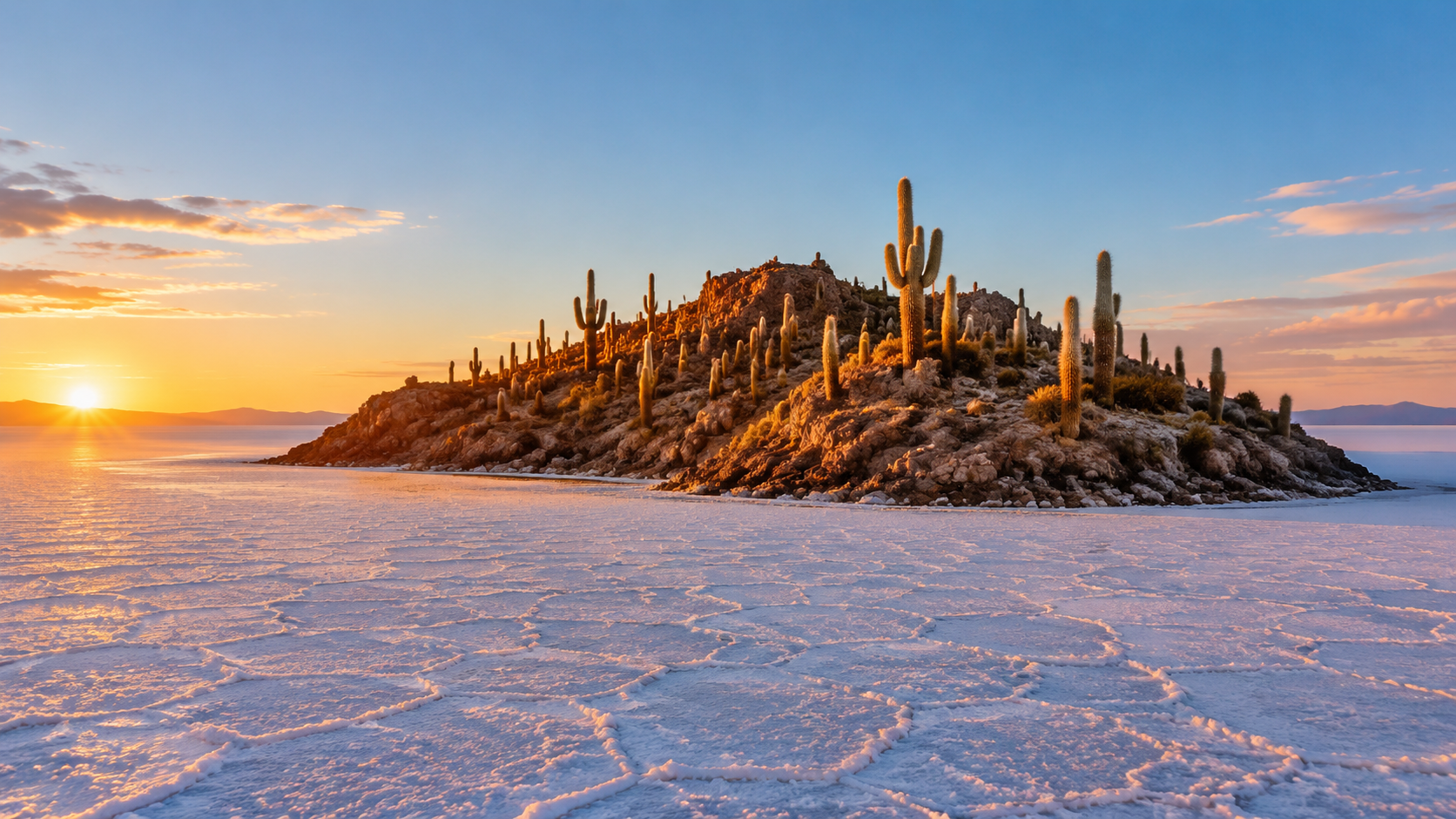
This rocky outcrop in the center of the Salar de Uyuni features 1,000-year-old cacti reaching 10 meters high. Accessing the top provides panoramic views of the salt desert.
Located near the edge of the Salar de Uyuni, this site displays 19th-century steam locomotives left to rust in the high-altitude air.
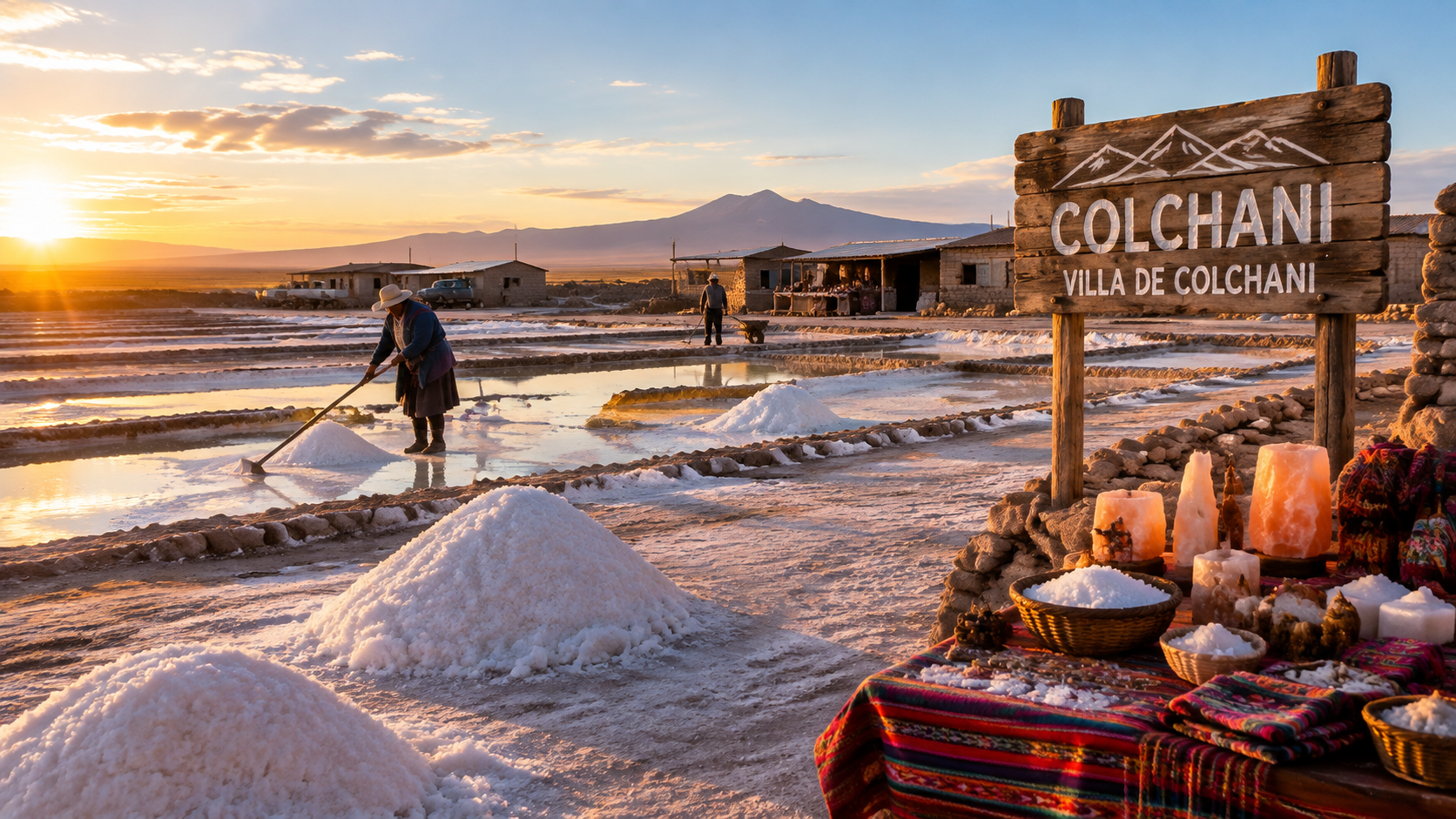
A gateway to the Salar de Uyuni where local families process salt using traditional methods. Visitors can purchase artisan salt carvings.
A vast area surrounding the Salar de Uyuni containing multicolored lagoons, geysers, and unique geothermal rock formations.
A natural rock formation sculpted by wind erosion in the desert plains surrounding the Salar de Uyuni.
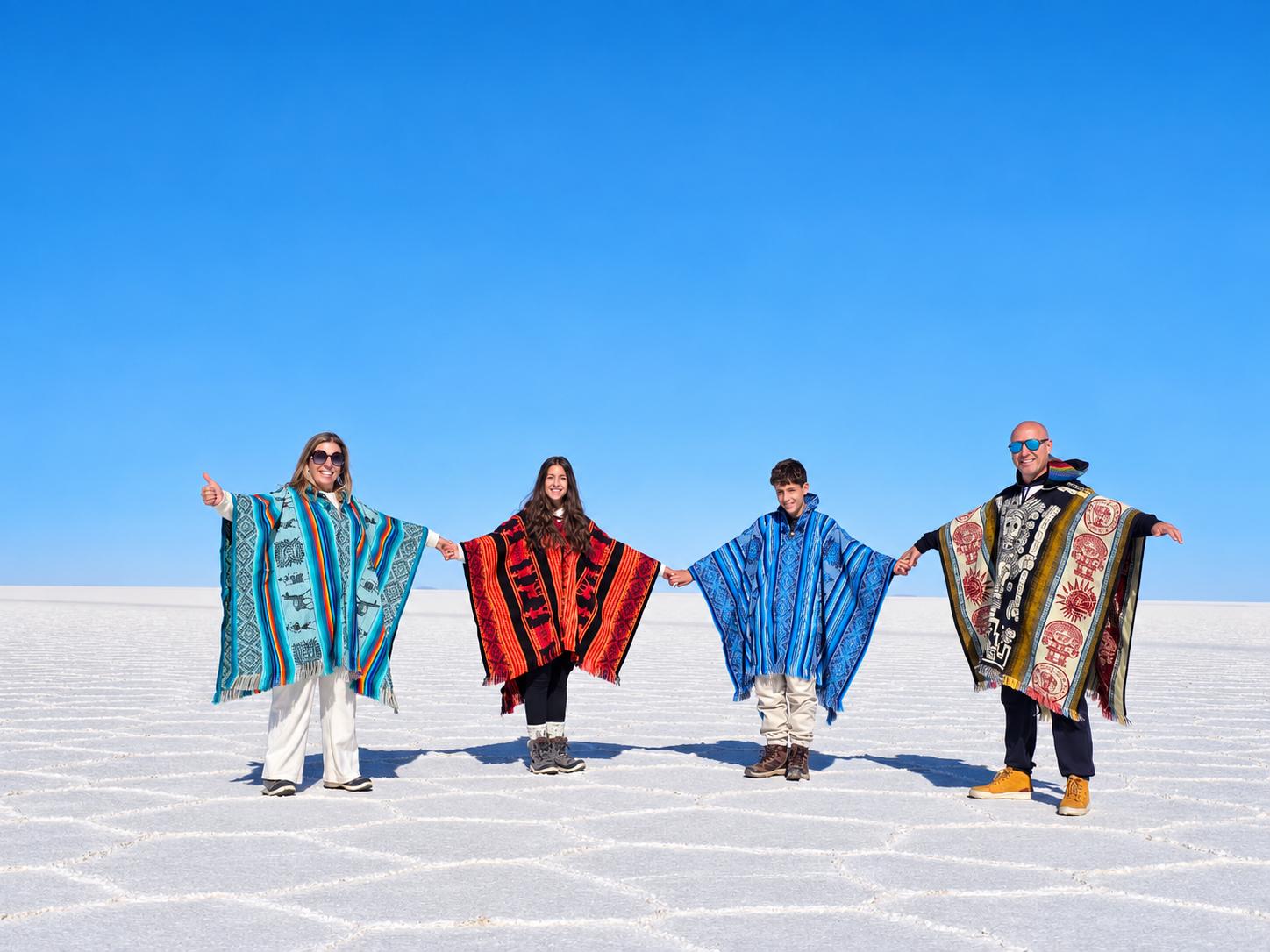
You leave Uyuni before dawn, and by the time the sun clears the eastern ridge, your vehicle has rolled onto the white expanse, salt crunching beneath the tyres. The driver stops where the crust holds firm, and you step out into silence—no trees, no buildings, only the flat geometry of evaporite and sky.
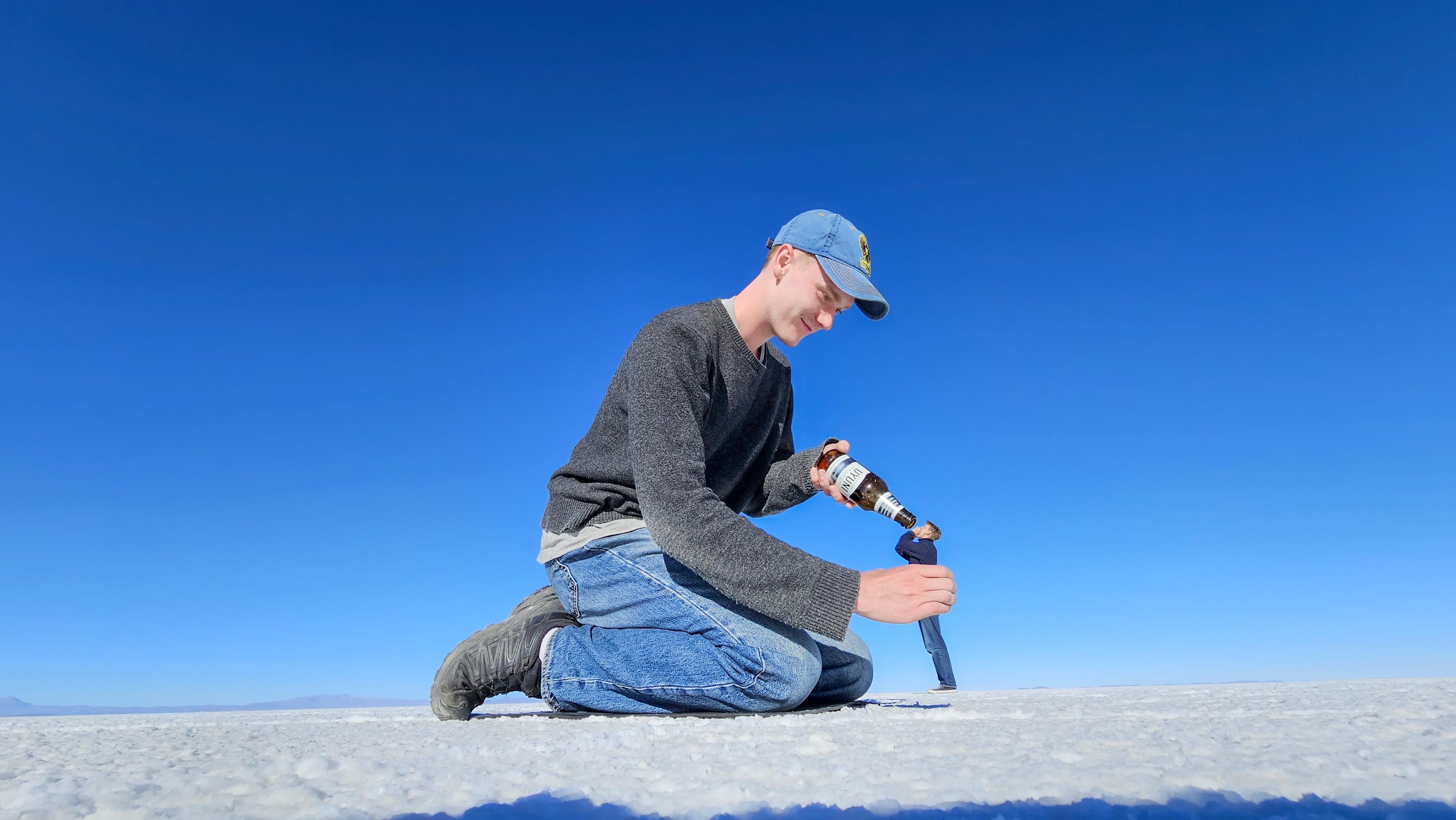
Perspective collapses. A figure two hundred metres away appears to float. You photograph the optical tricks, then continue to Incahuasi Island, where thousand-year-old cacti rise from a limestone outcrop in the salt's centre.
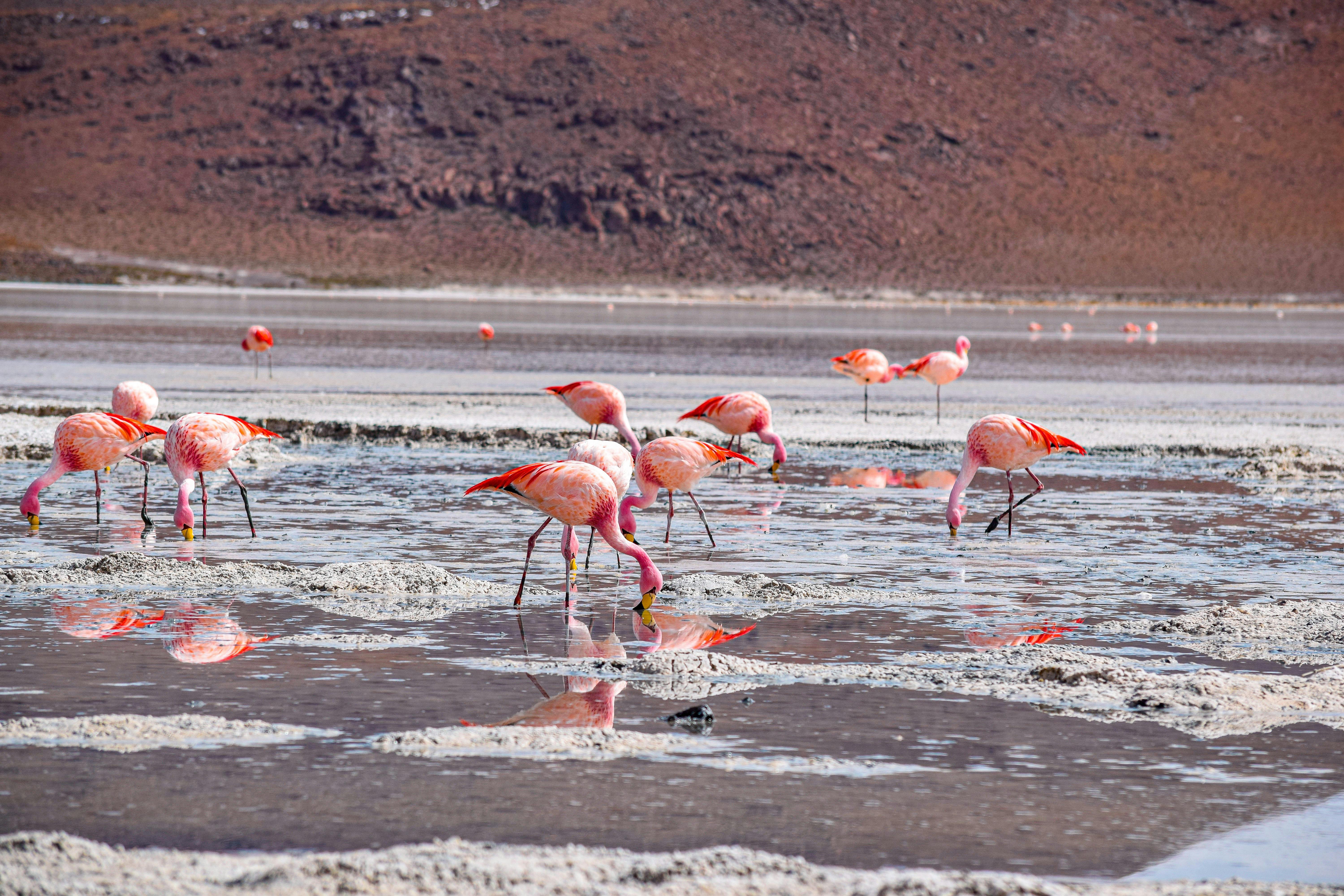
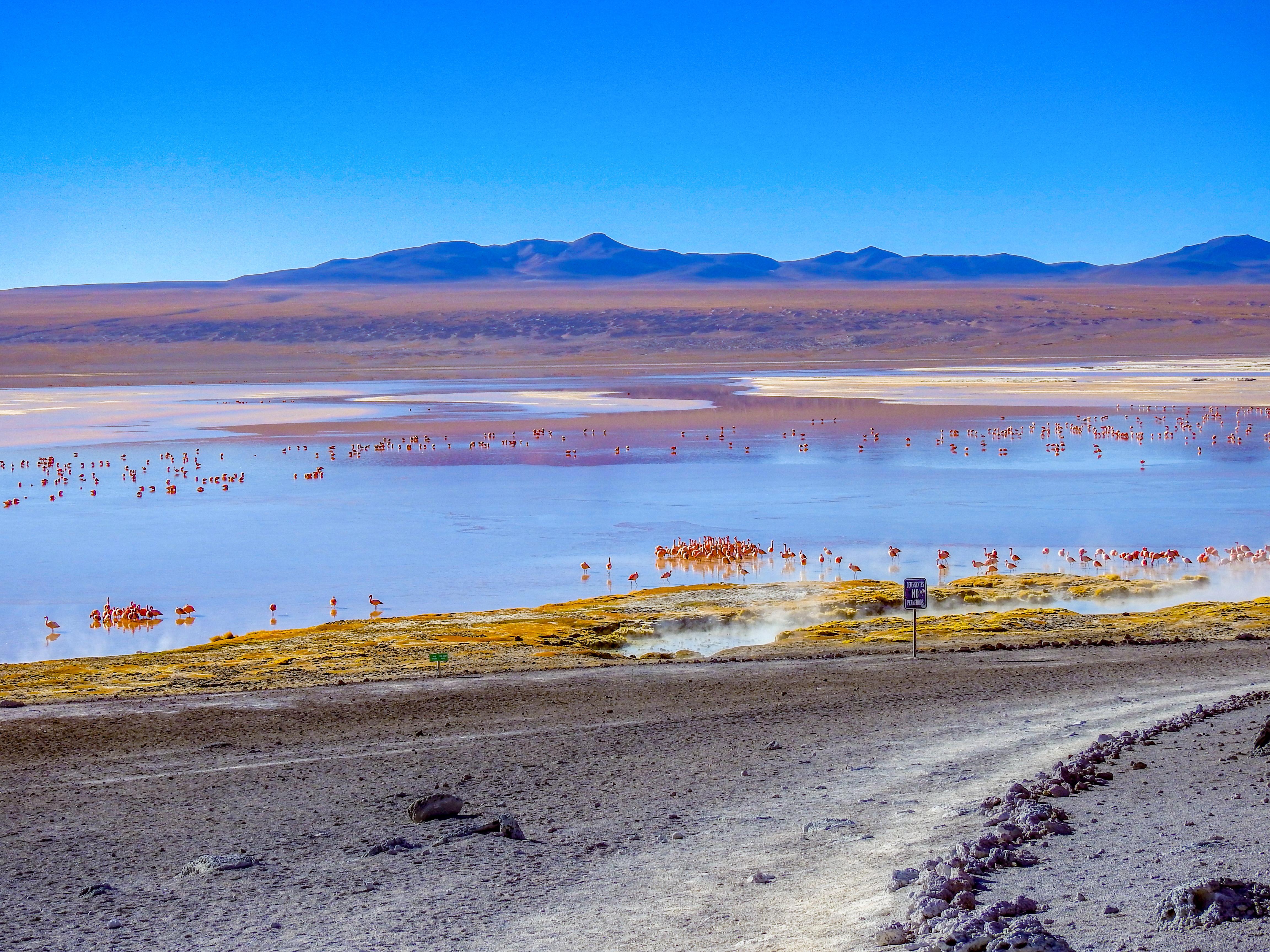
The second day trades flatness for topography. You climb through volcanic rubble to Laguna Colorada, its rust-coloured water dense with diatoms and bordered by white borax deposits. Flamingos wade in the shallows, filtering brine shrimp. That afternoon, the Sol de Mañana geysers hiss steam into the thin air, and you walk carefully around the thermal pools, the ground warm beneath your boots. You sleep in a stone refugio at 4,200 metres, the cold absolute, the stars crowding overhead.
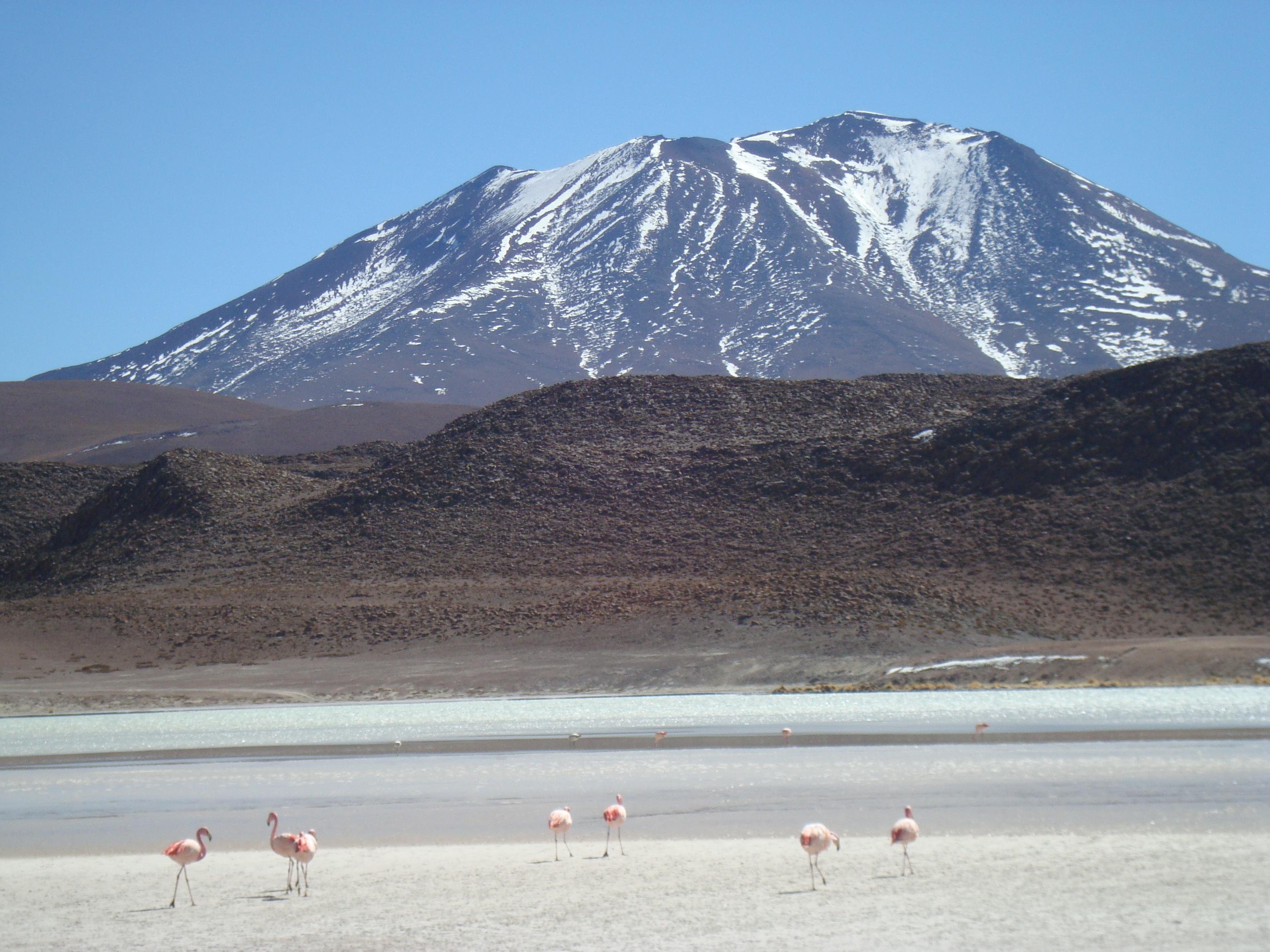
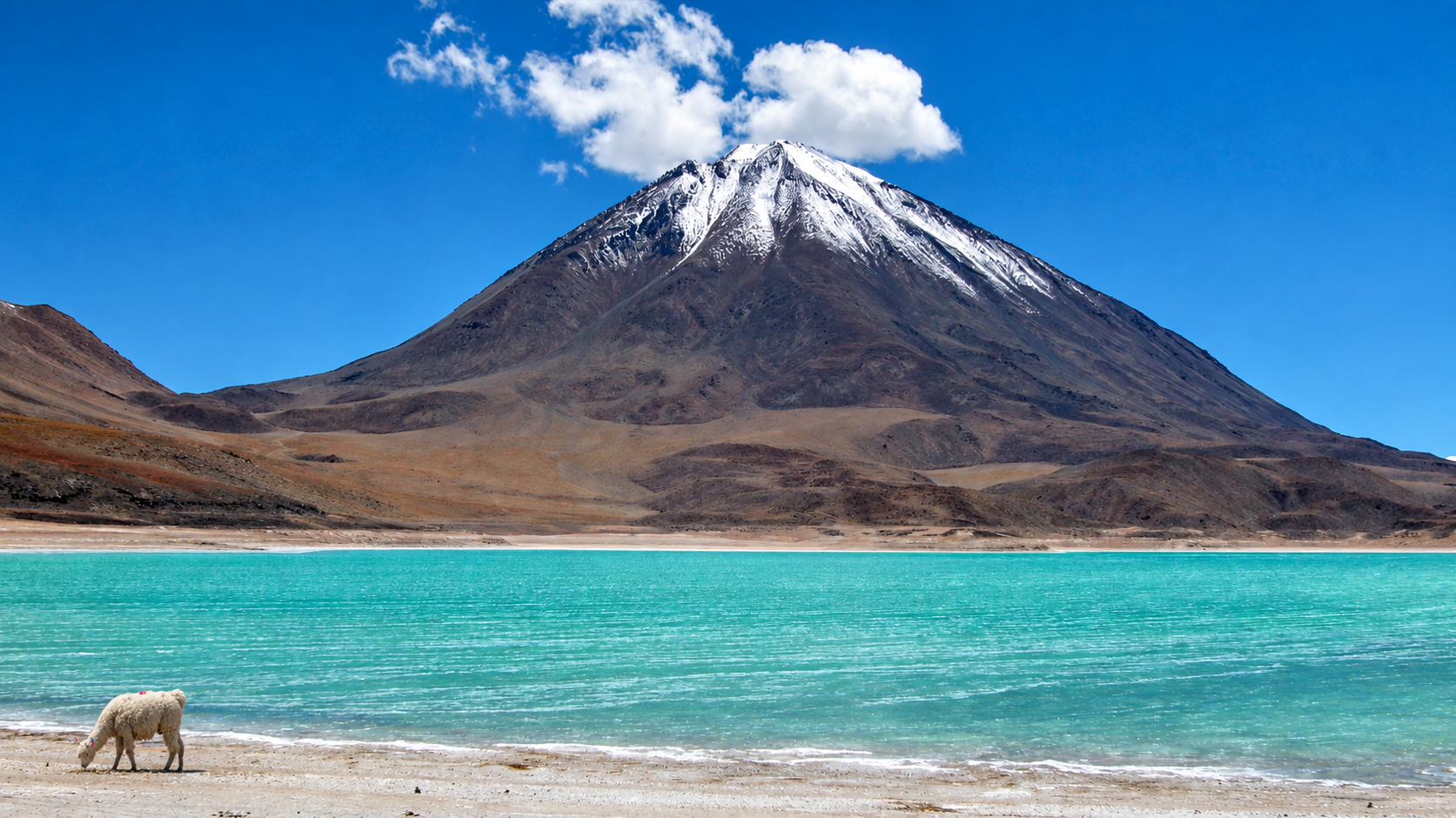
On the third morning, you descend past Laguna Verde, its turquoise water pooled beneath Volcán Licancabur, and cross into Chile as the altiplano gives way to sand.
All the details about your upcoming adventure in one place
The Salar de Uyuni stretches across 10,582 square kilometres of the Bolivian altiplano at 3,656 metres above sea level, making it the world's largest salt flat and the planet's most reflective natural surface.
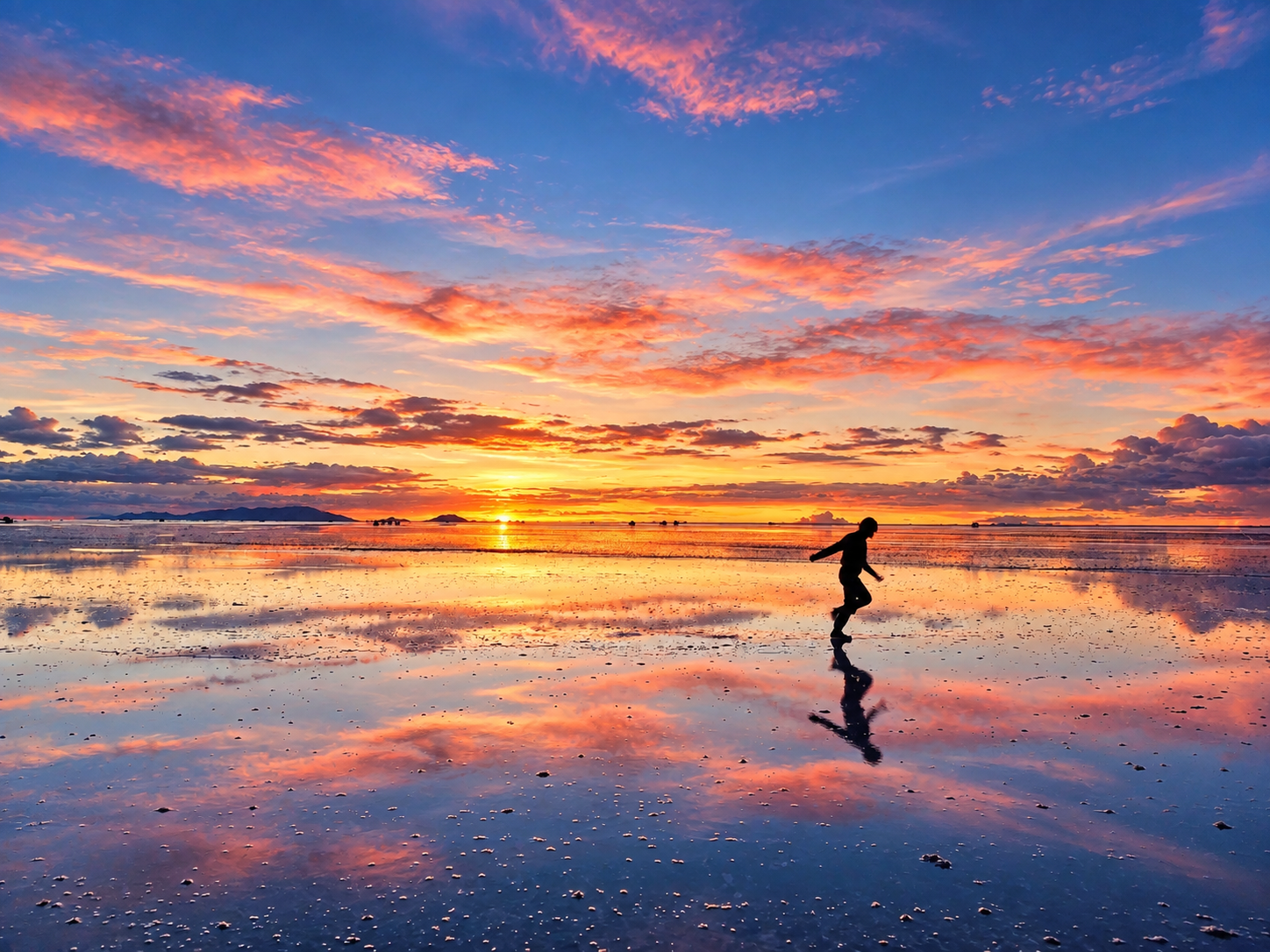
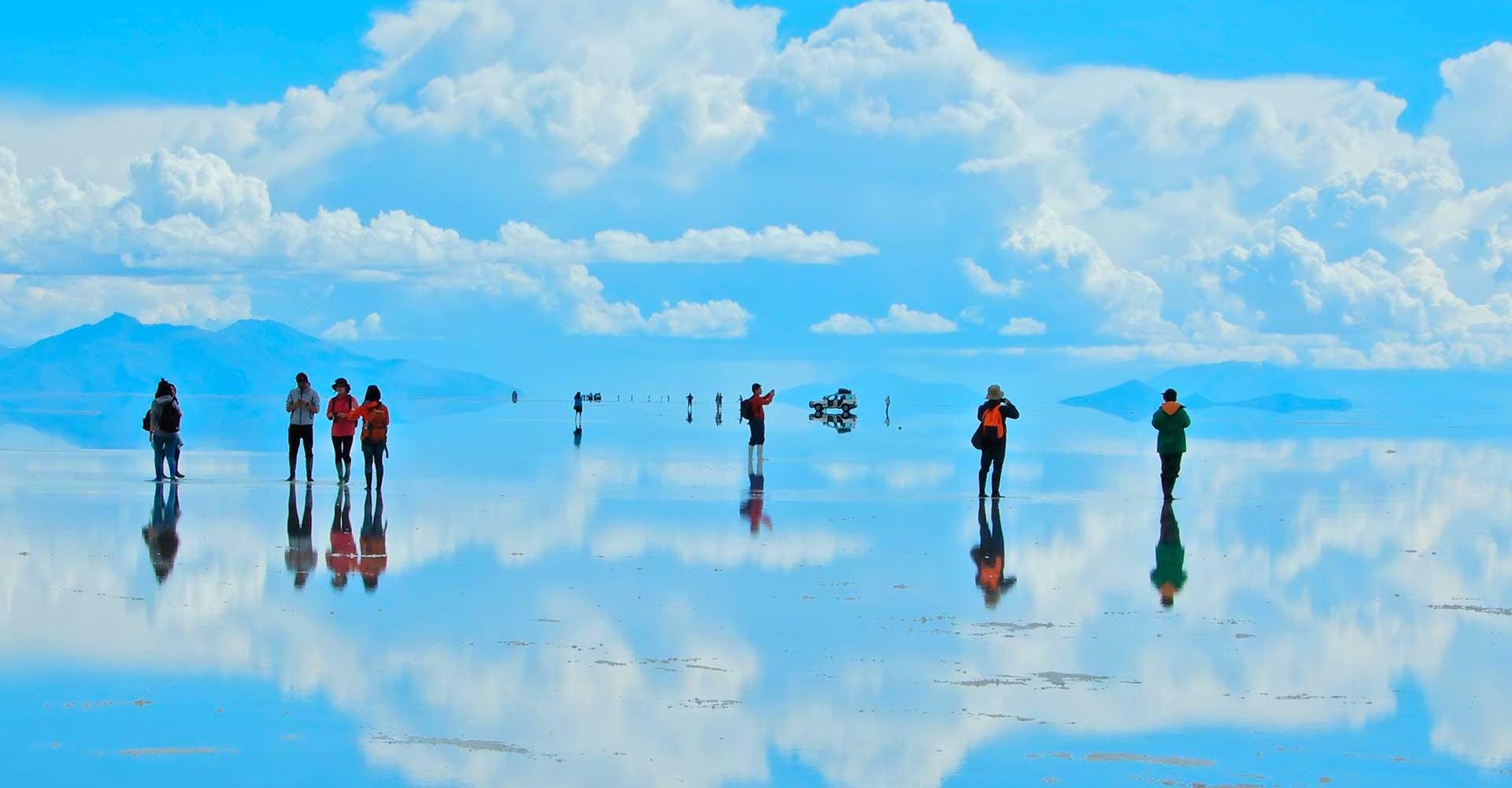
Formed when prehistoric Lake Minchin evaporated between 30,000 and 42,000 years ago, the basin left behind a crust of lithium-rich brine and salt polygons up to four metres thick. During the rainy season from December through March, a shallow film of water transforms the flats into a seamless mirror, erasing the horizon and doubling the Andean sky. The uyuni salt flats tour 3 days traverses this expanse and continues south into the Eduardo Avaroa Andean Fauna National Reserve, where the route links volcanic peaks, silica lagoons, and high-altitude geothermal fields.
The town of Uyuni, a former railway junction built to service silver and tin extraction routes in the late nineteenth century, now serves as the departure point for multi-day expeditions. Most three-day itineraries follow a southern trajectory from the salt flats through the Sur Lípez Province, crossing gravel tracks and volcanic scree to reach Laguna Colorada, a crimson-hued lake fed by mineral runoff and home to three species of Andean flamingo. The second day typically includes the Siloli Desert, where wind-sculpted rock formations rise from pumice fields, and the Sol de Mañana geothermal basin, where sulphurous fumaroles and mud pools simmer at nearly five thousand metres. The journey concludes at the Chilean border near San Pedro de Atacama, descending from the altiplano into the Atacama Desert.
Operators equip travellers with four-wheel-drive vehicles, arrange overnight stays in salt-brick lodges and basic refugios, and navigate the conservation fee checkpoints that fund the reserve's infrastructure. The 30 BOB entry fee per foreign adult visitor supports trail maintenance and seasonal road grading across the reserve. Weather conditions at altitude demand layered clothing, and the thin atmosphere at elevations above 4,000 metres requires gradual acclimatisation. Departure times cluster between 05:30 and 08:00 to capture the sunrise light, when low-angle illumination sharpens the salt crust's hexagonal tessellation and mirror reflections reach peak clarity. The three-day salt flat expeditions link geological phenomena across a landscape that remains largely roadless, offering a continuous traverse of one of South America's most extreme and least populated terrains.

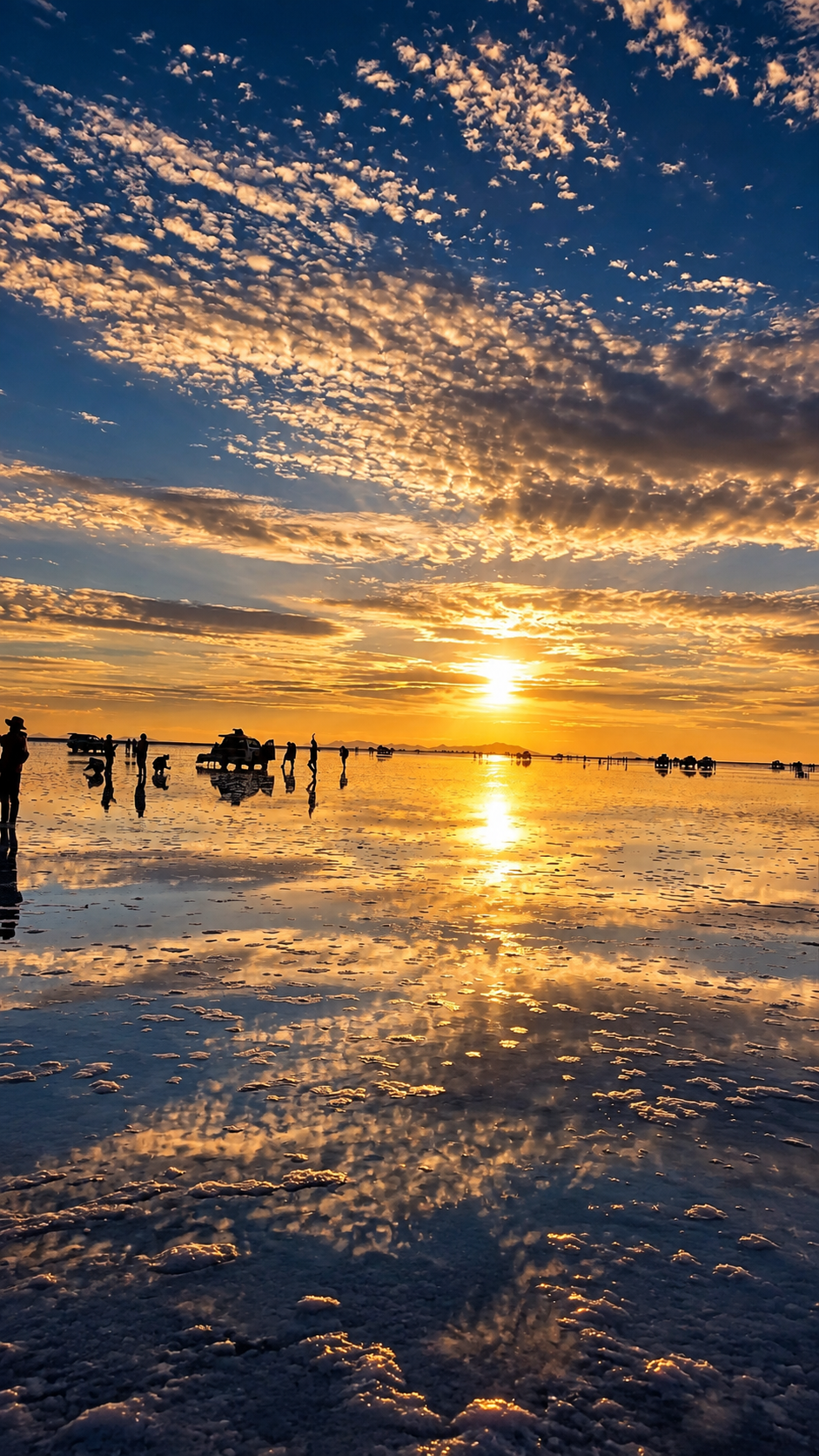
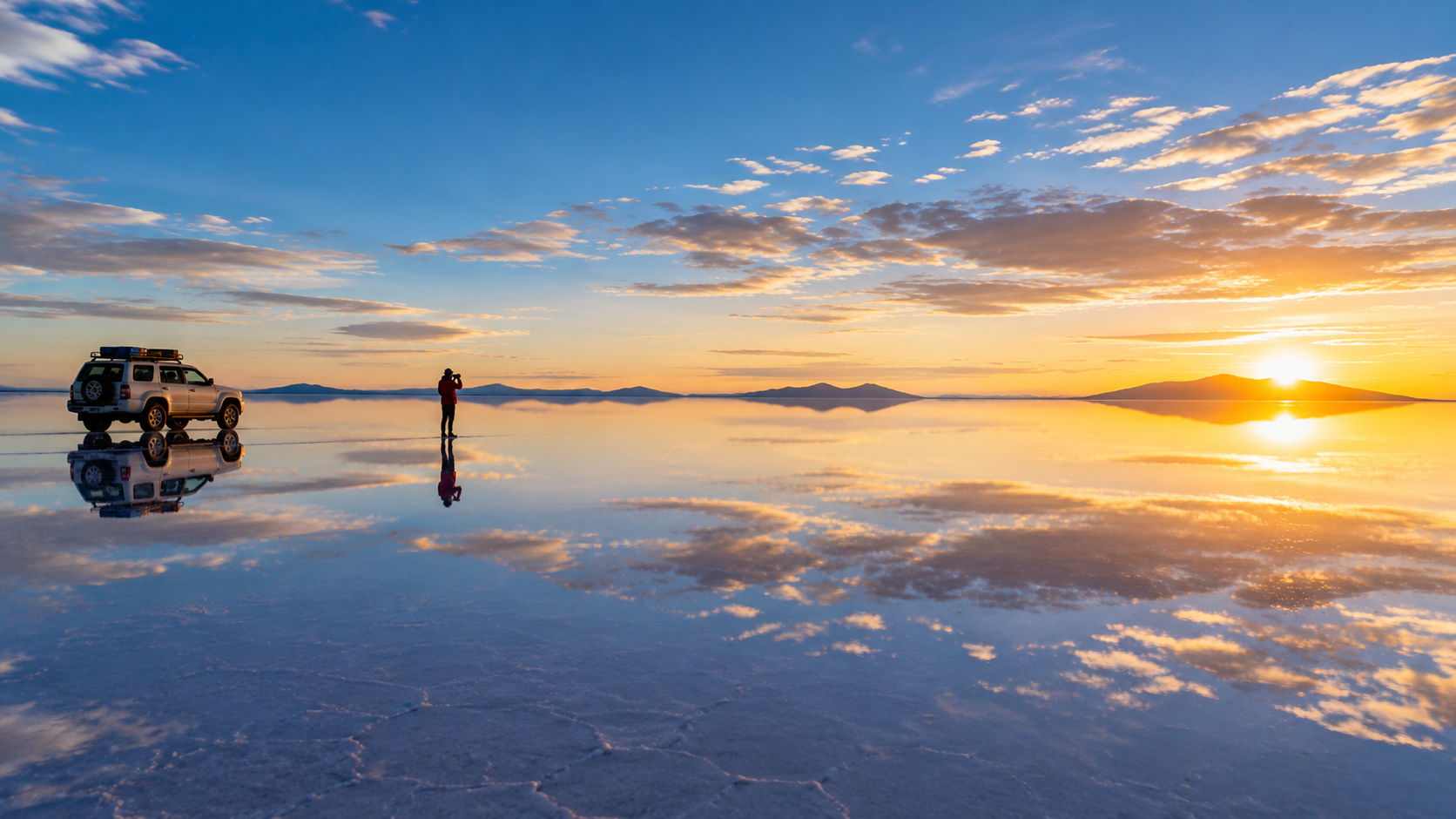
A shallow film of water transforms the flats into a seamless mirror, erasing the horizon and doubling the Andean sky.
Layering is essential due to extreme temperature swings between frigid nights and intense sun. Wear moisture-wicking base layers, a warm insulating mid-layer, and a wind-resistant shell.
Carry your physical passport at all times as checkpoints require document verification. Keep a small daypack for essentials, as space in 4x4 vehicles is strictly limited.
Protect camera gear from salt dust and brine by using sealed dry bags. Polarizing filters are recommended to manage intense glare from the salt crust and mirror reflections.
The 3-day journey is physically demanding and involves high altitudes exceeding 4,000 meters, which may not be suitable for young children. Consult with operators about private transport options to maintain flexibility.
The terrain is not wheelchair accessible and involves rugged, high-altitude travel across unpaved surfaces. Physical exertion is required to navigate salt formations and rocky island trails.
Most group tours include basic meals, but bring high-energy snacks and sufficient water as local supplies are scarce. Facilities often charge for bathroom access and showers, so carry small-denomination bolivianos.
Opening hours
00:00–23:59 daily
Address
Salar de Uyuni, Potosí Department, Bolivia
Accessibility
Remote terrain with limited infrastructure
Best arrival window
05:30–08:00
Luggage
Pack light in small backpacks
Cancellations are subject to specific operator agreements, often requiring at least 7 days notice for partial refunds. Entrance fees like the 30 BOB conservation fee are paid locally and are generally non-refundable.
Recommended time
3 days
Planning your uyuni salt flats tour 3 days requires balancing expansive travel across the high-altitude Andean plateau with localized exploration. Following the best arrival window of 05:30–08:00 ensures you witness the signature mirror reflections before the mid-day arrival of larger vehicle caravans. Selecting an appropriate uyuni salt flats tour 3 days tour allows for deeper immersion in the vast hexagonal salt crusts and remote volcanic landscapes compared to single-day excursions. Visitors purchasing uyuni salt flats tour 3 days tickets should anticipate shifting congestion levels as expeditions converge on popular geysers and colorful lagoons throughout the afternoon.
Crowd levels through the day
The Salar de Uyuni rests atop what was once Lake Minchin, a vast prehistoric body of water covering over forty thousand square kilometers of the Altiplano. Between forty thousand and twenty-five thousand years ago, tectonic shifts and climatic changes caused the lake to evaporate in stages, leaving behind a mineral crust ten meters deep in places. The salt layer crystallized from brine concentrated over millennia, creating the world's largest salt flat at an elevation of thirty-six hundred meters. Indigenous Aymara communities knew the flats as a source of salt and a route for llama caravans long before Spanish colonizers arrived in the sixteenth century. Spanish interest in the Potosí Department centered on silver extraction from Cerro Rico, but salt from Uyuni supplied the mining settlements and preservative industries. By the early twentieth century, rail lines pushed toward the border with Chile, and the town of Uyuni became a junction for freight and labor. Salt extraction remained artisanal until the mid-twentieth century, when mechanized harvesting began in the northern sectors. The discovery of lithium reserves beneath the salt crust in the nineteen seventies transformed the region's strategic importance. Bolivia holds an estimated nine million tons of lithium, much of it concentrated under the Salar, though industrial-scale extraction has faced repeated delays over environmental and sovereignty concerns. Tourism emerged in the nineteen nineties as budget travelers sought overland routes between La Paz and San Pedro de Atacama. The uyuni salt flats tour 3 days itinerary became standard by the early two thousands, linking the salt expanse with the colored lagoons and geyser fields of the Eduardo Avaroa Reserve. Today the Salar draws over three hundred thousand visitors annually, and the mirror effect during the rainy season has made it one of South America's most photographed landscapes. The thirty-boliviano conservation fee introduced in twenty twenty funds trail maintenance and waste removal across the fragile desert ecosystem.
Lake Minchin begins evaporating, leaving mineral deposits across the Altiplano.
Spanish colonizers establish supply routes through the Salar to support silver mining at Potosí.
The Antofagasta-Bolivia railway reaches Uyuni, making the salt flats accessible by rail.
Geologists identify substantial lithium reserves beneath the salt crust, estimated at nine million tons.
Budget tourism routes through the Salar link Bolivia with northern Chile, establishing the first multi-day uyuni salt flats tour 3 days circuits.
Conservation fees are introduced to fund environmental protection and infrastructure maintenance across the fragile ecosystem.
Position yourself amidst the rusted steam locomotives to capture industrial textures against the expansive desert horizon. This site serves as a frequent starting point for those on a uyuni salt flats tour 3 days.
Climb the trail leading to the summit for a vantage point overlooking the giant cacti and the surrounding white expanse. Use the cactus silhouettes to frame the vast polygon patterns of the salt crust.
Find a shallow layer of water on the flat surface to photograph the reflection of the sky and clouds. Step away from the vehicle tracks to ensure an undisturbed horizon line for your Salar de Uyuni photography.
Focus your lens on the crimson waters and the colonies of Andean flamingos that frequent this high-altitude basin. A telephoto lens helps capture the birds without disturbing their natural habitat.
Frame the rising steam vents and bubbling mud pots against the rugged volcanic landscape. Maintain a safe distance from the geothermal activity to capture stable shots of the fumaroles.
Exploring the vast landscapes of the Salar de Uyuni with children requires careful preparation due to high altitude and remote conditions. Planning a uyuni salt flats tour 3 days journey allows families to experience this unique terrain at a manageable pace.
Strollers are not practical on the salt crust or rugged terrain found throughout these uyuni salt flats tour 3 days tours. Bring a supportive child carrier to navigate the salt flats and nearby geological formations comfortably
There are no baby-change facilities available in the remote desert areas. Pack portable changing pads and extra supplies, as you will be spending long hours in a 4x4 vehicle while using uyuni salt flats tour 3 days tickets
This excursion is recommended for older children who can handle high-altitude environments and long travel days. Consult a pediatrician regarding oxygen levels before booking a uyuni salt flats tour 3 days tour for younger family members
The itinerary involves significant time in transit between remote lagoons and volcanic landscapes. Prioritize frequent hydration and snacks to manage the physical demands of these high-altitude Andean landmarks
Pack plenty of kid-friendly snacks and bottled water, as dining options are limited during the multi-day trip. Confirm dietary arrangements with your guide well in advance to ensure suitable meal options for children.
Dining options within the remote Salar de Uyuni are extremely limited, so most visitors on a uyuni salt flats tour 3 days bring snacks or rely on pre-arranged lodge meals. For those seeking hot food, nearby settlements like Colchani offer essential sustenance for travelers.
This venue serves traditional Andean cuisine featuring quinoa and llama meat. It is a popular stop for groups finishing their uyuni salt flats tour 3 days tours who want a refined dining experience near the flats.
Located near the base of Tunupa Volcano, this spot offers hearty lunch sets ideal for those on a uyuni salt flats tour 3 days tour. Expect local staples that provide necessary fuel for high-altitude exploration.
Found in the nearby town, this market is the best place to secure supplies before your uyuni salt flats tour 3 days tickets are activated. Local vendors offer fresh empanadas and fruit for a quick, inexpensive meal.
Everything you need to know for your journey
The Salar de Uyuni is a natural landscape accessible 24 hours a day, 00:00–23:59.
The entrance fee for the Salar de Uyuni is 30 BOB per foreign adult visitor at entry checkpoints.
We recommend arriving between 05:30–08:00 for the best sunrise mirror reflections at the Salar de Uyuni.
The Salar de Uyuni tour involves rugged off-road travel and high altitudes that may not be accessible for all visitors.
Avoid carrying large luggage, unauthorized drones, or non-essential plastics that may impact the Salar de Uyuni environment.
Yes, bringing extra snacks is advised for your uyuni salt flats tour 3 days, as resources in the Salar de Uyuni are limited.
Essential items for your uyuni salt flats tour 3 days include high-SPF sunscreen, sunglasses, and thermal layers to handle the Salar de Uyuni climate.
Photography is highly encouraged, but protect your gear from salt damage while touring the Salar de Uyuni.
The Salar de Uyuni is weather-dependent; the wet season creates mirror effects, while the dry season allows full access to the Salar de Uyuni salt crust.
Join thousands of happy travelers who have discovered this incredible experience
Book Your Experience Now