48 hr
Uyuni Salt Flats 2-Day Adventure from La Paz
- Expert local guide
- Small group
- Skip-the-line access
- Free cancellation
Uyuni Salt Flats Tour From La Paz — Multi-Day Expeditions
Bolivia's white expanse awaits, where earth meets sky in seamless reflection
Compare fares, pick the fit — all bookings are mobile-voucher and eligible for free cancellation where shown.
48 hr
120 hr
8 hr
| Experience | Duration | Rating | Skip-the-line | Guide | Small group | Free cancel. | Price | |
|---|---|---|---|---|---|---|---|---|
|
Guided Experience
Most popular
Uyuni Salt Flats 2-Day Adventure from La Paz
|
48 hr | ★ 4.0 | ✓ | ✓ | ✓ | ✓ | €185 | Book → |
|
Guided Experience
Five-Day Uyuni Salt Flats Adventure from La Paz
|
120 hr | ★ 4.2 | ✓ | ✓ | ✓ | ✓ | €888 | Book → |
|
Guided Experience
Premium Overnight Transfer: La Paz to Uyuni
|
8 hr | ★ 5.0 | ✓ | ✓ | ✓ | ✓ | €72 | Book → |
Worth it for those with time
A uyuni salt flats tour from la paz demands serious commitment—the overnight bus from Bolivia's capital requires 10–12 hours each way, turning even a two-day itinerary into a four-day round trip. That investment pays dividends for travelers drawn to stark, otherworldly landscapes: the salt crust stretches 10,582 square kilometers, creating mirror reflections during the wet season and geometric polygons when dry. Multi-day tours layer in the Siloli Desert, red and green lagoons tinted by mineral deposits, and flamingo colonies at high-altitude wetlands. The 30 BOB conservation fee is negligible; the real cost is transit time and tour pricing. Budget operators cluster around basic salt-block hostels, while premium packages offer private 4x4s and upgraded lodging. If your schedule allows only a weekend, flights from La Paz to Uyuni airport collapse travel to under an hour, preserving energy for the salt flats themselves. The geological spectacle justifies the effort for landscape photographers and patient explorers.
Bottom line: The uyuni salt flats tour from la paz rewards travelers who treat Bolivia's altiplano as the destination, not a checklist stop.
While the former offers expansive high-altitude landscapes, the latter provides an adrenaline-fueled descent, making them distinct experiences for travelers starting their journey in La Paz.
|
Top pick Salar de Uyuni |
Death Road Biking | |
|---|---|---|
| Transport mode | 4x4 Land Cruiser | |
| Average duration | 3 days | |
| Terrain | Flat salt crust | |
| Altitude profile | High altitude throughout | |
| Activity level | Low to moderate | |
| Booking accessibility | Online or local agencies | |
| See tickets & prices |
Verdict: Travelers seeking unique photography and geological wonders should choose the uyuni salt flats tour from la paz, whereas those preferring high-octane adventure will find the Death Road more satisfying.
Hand-picked experiences loved by thousands of travelers
2 days
Free Cancellation
Journey overnight to Bolivia's legendary salt desert for a day of otherworldly scenery and sunset magic
3 days
Free Cancellation
Experience Bolivia's surreal salt desert with VIP overnight transport, island exploration, and sunset viewing
3 days
Free Cancellation
Journey across Bolivia's stunning salt desert with overnight transport, island visit, and sunset wine
4 days
Free Cancellation
Journey across Bolivia's surreal white desert, volcanic landscapes, and flamingo-filled lagoons
4 days
Free Cancellation
Journey from La Paz across Bolivia's salt flats and colorful lagoons to Chile's Atacama Desert
3 days
Free Cancellation
Overnight journey to Bolivia's iconic salt flats with guided exploration, sunset viewing, and transport included
Check in at the salt flats entrance checkpoint and pay the 30 BOB fee.
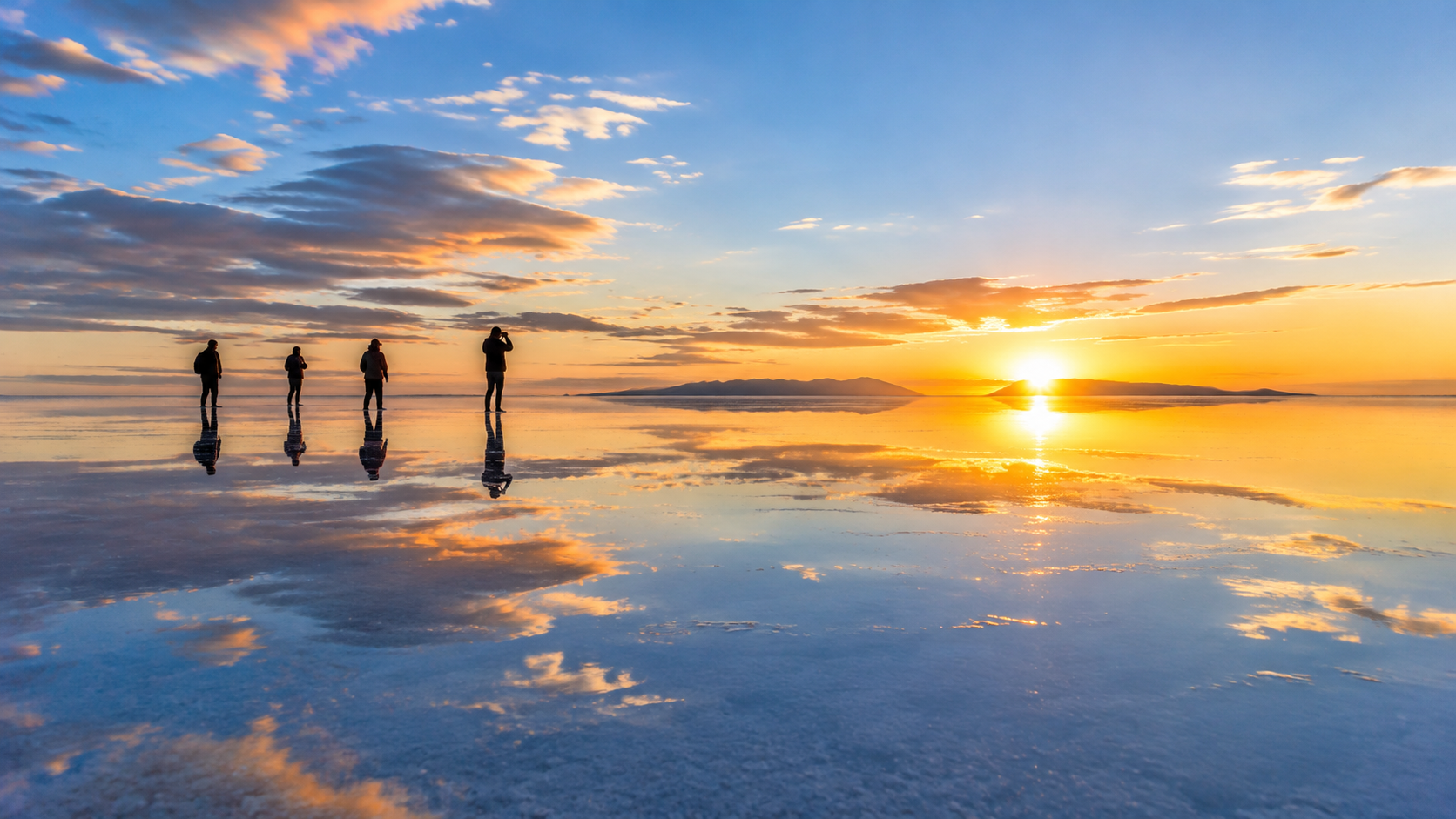
Capture mirror reflections during the optimal 05:30–08:00 window.
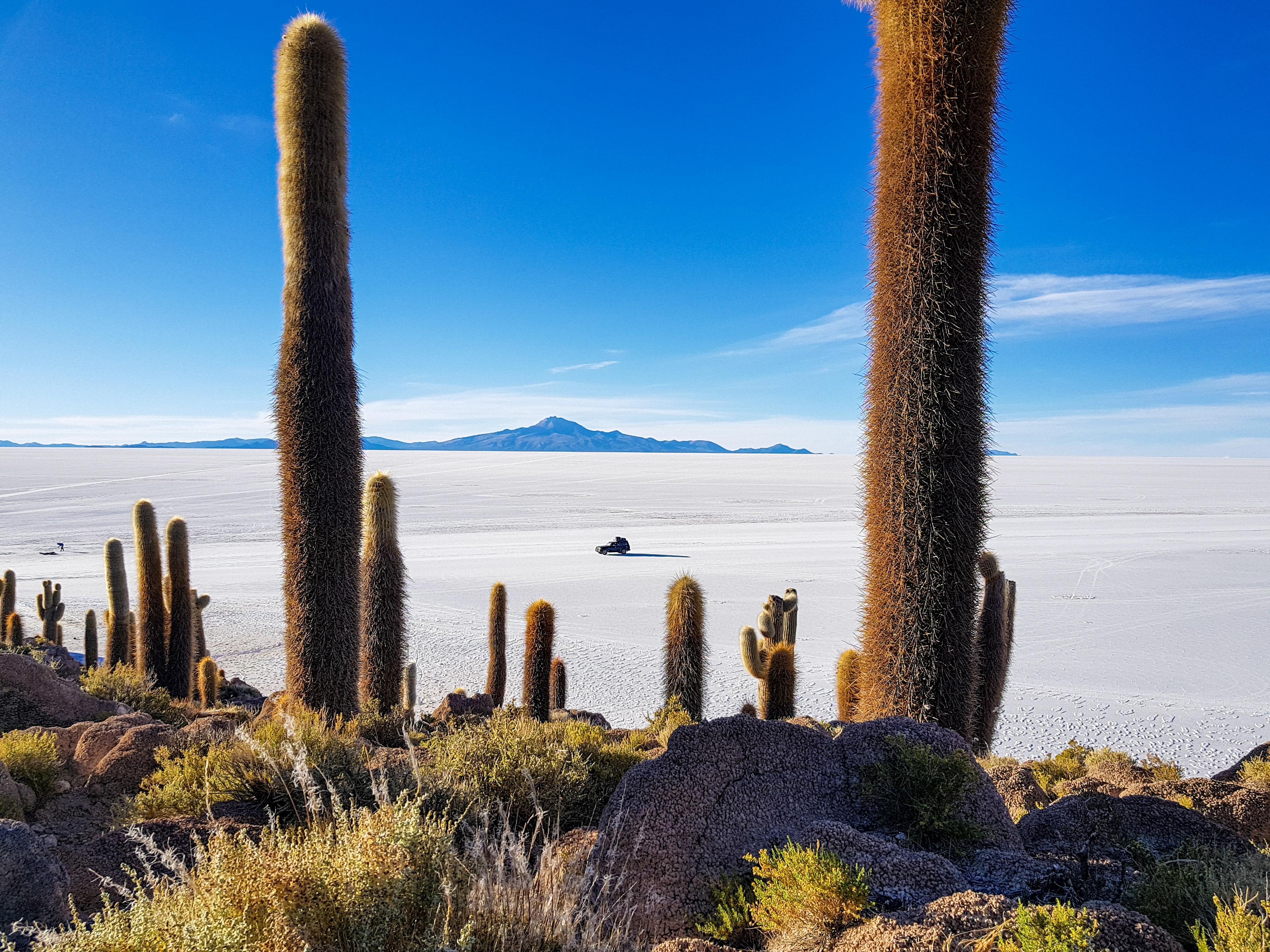
Explore the giant cactus formations and terrain features.
Tour the structure built entirely from salt blocks.
This rocky island contains fossilized coral and giant cacti reaching up to 10 meters in height. It serves as a central viewpoint for the surrounding white expanse.
Incahuasi Island Bolivia
Constructed entirely from salt blocks, this site demonstrates local building techniques. It remains one of the most unique structures in the Potosí Department.
Palacio de Sal
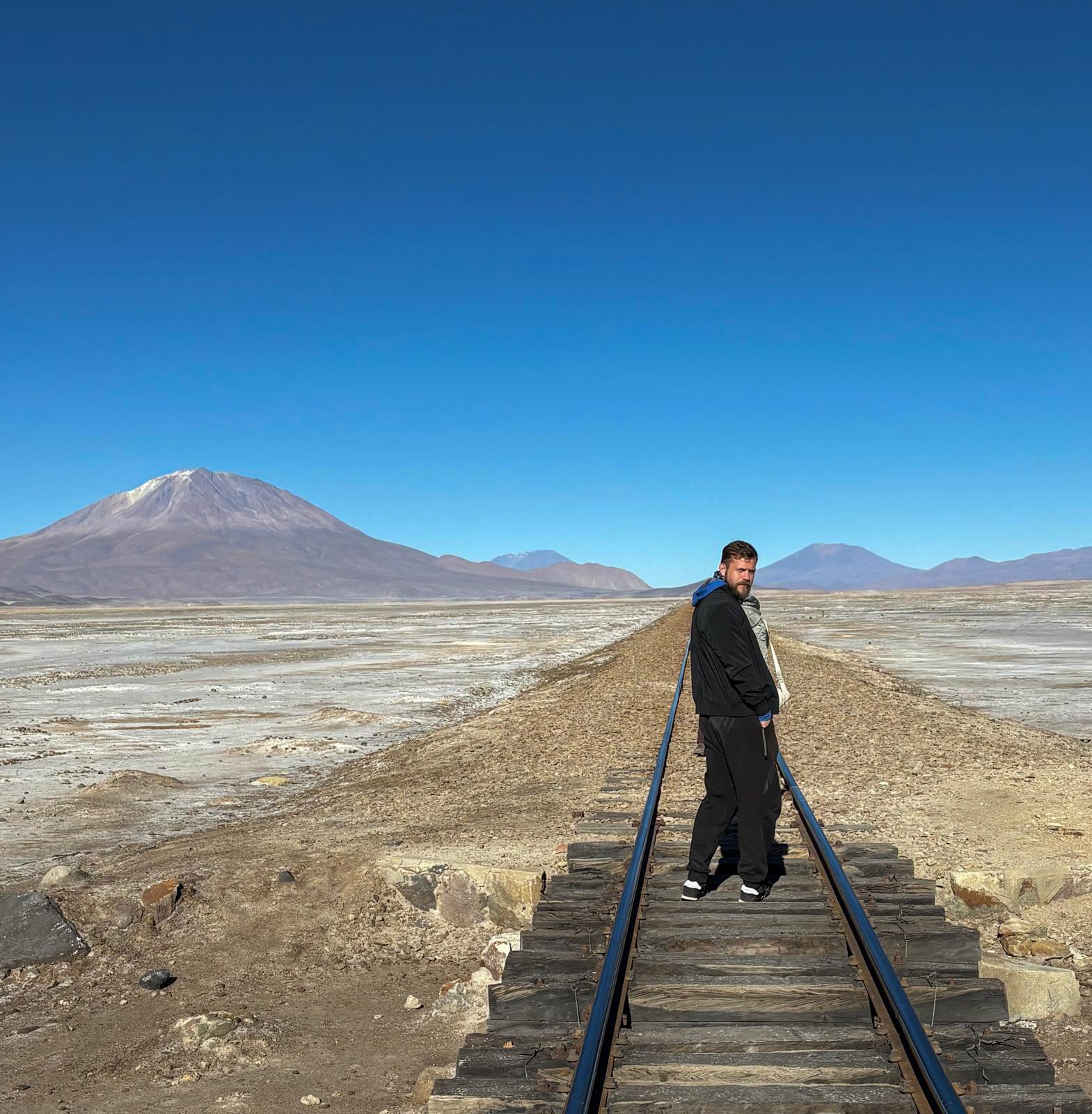
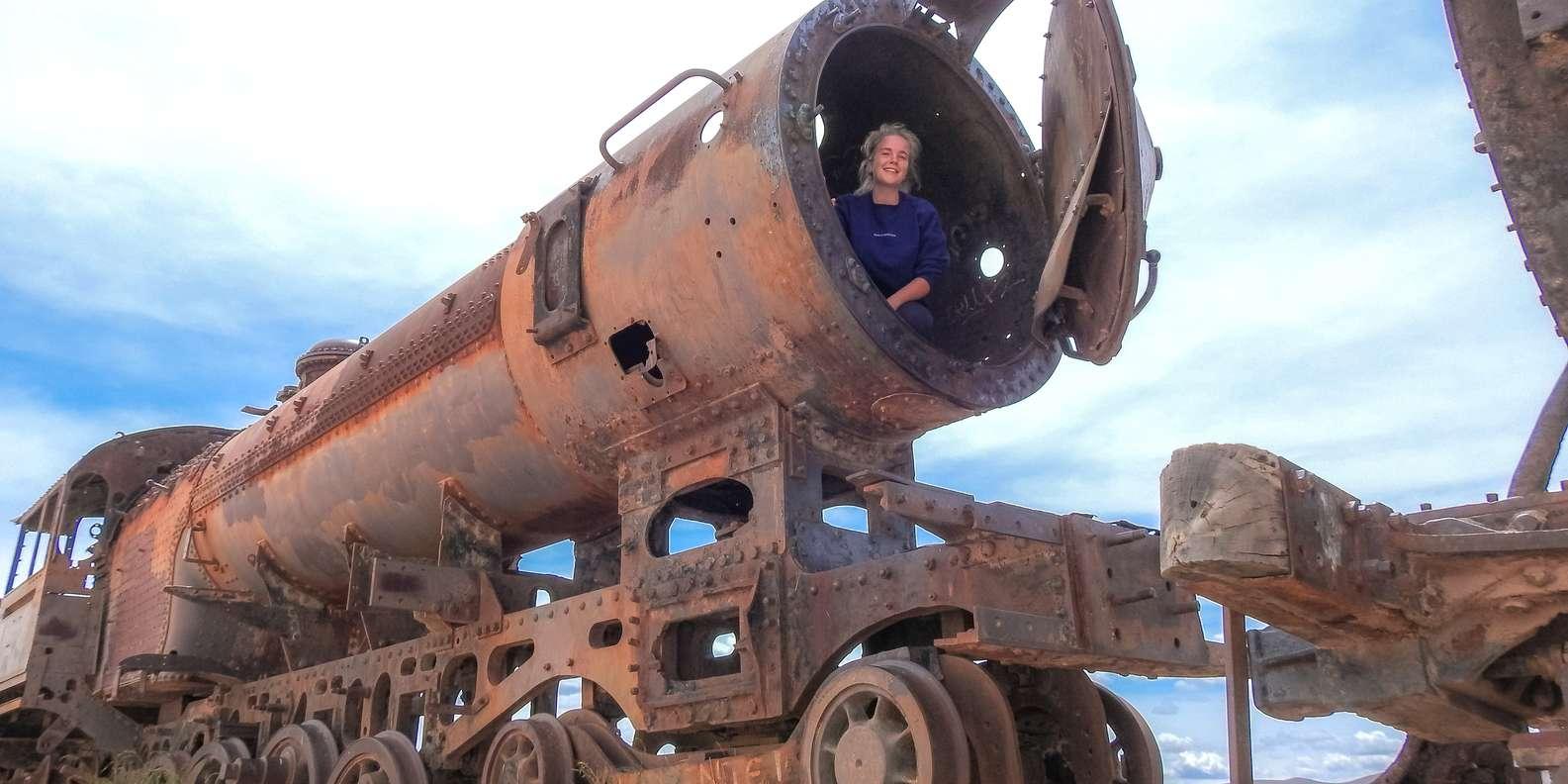
This site showcases historical locomotives from the late 19th century that once supported local mining. It provides a stark contrast to the white salt landscape.
Uyuni train graveyard
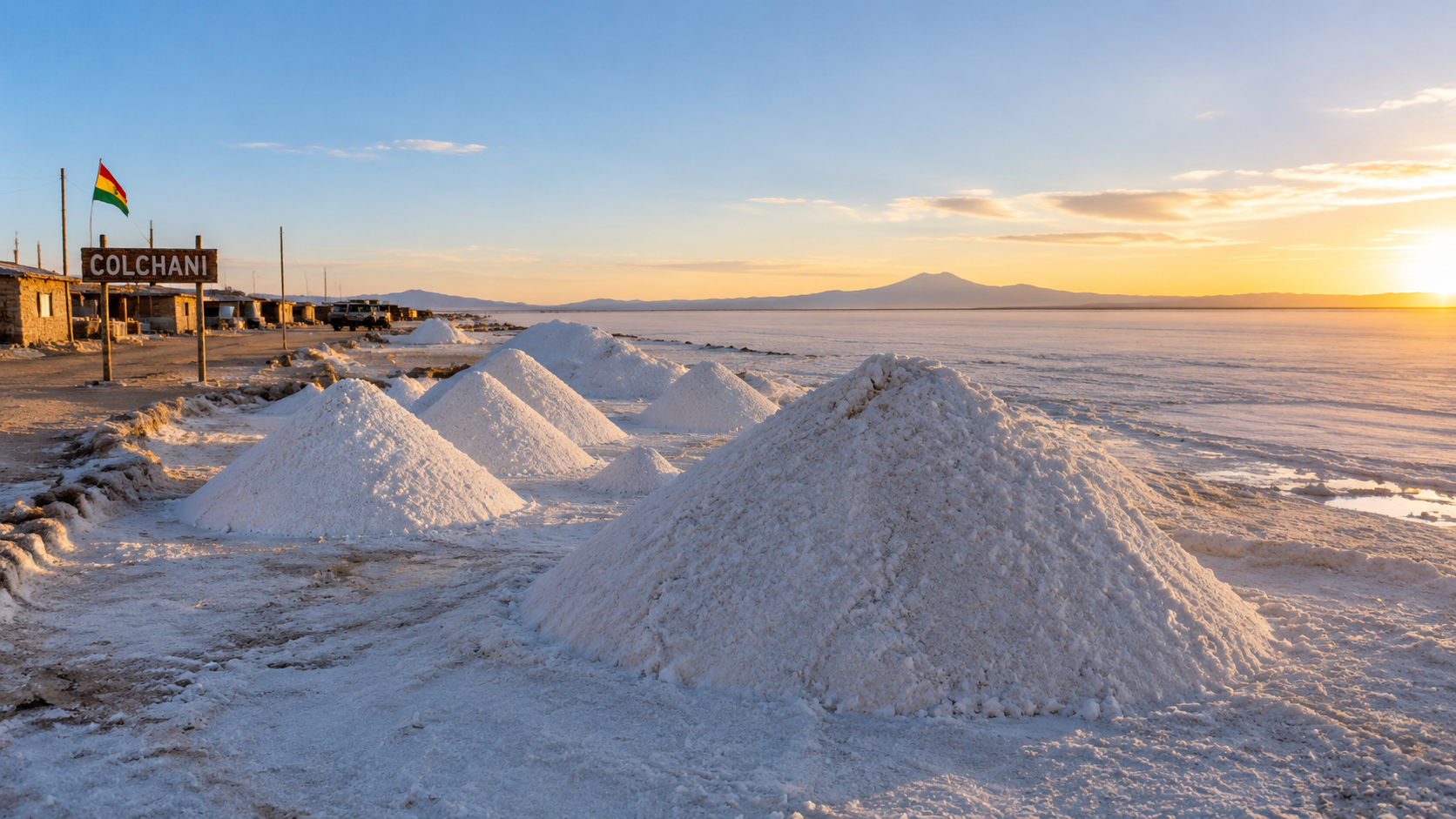
This small village is where the raw salt is processed for consumption. Visitors can observe the traditional techniques used by local families.
Colchani village salt
The vast, hexagonal patterns of the salt crust cover over 10,000 square kilometers. The surface is the largest salt flat in the world.
Salar de Uyuni
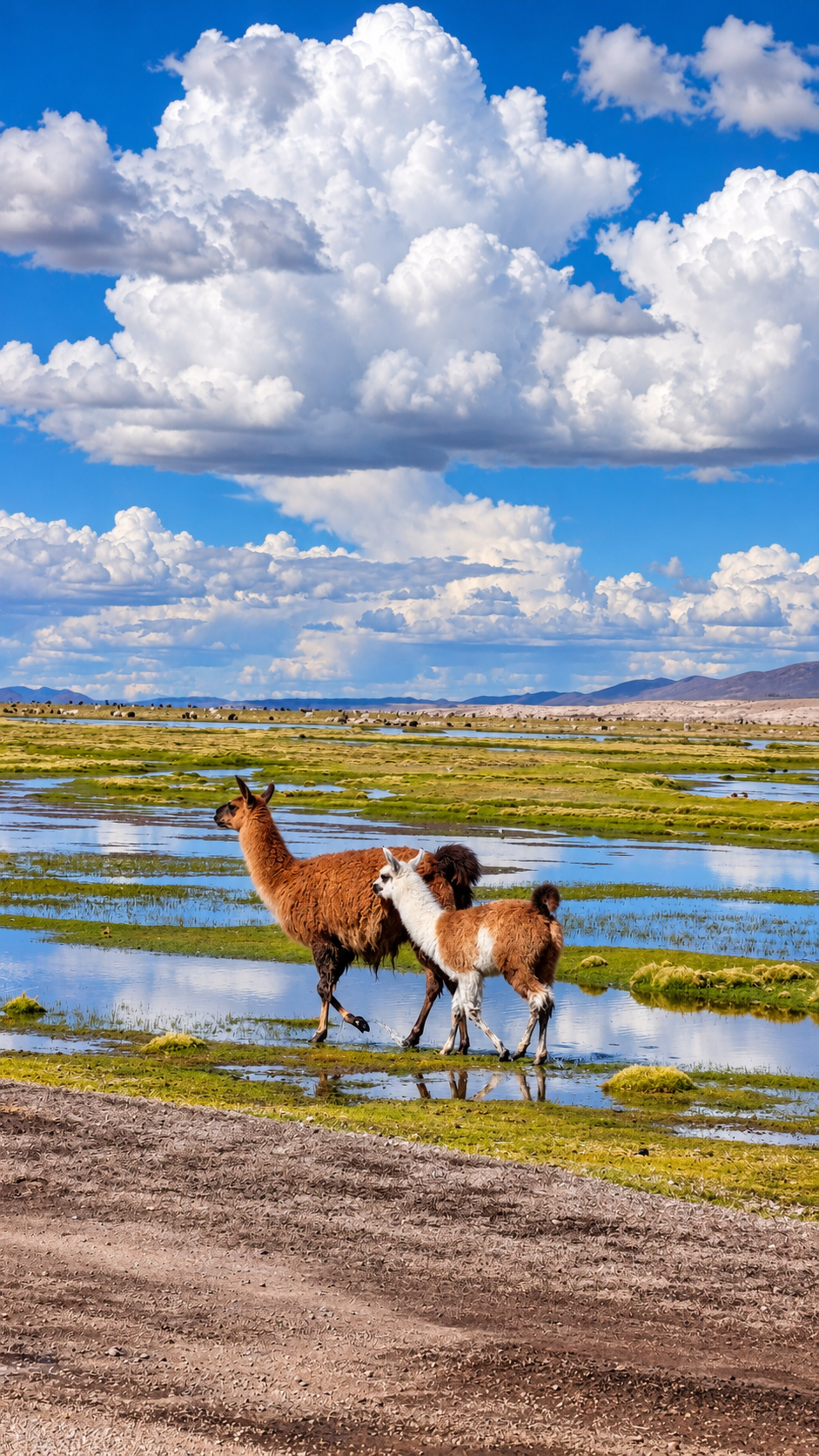
You depart La Paz in the early morning, the vehicle climbing past El Alto's sprawl before descending into the altiplano's open terrain. Hours pass through landscapes stripped to essentials — rust-colored hills, scattered adobe settlements, llama herds grazing on ichu grass.
By afternoon you reach the flats' northern edge, where the horizon dissolves into white and the air carries a faint mineral scent.
The first stop is Colchani, a salt-processing village where workers rake brine into pyramidal mounds for drying. You continue onto the crust itself, the tires crunching over hexagonal patterns formed by evaporation and capillary action. At Incahuasi Island, you walk among columnar cacti rising three meters high, their growth rings marking centuries. The silence is absolute except for wind.
Sunset paints the surface gold, then violet. You spend the night in a salt-block hostel, walls and furniture carved from the same compressed mineral. The second day brings the flamingo lagoons — three species wading through shallow alkali water, filtering microscopic organisms. If your tour extends to three or more days, you reach the geysers and the Dali Desert, where wind-sculpted rock formations stand isolated against empty sky.
All the details about your upcoming adventure in one place
The Salar de Uyuni spans 10,582 square kilometers across Bolivia's southwestern altiplano, the largest salt flat on earth formed from prehistoric lake beds that dried between 30,000 and 42,000 years ago.
What remains is a two-meter-thick crust of sodium chloride interspersed with lithium-rich brine pools — the planet's most extensive reserve of the metal, holding an estimated 9 million tons beneath its white hexagonal tiles. When rainwater collects during the wet season from December through March, the surface transforms into a mirror reflecting the Andean sky with near-perfect optical symmetry, a phenomenon that draws photographers and travelers to this remote corner of Potosí Department.
The flats sit at 3,656 meters above sea level, requiring acclimatization for most visitors arriving from lower elevations. Multi-day expeditions departing from La Paz cover not only the central salt expanse but also the surrounding Eduardo Aveloa National Reserve, where flamingo colonies feed in mineral-rich lagoons colored crimson and emerald by algae and sediment. The route passes the Tunupa volcano's western slopes, the Incahuasi Island covered in thousand-year-old cacti, and the remote Sol de Mañana geysers that exhale sulfurous steam at dawn. These itineraries operate year-round, though conditions shift dramatically: the dry season from May through October reveals the geometric salt patterns and allows vehicle access across the entire plain, while the wet months create the mirrored surface that has become the region's signature image.
Logistics matter at this altitude and isolation. A Uyuni salt flats tour from La Paz typically spans two to five days, with overnight stops in basic hostels near the flats or upgraded lodges constructed entirely from salt blocks. The 30-boliviano conservation fee funds maintenance of access roads and checkpoint infrastructure. Operators departing the capital navigate the 500-kilometer journey through high-altitude passes and arid plateaus before reaching the white expanse, a trajectory that reveals Bolivia's geological extremes in compressed sequence.

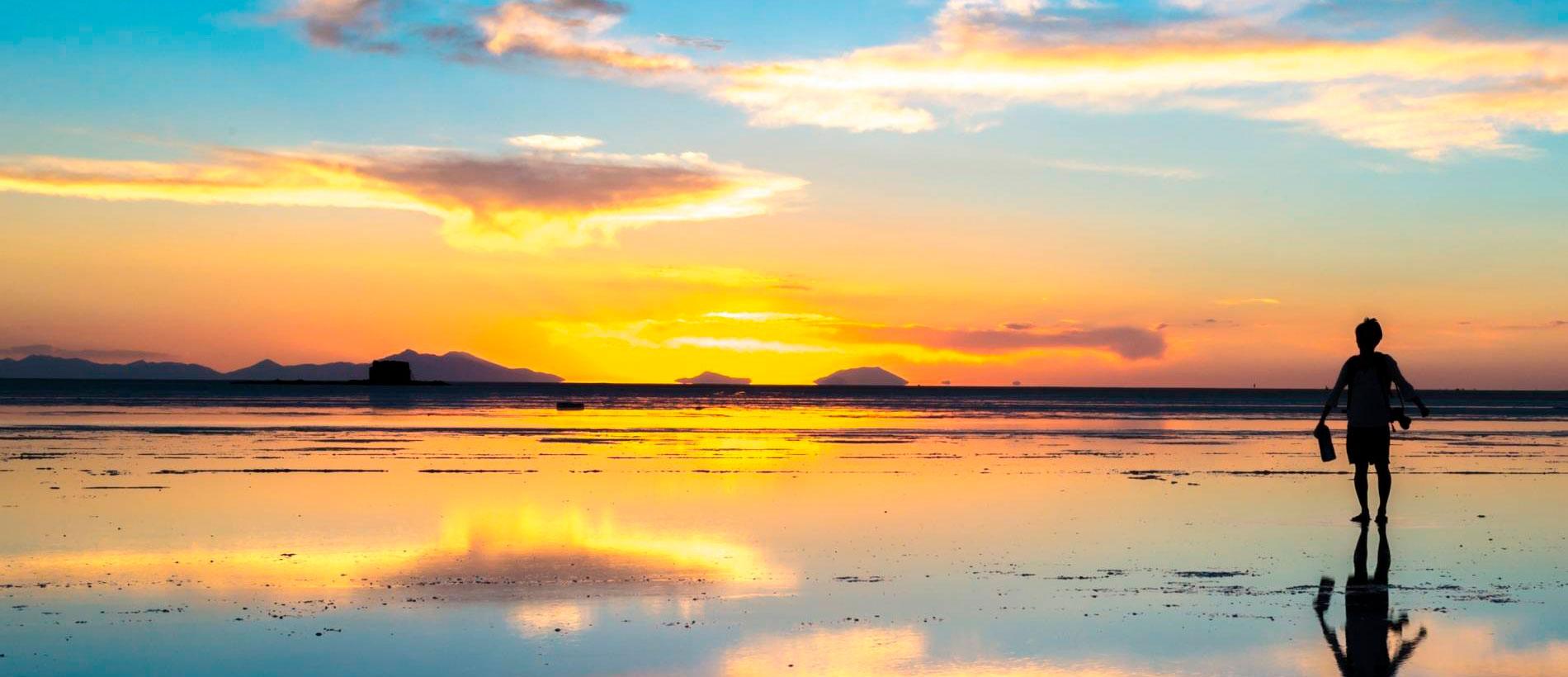
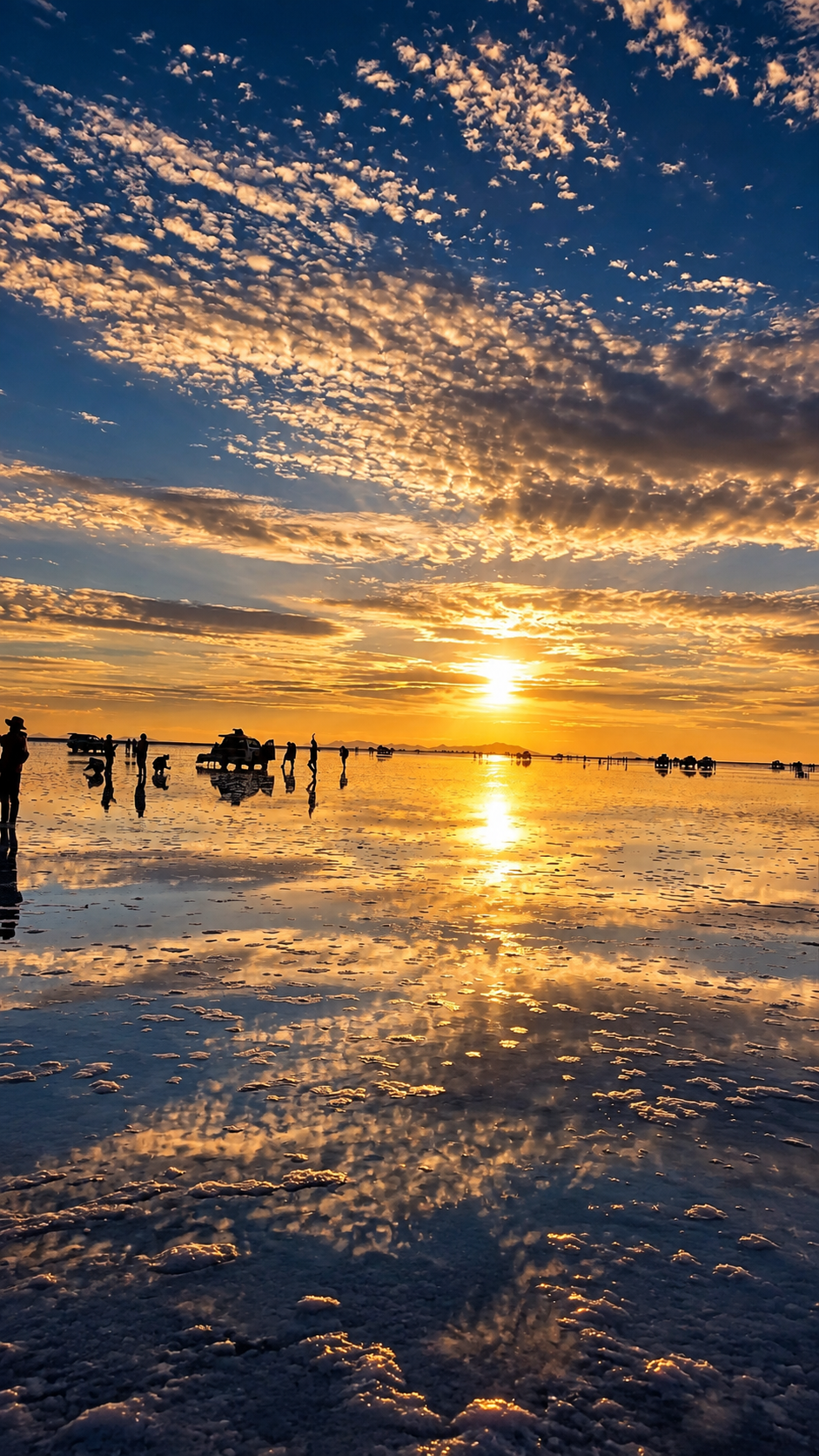
When rainwater collects during the wet season, the surface transforms into a mirror reflecting the Andean sky with near-perfect optical symmetry.
Wear warm, layered clothing as temperatures drop significantly at night. Sturdy, waterproof hiking boots are recommended for navigating the salt crust.
Travelers should keep their belongings secure during the journey. Avoid leaving valuables unattended in vehicles when stopping at the flats.
The reflective surface is ideal for perspective photography. Bring a tripod to stabilize shots during the low-light hours of sunrise.
The environment is high-altitude and physically demanding for young children. Ensure all family members are acclimatized to the altitude before starting a uyuni salt flats tour from la paz.
The salt flats are a natural, uneven landscape and lack formal paved paths. Mobility assistance may be limited; consult your tour operator for private vehicle accommodations.
Carry adequate water supplies and high-energy snacks as services are non-existent on the open flats. Most multi-day tours include meals prepared at designated lodges.
Opening Hours
00:00–23:59
Address
Salar de Uyuni, Potosí Department, Bolivia
Entry Fee
30 BOB per person
Optimal Arrival
05:30–08:00
Official Site
https://www.salardeuyuni.com
Public transport · 9–10h · Variable
Overnight buses depart La Paz for Uyuni town regularly.
Car · 8–9h · Dependent on operator
Private transfers are available from La Paz for direct access.
Cancellations for a uyuni salt flats tour from la paz must be submitted according to the specific operator terms found in your booking confirmation. Conservation fees of 30 BOB are typically non-refundable once paid at the checkpoint.
Recommended time
Full day
To experience the Salar de Uyuni effectively, plan for a full day of exploration across this vast landscape. Starting your uyuni salt flats tour from la paz within the recommended 05:30–08:00 window ensures optimal lighting for mirror reflections and minimal congestion. While travelers often look for quick uyuni salt flats tour from la paz tickets, the expansive nature of the horizon requires extended transit times between locations like Incahuasi Island and local brine extraction zones. Utilizing a professional Uyuni Bolivia excursion tour helps manage travel logistics and avoids the heaviest midday crowds as groups rotate through popular sites.
Crowd levels through the day
Weather · crowds · average price — dots go green to amber to red as each metric rises.
The rainy season provides the famous mirror reflection effect on the salt crust.
Weather is stable and temperatures are moderate, ideal for extended exploration.
Clear skies provide excellent visibility, though temperatures drop well below freezing.
Drier conditions prevail, exposing the hexagonal salt tile patterns across the vast landscape.
Spend at least two days in La Paz to adjust to the elevation before beginning your uyuni salt flats tour from la paz.
The salt is highly corrosive; wipe your camera gear and footwear down immediately after your uyuni salt flats tour from la paz.
Drink more water than usual to mitigate the effects of the dry, thin air found during any uyuni salt flats tour from la paz.
Power outlets are limited in remote lodges; bring a portable power bank for a uyuni salt flats tour from la paz.
Even in the sun, winds can be bitter; always keep a windbreaker accessible during a uyuni salt flats tour from la paz.
Carry sufficient BOB cash for your 30 BOB entrance fee as card readers are not available on the flats.
The Salar de Uyuni sits atop the remnants of Lake Minchin, a prehistoric body of water that covered much of southwestern Bolivia between 30,000 and 42,000 years ago. As the Andean climate shifted toward aridity around 10,000 BCE, Lake Minchin began its retreat, leaving behind a series of smaller lakes including Lake Tauca and Lake Coipasa. By roughly 7,000 BCE, evaporation had concentrated mineral salts across the basin, forming the salt crust that now defines every uyuni salt flats tour from la paz. The flats reached their modern extent approximately 3,000 years ago, when the final remnants of standing water disappeared, sealing a layer of brine beneath the hardened surface. Indigenous Aymara communities harvested salt from the edges of the Salar for centuries, trading it across pre-Columbian trade routes. Spanish colonial records from the 16th century document small-scale extraction, but the remote location and extreme elevation deterred industrial development until the mid-20th century. In 1959, the first geological surveys identified lithium-rich brine beneath the crust, a discovery that would reshape the region's economy. By the 1970s, Bolivia had begun experimental lithium extraction, though commercial production remained limited due to technical and political constraints. The transformation into a destination for travelers undertaking a Uyuni salt flats tour accelerated in the 1990s, when improved roads from La Paz and the establishment of tour operators in the town of Uyuni made multiday expeditions feasible. The construction of the Palacio de Sal, a salt-brick hotel on the flats' edge, opened in 1998 and marked the transition from scientific curiosity to mass tourism. Today, lithium extraction and tourism coexist uneasily, with environmental advocates warning that industrial brine pumping threatens the mirror-like water layer that appears during the rainy season. The Bolivian government imposed a 30 BOB conservation fee at entry checkpoints in 2015, directing revenue toward infrastructure and ecological monitoring across the Potosí Department.
Lake Minchin forms across southwestern Bolivia, covering the area that will become the Salar de Uyuni.
Evaporation concentrates mineral salts, creating the initial salt crust as the prehistoric lake dries.
Spanish colonial authorities document small-scale salt harvesting by Aymara communities.
Geological surveys identify lithium-rich brine beneath the salt crust, revealing commercial potential.
Bolivia initiates experimental lithium extraction projects, though technical challenges limit production.
Palacio de Sal, the first salt-brick hotel, opens on the flats' edge, signaling the rise of organized tourism.
Bolivian authorities introduce a 30 BOB conservation fee to fund infrastructure and environmental monitoring.
Stand at the peak for 360-degree views of the hexagonal salt crust patterns. This elevation provides a clear vantage point above the vast white expanse.
Position your camera low near these conical piles to capture the texture of harvested salt against the horizon. This is a common stop on a uyuni salt flats tour from la paz.
Find a thin layer of water during the rainy season to create perfect symmetrical reflections of the sky. This location is ideal for creative wide-angle shots.
Use a flat, dry section of the terrain to play with depth by placing props close to the lens. This technique relies on the lack of spatial reference points.
Capture the intense contrast of the dark, bubbling water holes against the blinding white landscape. Approach these geological features carefully to ensure equipment stability.
Planning a uyuni salt flats tour from la paz requires preparation for high altitude and remote terrain when traveling with children. This vast expanse offers a unique educational experience, though parents should prioritize comfort and health during the long journey.
Consult your pediatrician regarding high-altitude travel before booking your uyuni salt flats tour from la paz tours as the region sits at high elevation. Ensure children stay hydrated and allow extra time for acclimatization in La Paz before departing.;Strollers
Dining options directly on the salt crust are non-existent, making a planned uyuni salt flats tour from la paz essential for travelers requiring sustenance. Visitors typically rely on tour-provided meals or visit established eateries in nearby Uyuni town before or after their excursion.
Located on the edge of the flats, this venue is constructed entirely of salt blocks. It offers traditional Andean cuisine and is an ideal stop for those seeking a unique atmosphere before beginning their uyuni salt flats tour from la paz tour.
Everything you need to know for your journey
The site is open daily from 00:00–23:59. You may visit at any time, but follow the arrival recommendation of 05:30–08:00 for the best light.
Official tickets are not required, but you must pay the 30 BOB conservation fee per person at the entry checkpoint.
The best time for a uyuni salt flats tour from la paz is between 05:30–08:00 for sunrise reflections. Seasonally, the rainy season from December to March offers the best mirrors.
Prohibited items include drones, single-use plastics, and unauthorized chemicals. Security checks may occur to protect the ecosystem.
The tour is physically demanding due to altitude; ensure children are prepared for the remote environment before booking a uyuni salt flats tour from la paz.
Cancellations are subject to the specific operator's terms. The conservation fee is collected locally and is typically non-refundable.
Yes, every visitor must pay a 30 BOB conservation fee at the entrance of the Salar de Uyuni.
A typical visit involves several hours for photography and sightseeing. Most tours from La Paz are multi-day excursions to accommodate travel time.
Yes, many operators facilitate a uyuni salt flats tour from la paz, providing transport from the capital to the Potosí Department.
A rocky outcrop covered in giant cacti in the center of the flats.
An area featuring rusted historical locomotives from the 19th century.
A local community known for artisanal salt processing and crafts.
A hotel constructed entirely from salt bricks.
Provides direct views over the salt flats from an elevated position.
Centrally located in Uyuni town for transit convenience.
Join thousands of happy travelers who have discovered this incredible experience
Book Your Experience Now